
Qi Node 9: 芒種 Mángzhong (Grain Matures)
You’ve been conserving, planning, and preparing all year. Now it is time to DO!

Close-up image of grains of wheat on the grass stalk
The Season of Awakened Action
Mángzhǒng 芒種, the third of Summer's six Qi Nodes, arrives in early June. The name translates as "Grain in Beard" and refers to the moment when wheat and barley grains develop their awns, the fine bristles that mark the final stage before harvest. In the fields, the grains that had been filling quietly through Xiǎomǎn 小滿 are now nearly mature, and the agricultural work shifts from tending toward gathering. Farmers who have been maintaining the crop for weeks now move into the more urgent and physically demanding work of bringing it in.
The node sits between Xiǎomǎn and Xiàzhì 夏至, the Summer solstice, and its character reflects the position. Yáng qì is still climbing toward its peak, the days are still lengthening, and the heat is building reliably toward its annual high. Mángzhǒng carries more urgency than the earlier Summer nodes because the agricultural window is narrowing (grain that is not harvested in time will shatter or spoil) and because the body responds to longer days and higher temperatures with more available capacity for activity. The solstice is still two to three weeks away, which means the season has not yet reached the peak heat of Xiǎoshǔ and Dàshǔ in July, and the work done now happens under conditions the body can still sustain.
Fire at full volume, with Earth in the mix
Mángzhǒng belongs to the Fire phase, the phase that governs the whole of Summer, and the Heart remains the lead organ of the season. By this point in the calendar, the Fire is burning at sustained volume. The cardiovascular system is working harder to thermoregulate, sweating increases its draw on fluids and electrolytes, sleep shortens naturally, and the nervous system runs warmer. These are the same physiological shifts that began at Lìxià 立夏, now at higher intensity.
What distinguishes Mángzhǒng from the earlier Summer nodes is the presence of Earth. The grain-ripening imagery that gives the node its name belongs to Earth, the phase associated with the Spleen, digestion, and the transformation of food into usable substance. Classical commentary on this node observes that the heat of full Summer combined with the rising humidity of the rainy season produces the damp-heat conditions that place the heaviest load on the Spleen. In clinical terms, this shows up as bloating that tracks with humid weather, heaviness in the limbs, a foggy or sluggish quality of mind, and the sensation of being weighed down despite not having done particularly heavy work. The Chinese medical framing is that the damp conditions the Spleen has to contend with are also the conditions the Fire of Summer is generating in the body, and the two together compound each other.
What the season asks of us
Mángzhǒng is the node that most directly rewards action. The planning of Spring is complete, the steady development of early Summer has accumulated enough momentum to work with, and the projects that have been waiting for their moment generally have it now. The story that has been living in your head gets written, the difficult conversation gets scheduled, the deck gets built, the garden gets the second planting. The season supports sustained work across multiple fronts in a way that the quieter seasons do not.
The risk of the node is the mirror image of its gift. When the season supports action, the temptation to push past a reasonable pace is strong, and the cost of doing so compounds faster now than at Lìxià or Xiǎomǎn. The patients who arrive in late July and August with Summer-heat patterns (insomnia, irritability, exhaustion, inflammatory flares, digestive disruption) often trace the pattern back to three or four weeks of running hard in early-to-middle June without adequate recovery. Mángzhǒng is where the work of Summer is done, and it is also where the conditions for Summer burnout are established if the pace is not managed.
Emotional heat is also a genuine feature of this node. Irritability, impatience, and short tempers appear more readily in hot weather, and brief emotional releases can actually serve a clinical function by discharging accumulated heat. The pattern to watch for is the shift from occasional release to sustained churn. Anger that comes and passes is part of a working system. Anger that settles into a baseline state damages the Heart and sets up the deficiency patterns that follow in the later Summer and early Autumn.
Living with Mángzhong
Eat with the season
Build meals around foods that support digestion under damp-heat conditions. Barley, lentils, white beans, and black beans all have a draining quality that helps the body clear accumulated damp, and barley soup is one of the simplest and most season-appropriate meals you can make. Lightly cooked seasonal vegetables, cooked grains, and simple broths remain the steady base. Bitter greens continue to suit the season, and any of dandelion, arugula, endive, radicchio, or watercress work well. Mung beans and adzuki beans are the ingredients the traditional literature most directly recommends for this season, and they are worth using if you have them, but the functional work they do is available in a normal pantry.
Meal timing matters more at Mángzhǒng than at other times of year. A substantial breakfast, a reasonable midday meal, and a lighter evening meal fits the season's energetics better than the common pattern of skipping breakfast and eating a large dinner. The Spleen functions most strongly in the morning hours, and loading the day's heaviest meal into that window gives the digestion its best chance to handle the increased load. Green tea or chrysanthemum tea through the day supports digestion and helps clear damp-heat without the stimulant load of coffee; peppermint and hibiscus also work well as cooling summer teas. Continue pairing cooler and lighter Summer foods with warm cooked elements in the same meal, as discussed in the Xiǎomǎn post, and watch the cumulative cold load across the day.
Move with the season
Move consistently and keep the sessions well within what the heat allows. Mángzhǒng supports longer walks, swimming, cycling, tài jí, and the kind of sustained outdoor activity the season invites. The important adjustments are timing and recovery. Exercise in the cooler parts of the day, hydrate with attention to electrolytes as well as water, and build genuine rest days into the weekly pattern. Midday exertion in the heat of early June puts real strain on the cardiovascular system and depletes faster than recovery can keep up.
Stretching and mobility work earn their place at Mángzhǒng because damp-heat conditions tend to make the body feel stiff and heavy. Ten minutes of focused mobility in the morning often pays back more through the day than an additional thirty minutes of cardio would.
Rest with the season
Sleep tends to shorten further and become more fragmented at Mángzhǒng, and insomnia patterns often begin or worsen in this window. Keep the sleeping space genuinely cool, eat the last meal at least two to three hours before bed, limit alcohol in the evening, and despite the lingering light, hold bedtimes closer to the sun's schedule than to the clock's. Going to bed two hours after sunset rather than four hours after tends to protect sleep quality noticeably.
A midday rest of fifteen or twenty minutes remains a genuine clinical recommendation through Summer and is especially worthwhile at Mángzhǒng when the day's pace is higher. Deep breathing into the belly before sleep helps settle a nervous system that has been running warm, and ten minutes outside in the evening light, without screens, helps the body register the transition from day to night.
Tend your Heart
The cultivation work specific to Mángzhǒng is pacing the Fire. The season supports intense engagement and is also the node at which over-engagement produces the most predictable damage. Notice when you are saying yes to invitations you do not actually want, when afternoon irritability starts tracking with skipped meals, when your mind keeps racing after you lie down, or when small provocations produce disproportionate reactions. These are Heart signals, and they are worth taking seriously before they become patterns.
Occasional emotional release belongs to the season and is not a problem. A good argument that clears the air, a real cry, or a burst of frustration that passes within the hour all serve a clinical function by moving accumulated heat. The pattern to watch for is the shift from release to rumination. Anger that keeps looping, irritation that builds across days, and the sense of being constantly aggravated are signs that the Fire has tipped from warming to burning, and the response is more rest, more stillness, and more protected time alone.
Mángzhǒng is where much of the year's most meaningful work gets done, and it is also where the conditions for late-Summer depletion are established. The solstice is still ahead, and the major heat nodes of Xiǎoshǔ 小暑 and Dàshǔ 大暑 are weeks away. The patients who move through August and September well are usually the ones who committed to Mángzhǒng fully and who also protected their recovery while doing so.

Qi Node 8: 小满 Xiǎomǎn (Grain Sprouts)
We are mid-way through the first moon of Summer and the Yang qi is driving the creation summer fruits and vegetables. It is inspiring movement and activity in people and helping all of us to feel progressive and productive.
The Season of Small Fullness

Small plant is sprouting from the soil
Xiǎomǎn 小滿, the eighth of the 24 Qi Nodes and the second node of Summer, arrives in mid-to-late May. The name translates literally as "Small Fullness" and is often rendered as "Grain Sprouts," which describes what is actually happening in the fields at this point in the year. Wheat and barley grains have formed and are beginning to fill with moisture, but they are not yet plump and not yet ready for harvest. The agricultural calendar is being specific here: the crop has committed to the year, the work of forming the grain is underway, and the harvest is still weeks away..
By Xiǎomǎn, Yáng qì is well past the threshold it crossed at Lìxià and is climbing steadily toward its peak at the Summer solstice. Yīn is correspondingly still in decline, and will continue to decline until the solstice reverses the direction. Xiǎomǎn's distinct character comes from the specific combination of rising heat with the residual moisture of late Spring. In many climates the result is the first genuinely humid stretches of the year, and in drier climates it is the last reliable rain before the Summer dry season sets in. Either way, the node marks the entry into the damp-heat conditions that will shape the clinical picture for the next two months.
From ignition to sustained burn
If Lìxià 立夏 was the ignition of Summer's Fire, Xiǎomǎn is the phase where Fire settles into steady output. The early impulsiveness of late Spring and the opening burst of Lìxià have passed, and the work of the season becomes maintenance rather than launch. Seedlings that took hold in April are now established plants putting on consistent growth. Projects that started with enthusiasm in early May need follow-through in late May. The question shifts from whether something will get going to whether it will be tended well enough to reach completion.
This is the practical meaning of "small fullness." Things are filling in but not yet full. Grains are forming but not yet ripe. The year has committed to Summer but has not yet arrived at the solstice. The node exists to mark this in-between state, and the agricultural framing of the Chinese calendar, which is organized around what the crop is actually doing, makes the marking concrete rather than abstract.
Damp heat and the work of digestion
Xiǎomǎn introduces a physiological challenge that will persist through the rest of Summer: the combination of heat and humidity that Chinese medicine calls damp-heat. As rains increase and temperatures climb, the external environment puts more load on the body's capacity to regulate both temperature and fluid. Biomedically, this shows up as increased sweating, greater electrolyte turnover, and more work for the cardiovascular system. In Chinese medical terms, it shows up as strain on the Spleen and Stomach, the organ systems responsible for transforming food and fluid into usable substance.
The Spleen in Chinese medicine is not the biomedical spleen. It is the functional system that governs digestion, absorption, and the production of qì and Blood from food. It has a specific vulnerability to dampness, and the damp conditions of Xiǎomǎn are precisely the kind of environmental stress that reveals any underlying weakness. Patients who feel bloated after meals that used to sit fine, who notice their stools becoming loose or sluggish, who feel heavy and unmotivated in the afternoons, or who develop skin issues that flare with humidity are often showing early Xiǎomǎn patterns. The clinical picture tends to intensify as Summer deepens into Xiàzhì 夏至 and the major heat nodes of July, so the work of protecting digestion now is preventive.
Summer eating is one of the places where Chinese medical theory and common sense line up in a way that needs some care to explain. With Yáng qì at its seasonal peak, digestive function has more capacity than it does at other times of year, and the body can handle cool, raw, and hydrating foods that would sit poorly in Winter. A ripe tomato salad with fresh herbs, a cucumber with salt, or a bowl of cold soba on a hot afternoon are genuinely seasonal foods, and eating them is appropriate to what the body is doing.
The problem is cumulative load rather than any single food. A tomato salad eaten with an iced drink, followed by a frozen dessert, followed by another iced drink with dinner, delivers enough cold into the digestive system over the course of a day to weaken Spleen function even in Summer. The clinical picture this produces is familiar: bloating that tracks with iced coffee habits, loose stools after meals that included cold drinks, and a heavy, sluggish feeling in the afternoons that patients often attribute to the heat itself when the eating pattern is actually the more proximate cause. The Spleen tolerates more cool food in Summer than in other seasons, and it still has a ceiling, and exceeding the ceiling reliably produces symptoms.
The practical version is straightforward. Enjoy the season's cooling foods when they are seasonal and fresh. Pair them with warm elements in the same meal when possible: a warm grain, a cooked protein, or a cup of tea with the salad. Reserve iced drinks and frozen desserts for occasional use rather than daily default, and notice how your digestion responds when you adjust the pattern. Most patients can identify their own ceiling within a week or two of paying attention.
What the season asks of us
Xiǎomǎn asks for sustained effort without overextension. The Fire of Summer is established, which means the body has the capacity for genuine work, genuine connection, and genuine activity. It also means the temptation to run hot is real, and the cost of doing so compounds over the weeks ahead. The patients who arrive in late July exhausted, inflamed, and sleeping poorly are usually the ones who treated May and early June as if there were no ceiling.
The season also asks for patience with incomplete things. Modern work culture is oriented toward completion and output, and Xiǎomǎn does not offer either. Grains are filling. Projects are developing. Relationships are deepening. None of it is finished, and none of it needs to be. The cultivation practice of this node is learning to work steadily on what is in progress without demanding that it arrive before its time.
Living with Xiǎomǎn
Eat with the season
Build Summer meals around a steady base of cooked food while making room for the cooling and hydrating foods the season genuinely calls for. Cooked rice, millet, congee, lightly cooked seasonal vegetables, and simple soups remain the foundation, and fresh tomatoes, cucumbers, melons, seasonal fruit, and cool grain salads sit comfortably on top of that base. Bitter greens such as dandelion, arugula, and endive continue to suit the season from Lìxià forward. Mung beans have a long tradition of use through late Spring and Summer for clearing heat without weakening digestion, and they work well in either hot soups or cooled preparations depending on the day.
The problem in Summer is rarely any single food and more often the cumulative cold load across a day. A cold lunch, an iced coffee, a frozen dessert, and another iced drink at dinner add up to more cold than the Spleen tolerates even at full Summer capacity, and the signs show up as bloating, loose stools, and the heavy afternoon sluggishness patients often attribute to the heat. Pairing cool foods with warm elements in the same meal (a hot grain with the salad, a cup of tea with a cold lunch) resolves most of this, and reserving iced drinks and frozen desserts for occasional rather than daily use holds the rest. Room-temperature water and warm teas such as chrysanthemum or barley tea work better for sustained hydration than ice water.
Move with the season
Move consistently and moderately. Walking, cycling at conversational pace, gentle swimming, tài jí, and yoga all suit the Xiǎomǎn energy of sustained activity. The mistake to avoid is the high-intensity midday workout in rising heat and humidity, which drains fluid and electrolytes faster than they can be replaced and adds heat to a system already working to dissipate it. Shift hard training to early morning or evening, and build in recovery days without apology.
Stretching and breath work become especially useful as humidity rises, because damp environments tend to make the body feel heavy and stiff. Ten minutes of mobility work in the morning often matters more for how you feel through the day than an additional thirty minutes of cardio would.
Rest with the season
Sleep continues to shorten naturally as Summer deepens, and a later bedtime with an earlier rise suits the season. What tends to cause trouble at Xiǎomǎn is the quality of sleep rather than the quantity, because damp-heat disrupts rest in specific ways. Waking at two or three in the morning feeling warm and sticky, falling asleep easily but sleeping shallowly, and waking unrefreshed despite adequate hours are all common patterns this time of year.
Keep the sleeping space cool and well-ventilated, eat your last meal at least two to three hours before bed, and limit alcohol in the evening, which adds heat and disrupts the second half of the night. A brief midday rest of fifteen or twenty minutes is a genuine clinical recommendation for this season and is easier to integrate than people assume.
Tend your Spleen
This is the cultivation work specific to Xiǎomǎn. The Spleen in Chinese medicine is nourished by regularity, warmth, and moderation, and it is depleted by irregularity, cold, and overwork. Eat meals at consistent times rather than skipping and stacking. Eat while sitting down rather than while driving, walking, or working. Eat warm food in preference to cold, especially the first meal of the day. These are small adjustments that accumulate into real digestive function over the course of weeks.
The Spleen is also the organ most affected by overthinking in Chinese medical theory, and the late-May timing of Xiǎomǎn often coincides with the point at which people's projects and commitments start to pile up. Worry, rumination, and mental overwork drain Spleen qì in ways that are clinically observable: bloating that tracks with stress, appetite that disappears during busy weeks, digestion that feels fine on vacation and poor at work. The cultivation practice is building in genuine mental rest, not just physical rest. A walk without a podcast, a meal without a screen, or an evening without a to-do list all do Spleen work.
Xiǎomǎn is the node at which Summer's promise begins to fill out in a real way. The grains are forming. The year is committed. What you establish here in terms of steady eating, moderate movement, protected rest, and tended digestion is what will carry you through Mángzhòng 芒種, Xiàzhì 夏至, and the heat nodes of Xiǎoshǔ 小暑 and Dàshǔ 大暑 still ahead. The season rewards patience with what is developing and steadiness with what is being maintained, which is usually more than it rewards ambition about what has not yet begun.

Qi Node 7: 立夏 Lìxià (Summer Begins)
Learn about the important shift from Spring to Summer Qi with the details of this qi node
Leaning into the Fire of Summer
Lìxià, the first of summer's six Qi Nodes, arrives in early May. It sits roughly halfway between the spring equinox and the summer solstice, and it marks the point at which Yáng qì stops rising against the cold and settles into dominance. The practical differences show up in the details of the day. Nights stop dropping into frost range, the warmth that spring afternoons produced now holds into the evening instead of dissipating at sunset, and plants that had been starting and stalling through April move into steady growth. Appetites shift toward lighter foods without anyone having to decide, and sleep shortens by half an hour or so on its own. These are small signals individually, but together they mark a real transition in the body and in the landscape.
If you have been following the Qi Node series, you know that Chinese cosmology treats the year as a continuous cycle rather than a sequence of discrete seasons. Each of the 24 Qi Nodes marks a specific shift in the balance of Yīn and Yáng, and Lìxià is the node at which Yáng qì moves from ascending to ruling. In practical terms, this is the difference between a season that is still negotiating with winter and a season that has committed to its own character.
Fire, the Heart, and the Spirit of Summer
Summer belongs to the Fire phase in the Five Phases system. Fire is the phase of upward and outward movement, of warmth, visibility, and consumption. A fire radiates in all directions at once, transforms whatever it contacts, and cannot be contained without active effort. These qualities describe summer's energetic character and they describe what the season asks of the body.
In Chinese medicine, Fire is governed by the Heart, which carries a larger role than its biomedical counterpart. The Heart moves blood, and it also houses Shén 神, the part of consciousness that experiences joy, maintains clarity, and allows for genuine presence with other people. When the Fire phase is in balance, a person feels alive, connected, and engaged. When it burns too hot, the same person becomes restless, scattered, and prone to the kind of insomnia where the body is tired, but the mind will not settle.
Summer genuinely asks more of the cardiovascular system in biomedical terms as well. Heat increases metabolic demand, sweating draws on fluid reserves, and the heart works harder to thermoregulate by shunting blood toward the skin. The nervous system runs warmer, sleep tends to shorten, and the body's general set point shifts upward. Biomedicine and Chinese medicine are describing the same underlying reality from different angles. The Heart is under more load in summer, the spirit that lives in it is more active, and both need tending.
What the Season Asks of Us
After Winter's stillness and Spring's cautious opening, Lìxià calls for engagement. This is the season for showing up to social gatherings, for acting on creative projects that have been waiting, for saying yes to invitations, and for letting yourself be seen. Fire is the phase associated with visibility, with being seen and seeing others clearly, and Summer rewards people who are willing to be present with each other, to speak plainly, and to laugh without holding back.
Despite the expansiveness of Fire, the season also asks for containment. A fire without edges burns out its fuel and itself, which is the physiological picture behind the Summer patterns we see clinically. Insomnia from a Heart that cannot settle, anxiety from Shén that has nowhere to land, and the exhaustion that arrives around late July in people who said yes to everything in May are all versions of the same underlying problem. Racing thoughts at bedtime, a jumpy pulse, irritability under small provocations, and a flat sensation where joy used to live are the body's signals that Fire has tipped from warming to burning.
Joy itself is the emotion associated with the Heart, which can surprise readers who assume joy is uncomplicated. In Chinese medicine, joy taken to excess is a real pathology. It looks like mania, like the kind of relentless cheerfulness that cannot settle into quiet, and like the social exhaustion that comes from months of saying yes to everything. The counterweight to excess joy is not sadness. It is the capacity to sit still without needing stimulation, to enjoy your own company, and to let an evening be quiet without treating the quiet as a problem to solve.
Lìxià is early enough in Summer that the work of the season is to set a sustainable pace. The solstice is still more than a month away, and there is plenty of summer ahead.
Living with Lìxià
The recommendations below are organized into four categories that will carry through the rest of the Qi Node series. Small, consistent adjustments across eating, moving, resting, and cultivating tend to work better than dramatic seasonal overhauls.
Eat with the season
Favor cooling, hydrating foods that do the thermoregulatory work your body is asking for. Watermelon, cucumber, melon, leafy greens, fresh herbs like mint and cilantro, and mildly bitter greens such as dandelion, arugula, and endive all fit the season. Bitter flavor has a specific affinity for the Heart in Chinese medicine and a real effect on digestion and bile flow in biomedical terms.
Ease off heavy, greasy, or deeply warming foods, and go light on alcohol, which adds heat the body is already managing. Stay well hydrated with room-temperature or slightly cool water rather than iced drinks. Very cold beverages tend to weaken digestive function, which in Chinese medicine is described as damaging the Spleen Yáng and in physiological terms shows up as bloating, sluggish digestion, and loose stools after cold meals.
Move with the season
Summer encourages activity, and the body is generally ready for it. Swimming, hiking, cycling, dancing, and long walks all suit the season's upward and outward quality. The one adjustment worth making is timing. Exercise in the early morning or in the cooler part of the evening rather than the middle of the day, especially as Summer deepens. Midday exertion in heat places real strain on the cardiovascular system and depletes fluids and electrolytes faster than you can replace them.
Build in genuine recovery days. The instinct to push through every sunny day is strong, and it is the instinct that produces late-July burnout. A body that moves five days a week and rests two will outperform a body that tries to move all seven.
Rest with the season
Sleep naturally shortens in Summer, and that is fine within limits. Going to bed an hour later than in winter and rising earlier suits the season's Yáng character. What matters more than duration is the transition into sleep. If you are finding it hard to settle at night, the issue is usually that the Heart and Shén are still running at daytime intensity when you lie down.
Create a real evening wind-down. This can be as simple as stepping outside after dinner to watch the light change, sitting on a porch without a screen, or doing ten minutes of slow breathing before bed. The goal is to give the nervous system an unambiguous signal that the day is ending. A brief midday rest of fifteen or twenty minutes lying down with eyes closed also suits this season and is a practice worth reclaiming from cultures that never stopped doing it.
Tend your Heart
This is the cultivation practice specific to Lìxià. Make time for the relationships that matter to you and invest in them actively, because the Heart is nourished by genuine connection and depleted by its absence. Say the thing you have been meaning to say, make the call you have been putting off, and host the dinner you have been thinking about.
Equally, notice when your Fire is starting to run hot. Scattered attention, a racing mind at night, irritability disproportionate to the trigger, and a sense of being constantly available to everyone are early signals. When they appear, the answer is not more stimulation. The answer is a quieter evening, an earlier bedtime, a walk alone, or a meal eaten slowly. The Heart in Summer is like a well-tended fire. It needs fuel and it needs space around it, and both are cultivation.
Lìxià is the opening node of summer, which means the work here is pacing. The solstice is still weeks away, and the hottest Qi Nodes of the year, Xiǎoshǔ and Dàshǔ, are still ahead. What you establish now in terms of sleep, food, movement, and attention is what will carry you through July and August. The season rewards people who commit to it fully and who also build in the recovery that sustained commitment requires.

Qi Node 5: 清明 Qīngmíng (Clear and Bright)
Yang Qi emerges clear and bright at this time of the year, finally strong enough to start really doing things.
Clarity, Renewal, and the Brightness of Spring
From the equality of Yin and Yang during the previous Spring Equinox qi node, now Yang qi emerges as a pure and glowing pristine version of itself, fully reborn into all its active and moving glory. The lengthening days are very obvious now and there is more energy and motivation to spur new growth and the coming abundance of Summer. Yang is fully leading the calendar now. From this node until Summer Solstice, Yin will continue to fade into the background, which should remind us to be mindful of our Yin resources as they are not as abundant through the warm and energetic months of late Spring and Summer.

Classical painting of Chinese people participating in a QingMing ancestor ritual
Qīngmíng, the fifth of Spring's six Qi Nodes, arrives in early April. The name translates as "clear and bright," and it marks the point at which Spring becomes fully itself. The variable weather of March settles into more reliable warmth. The frost dates pass in most temperate regions. Trees that had been budding through Chūnfēn now have visible leaves. Grasses green out across fields and lawns. The air carries fewer particulates than at any other point in the year, which is part of where the "clear" in the node's name comes from: this is genuinely the clearest time in the atmospheric calendar, the result of spring rains washing the air and the absence of summer heat to lift dust and pollen into the lower atmosphere.
In the body, the shift is registered as more sustained energy, longer effective working hours in daylight, and the disappearance of the seasonal-affective heaviness that lingers through the early Spring nodes. Liver qì, which has been the dominant clinical concern through Lìchūn, Yǔshuǐ, and Jīngzhé, is now flowing with less resistance for most patients. The people who still struggle with Liver qì constraint at this point in the year tend to have deeper underlying patterns that warrant clinical attention rather than seasonal adjustment alone.
The festival and its meaning
Qīngmíng is one of the few solar terms that doubles as a major cultural festival in China and across the Chinese diaspora. The festival shares the name of the node and falls within its window, typically on April 4th or 5th. It is one of two major festivals organized around the relationship between the living and the dead, and the rites are specific: families visit ancestral graves, sweep them clean of winter debris, lay fresh flowers, burn incense, and tell stories of the people buried there.
The cosmological logic of the festival is worth understanding because it clarifies something about the season as a whole. The dead belong to Yīn. The living belong to Yáng. The Qīngmíng festival is structured as a formal expression of gratitude from the Yáng (living) to the Yīn (dead) for having carried them through Winter, when Yīn was dominant and the living depended on the slow accumulated wisdom and resource that the dead represent. The same families that sweep graves in the morning typically spend the afternoon flying kites, planting seeds, and gathering outside with the living. The festival's structure carries both orientations at once: thanking what has passed, and turning toward what is starting.
This dual orientation is the conceptual core of the node. Qīngmíng asks for both backward and forward attention. The reflection that was done in deep winter is honored. The projects that have been forming through early Spring are now actually started. Neither orientation crowds out the other.
Time to actually begin
If the previous Qi Nodes have been the season of planning, Qīngmíng is the node where the planning meets execution. Frost dates have passed in most regions, the soil is warm enough for direct planting, the days are long enough to support sustained work, and Yáng qì is mature enough to drive activity without quickly depleting. This is the window for actually putting plants in the ground that you have been preparing for since February, breaking ground on the renovation, starting the training program for the summer race, launching the first version of the new product, or making the first real moves on the project that has been waiting all winter.
The clinical observation worth holding alongside this enthusiasm is that the warm seasons reward steady escalation rather than abrupt onset. Patients who go from sedentary winter into full-intensity training in April tend to produce injuries that take weeks to recover from. The same is true for projects: starting too many things at once, or starting a single thing at full intensity, tends to produce burnout by late May. The work of this node is to begin in earnest while leaving room for the gradual increase that the next three months are going to ask for.
Living with Qīngmíng
Eat with the season
The dietary shift toward lighter foods that began at Yǔshuǐ has now largely completed. Heavy winter foods are out of rotation. Fresh seasonal vegetables are widely available again, and a substantial portion of the plate can be the greens, herbs, and early spring vegetables that the season produces: spinach, kale, chard, dandelion greens, watercress, arugula, asparagus, peas, scallions, fresh herbs.
Bitter and slightly sour flavors support Liver function in a real and specific way. Bitter greens have measurable effects on bile production and digestion. A small amount of vinegar or lemon in salad dressings, or a few thin slices of citrus added to water, gently supports the same function. Light herbal teas like mint, chrysanthemum, or chen pí 陳皮 (aged citrus peel) suit the season and the body's adjustments to it.
Cold and raw foods can enter the rotation more freely than at previous nodes, though iced drinks and very large salads should still be modest in frequency. Lìxià in early May is when the body is fully ready for cooler foods.
Move with the season
This is the node where the body is genuinely ready for dynamic movement. Running, cycling, hiking, swimming, and resistance training all suit this moment. The lengthening daylight supports longer sessions, and the warmer weather makes outdoor exercise comfortable.
The pacing advice is to build gradually. The first three to four weeks of more vigorous activity should be moderate in intensity, with attention to sleep, hydration, and recovery. By the time Lìxià arrives in early May, the body should be ready for the full summer intensity, but Qīngmíng itself is the ramp, not the destination.
Time outdoors is the seasonal practice. A daily walk or run in fresh air, gardening, hiking on weekends, sitting outside during meals when the weather allows. The body responds to natural light and outdoor air in ways that indoor exercise cannot fully replicate, and this is the window of the year where outdoor time is most easily available.
Rest with the season
Sleep continues to shorten naturally with the lengthening days, and most people will find themselves comfortable with seven to eight hours rather than the eight to nine that suited Winter. The transitions into and out of sleep matter more than total duration. A consistent bedtime within a thirty-minute window, and a consistent wake time within a similar window, supports the steady Yáng activity that the season is calling for.
Wind protection is no longer the daily concern it was through Yǔshuǐ and Jīngzhé. The neck and lower back can come uncovered for most of the day. Evenings can still cool quickly, so a light layer for outdoor activities after sunset is still worth having available.
Tend your Liver
This is the cultivation practice specific to Spring, and Qīngmíng is the node where it takes on its mature form. The Liver governs the smooth flow of qì and the capacity to plan and direct. With Yáng now fully established, the cultivation work is to give the Liver clear direction and steady use without overloading it.
The discipline at this node is modulation. The instinct after a long Winter and an uncertain early Spring is to grab everything that has been waiting and pursue it all at once. The seasonal reality is that healthy activity moves in gradual increases and decreases across the year, peaking at the Summer solstice in June and tapering toward Autumn. Patients who treat April as the year's full-throttle moment tend to be depleted by July. Patients who treat April as the early portion of a long crescendo arrive at the solstice with capacity intact and finish summer well.
This applies practically to everything from exercise intensity to work hours to social commitments. Start the projects. Begin the training. Plant the garden. And let the next three months of escalation happen at the pace the seasons are actually moving, rather than trying to compress them all into April.
Qīngmíng sits late in Spring's six Qi Nodes. Gǔyǔ, the final node of Spring, arrives in mid-to-late April and brings the year's most reliable rain. The pace and direction established now is what carries the body into early Summer with the energy and clarity that the warmer seasons are going to require.

Qi Node 4: 春分 Chūnfēn (Spring Equinox)
The lethargy of Winter has given way to the agitation of Spring. Learn more about how you can take advantage of the return of a more directed and potent Yang Qi
Equality of Yin and Yang

Chūnfēn, the fourth of Spring's six Qi Nodes, arrives in mid-to-late March. The name translates as "spring equinox," and it marks the point in the year when daylight and nighttime hours are equal. The Sun crosses the celestial equator on this day, and from this point until the autumn equinox six months later, the days are longer than the nights. The shift is observable in the details. Sunrise moves significantly earlier through this window, the angle of the afternoon light changes noticeably, plants that had been preparing through Lìchūn and Yǔshuǐ begin breaking the soil, and the variable winds of Jīngzhé start to settle into more consistent patterns. Yáng qì, which had been pushing upward against resistance through the first three Qi Nodes of Spring, is now strong enough to direct itself, and the rest of Spring is the season of its maturing.
What equinox actually means
The equinox is often described as a moment of balance between Yīn and Yáng, but the precise meaning of that balance is worth getting right. The equality is one of daylight and nighttime hours, not one of total Yīn and Yáng in the cosmos. Yīn remains the larger and more substantive body throughout the year, the dark ground out of which Yáng emerges and into which Yáng eventually returns. Yáng is smaller in scale but more concentrated and more active. Even at equinox, the proportions of Yīn and Yáng in the universe as a whole are nowhere near equal. What is equal, and what the equinox names, is the meeting of their seasonal expressions in the sky.
This is a useful distinction because it changes what the equinox is doing. Rather than a brief balanced peak followed by tipping into Yáng, the equinox is the moment at which Yáng has grown strong enough to operate independently, while Yīn, still vast, begins to recede into the background of the year. From this point forward, Yáng leads the foreground. Yīn does not disappear; it becomes the steady ground against which the more active phases of Spring and Summer take place.
What is available now that was not before
There is a particular relationship between Yīn and Yáng at this moment that has real clinical and personal implications. When Yīn was dominant through Winter, it was abundantly present but not easily accessible to the more active and directional faculties that Yáng governs. The work of Winter was internal: rest, reflection, the slow accumulation of insight and resource. What was gathered then was not always immediately usable; it was stored, the way a body stores nutrients or a household stores firewood.
At Chūnfēn, Yáng has become strong enough to draw on that stored Yīn deliberately. The reflection that happened in January becomes the basis for decisions in March. The conversations with family in December become the framework for projects starting now. The reading and learning of the winter become the foundation of new work. The clinical observation is that patients who used the winter well, who actually slept enough and rested enough and reflected enough, arrive at Chūnfēn with resources they can spend. Patients who pushed through winter as if it were a slightly darker version of summer arrive at Chūnfēn already depleted and tend to struggle through the more demanding seasons that follow.
This is the underlying point of treating the year as a cycle rather than a continuous stretch. Each season prepares for the next. The energy that Spring asks the body to spend was supposed to be gathered in Winter, and the energy that Summer asks for was supposed to be gathered through Spring. Chūnfēn is the first node where this becomes obvious in practice.
Living with Chūnfēn
Eat with the season
The dietary shift that began at Yǔshuǐ and continued through Jīngzhé can now move further. Heavy winter foods can largely come out of rotation. Slow-braised meats, dense root vegetables, and long-simmered stews give way to lighter cooking methods, more fresh greens, and a wider range of vegetables as they begin to come into season.
Pungent and aromatic flavors continue to do useful work. Scallion, chives, fresh ginger, garlic, mustard greens, watercress, arugula, and dandelion greens all support the rising Yáng qì and help disperse stagnation accumulated through winter. Steamed and lightly sautéed greens, simple grain bowls with seasonal vegetables, and broths with fresh herbs are well-matched to this moment.
Cold and raw foods can begin entering the rotation in small amounts, but with caution. The afternoons are warm enough to make a salad appealing, and the digestive system has adapted enough to handle modest amounts of raw food without trouble. Larger raw meals, smoothies, and iced drinks should still wait. Lìxià in early May is when the body is ready for those.
Move with the season
This is the Qi Node where exercise can resume meaningfully. The body has the resources to do more than it could at Jīngzhé, and the lengthening daylight supports more sustained activity. Brisk walking, easy running, cycling, and the early phases of resistance training all suit this moment.
The practical advice is to ramp gradually. The first three weeks of more vigorous exercise should build slowly, with attention to recovery and sleep. Pushing to full capacity in late March is one of the most common precipitating factors for injuries that show up across the summer. A reasonable rule is that workouts should leave you feeling energized rather than depleted; if a session produces fatigue that lasts into the next day, the dose is too high for now.
Gardening is the seasonal exercise par excellence at this moment. Tilling soil, moving compost, planting, and the bending and lifting that come with all of it engage the body in exactly the patterns the season is asking for. If you have access to ground to work, this is the best time of year to be working it.
Rest with the season
Sleep duration continues to shorten naturally as daylight extends, but the quality of sleep should remain steady. Going to bed within roughly the same thirty-minute window each night, and waking within a similar window each morning, supports the kind of consistent rhythm that lets the body use the rising Yáng without becoming agitated by it.
Wind protection is still worth maintaining through the end of March, particularly in the morning and evening when temperatures drop. The neck, lower back, and feet remain the most vulnerable regions. By Qīngmíng in early April, this concern fades; for now, the scarves stay close at hand.
The traditional practice for Chūnfēn is neigong at sunrise. The Sun crosses the equator on this day, and standing facing the rising sun for fifteen or twenty minutes of slow breathing is the classical practice for the node. Breathe deep into the belly and imagine the morning light gathering into the body with each inhalation. The practice is simple, and its benefit is cumulative across the weeks that follow.
Tend your Liver
This is the cultivation practice specific to Spring, and Chūnfēn is the node at which the practice becomes most clearly available. The Liver governs the smooth flow of qì and the capacity to plan and direct. With Yáng now strong enough to operate independently, the seasonal work shifts from preparation to execution.
The plans that have been forming through Jīngzhé can now be made concrete. Garden layouts get finalized and planted. The new skill or hobby that has been considered can be started in earnest. The career or business expansion that has been in the planning stage can begin its first real moves. The intellectual project, the writing, the difficult conversation that has been postponed since January — all of these have a window now that they did not have a month ago.
The cultivation discipline is to channel the rising energy toward what actually matters rather than letting it diffuse into busyness. The danger at Chūnfēn is not under-activity but misdirected activity: starting many things, finishing none, mistaking motion for progress. The Liver wants direction, and giving it clear direction is what allows it to function smoothly. A short list of two or three meaningful projects, pursued with steady attention, will produce more by midsummer than a long list pursued with scattered attention.
Chūnfēn sits at the midpoint of Spring's six Qi Nodes. Qīngmíng, the next node, arrives in early April and brings the year's first real warmth. The work established now is what carries into the more confident Yáng of mid-Spring.

Qi Node 3: 惊蛰 Jīngzhé (Insects Awaken)
Finally we can begin to feel the change in the balance of Yin and Yang in our environments. It’s still not time to go out and be super active, spending loads of time outside and getting sweaty but the change is coming. Use this node to finalize your Spring plans and get thinking about what you’ll want to do with the long days of Summer.
When the Dragons Wake
Chinese style blue dragon dyed onto silk
Jīngzhé, the third of Spring's six Qi Nodes, arrives in early March. The name translates as "insects awaken" or "the awakening of hibernating creatures," and it marks the point at which Yáng qì begins moving with real momentum. Where Lìchūn opened the gate and Yǔshuǐ brought the first rain, Jīngzhé is when Yáng qì pushes above the surface in ways the body and the landscape both register. Daytime temperatures climb consistently into the fifties and sixties across much of the temperate world. Soil temperatures rise enough for early root activity to begin. Thunderstorms return to weather patterns that had been dominated by snow. Earthworms become active in topsoil. Birds shift from winter feeding into early territorial and mating behavior. The wind picks up, and it carries a different quality from the dry cold winds of winter: gusty, variable in direction, often warmer than the air it displaces.
The same momentum that drives the season forward also drives changes in the body. Patients who have been stable through winter often notice a shift in this window: restlessness, sleep that is lighter or more interrupted, a sense of needing to do something without knowing what, and the return of patterns that had been quiet for months. The work of Jīngzhé is to help that rising qì find appropriate expression. When it does, the energy gets used. When it does not, the energy overflows into agitation or gets suppressed back into stagnation.
The dragons and the earthworms
The classical imagery for Jīngzhé centers on two creatures doing the same work at very different scales. Dragons that have been hibernating in the deep waters of high mountain lakes through winter begin to stir. Their movement cracks the ice that had held them, and their breaking free is the classical explanation for the return of thunder and lightning to spring weather. Dragons in this tradition represent the most concentrated form of Yáng qì, so their seasonal stirring is the celestial signal that Yáng has begun moving.
Earthworms do the ground-level version. As soil temperatures rise, the worms become active near the surface, and their movement aerates the soil in ways that allow seeds to germinate. The Chinese word for earthworm is dì lóng 地龍, which translates as "earth dragon." The worms and the celestial dragons are participating in the same seasonal function from different scales, and the language names them accordingly. Yáng qì is rising in the ground, in the atmosphere, and in the body.
The temptation of early Yáng
After several months of winter, the first real warmth of Yáng feels like permission to resume activity at the level it was held before the cold set in. The instinct is to plant the garden, start the renovation, return to vigorous exercise, take on the project that has been waiting since November. The body and the landscape can feel ready in ways they actually are not. Yáng qì in early Spring is young Yáng. It is establishing itself, and the cold has not fully retreated.
The patients who get into the most trouble in this window are the ones who treat the first warm afternoon as a license to abandon winter protections. They go out in shorts on a sunny day with the temperature still in the fifties. They push through a vigorous workout when their sleep has been disrupted for a week. They commit to a major project in a burst of enthusiasm that does not survive the windy March weeks that follow. The colds, sinus congestion, headaches, watery eyes, and fatigue that show up across the rest of Spring and into early Summer often trace back to a single afternoon in Jīngzhé where Yáng was treated as more mature than it was.
This is the season for planning. Lists, sketches, measurements, costing, comparison shopping, and detailed preparation are what the season actually rewards, and the work done now is what lets the bigger projects of late Spring and Summer go cleanly when their proper window arrives.
Living with Jīngzhé
Eat with the season
Continue the gentle shift away from heavy winter foods that began at Yǔshuǐ. Reduce slow-cooked meats, dense root vegetables, and long-braised dishes. Begin incorporating more green vegetables, lightly bitter greens like dandelion or arugula, and gently fermented foods like quick pickles or sauerkraut.
Pungent and aromatic flavors are well-matched to this moment because they help disperse stagnation that accumulated through winter. Scallion, fresh ginger, garlic, chives, mustard greens, and chen pí 陳皮 (aged citrus peel) all do useful work. A thin broth with scallion and ginger, or chen pí tea sipped warm through the morning, supports the rising qì without forcing it.
Cold and raw foods should still stay off the menu. The afternoons may be warm enough to make a salad sound appealing, but the digestive system is still working with winter physiology and responds better to cooked food for several more weeks. Iced drinks in particular should wait until Lìxià in early May.
Move with the season
Activity can resume meaningfully now, though it should not yet resume aggressively. Walking, gentle stretching, tai chi, qi gong, and easy bicycling all suit this moment. Move with the rising qì rather than demanding more from the body than the season can sustain.
The traditional practice for Jīngzhé is neigong facing the rising sun in the early morning. The hours just before and after dawn carry the strongest seasonal qì, and standing or moving quietly through that window allows the body to entrain to the rhythm the year is establishing. Twenty minutes is enough. Pay attention to the morning air, the changing light, and the body's response to both.
If you are returning to a more vigorous exercise practice, ramp slowly. A reasonable rule is to do roughly two thirds of what feels possible in the first week, then increase gradually over the following weeks. Pushing to full capacity in the first warm week of March is one of the most common precipitating factors for the colds and respiratory complaints we see across the rest of the season.
Rest with the season
Lengthening daylight will naturally shorten sleep duration by twenty or thirty minutes, which is fine within limits. What matters more is the quality of sleep and the steadiness of the rhythm. Going to bed at variable times, or staying up late on the first warm evenings to enjoy the change, undercuts the restorative work the Liver is doing during the early morning hours when its activity is highest.
Wind protection remains important. The neck, the lower back, and the feet are the most vulnerable regions, and the variable winds of March can drive cold into the body even on afternoons that feel warm. Scarves stay on. Wool socks stay in rotation. The clinical cost of premature exposure in this window is high enough to be worth the small inconvenience of staying covered.
Tend your Liver
This is the cultivation practice specific to early Spring. The Liver governs the smooth flow of qì throughout the body, and Jīngzhé is the node at which Liver qì most clearly expresses itself. The seasonal work happens in two registers, and both are worth attention.
The first is channeling. The energy that has been gathering is available now for the kind of detailed forward planning that the rest of the year will depend on. Garden layouts, project costings, comparative research, list-making, and the slow careful work of preparing for what comes next. This kind of focused work has access to a quality of attention in early Spring that it does not have in deep winter or high summer.
The second is noticing where rising qì meets old constraint. Sighing more than usual, small frustrations that feel disproportionate to their causes, premenstrual symptoms intensifying, tension settling in the jaw or between the shoulder blades, sleep breaking around 1 to 3 AM. These signal that Liver qì is moving against something that has been held still. The response is to identify what is being held and gently begin loosening it, rather than to push harder against the constraint.
Jīngzhé sits roughly halfway through Spring's six Qi Nodes. Chūnfēn, the Spring equinox, arrives in mid-to-late March and brings the year's first balance point between light and dark. The pace, protection, and planning that get established now are what allow the more confident Yáng of mid-Spring to arrive cleanly.
Best Time for Qi
5 am
The hours just before dawn.
Phase
Wood
Movement upward and outward.
Direction of Activity
Neigong facing the rising sun
Don’t exert yourself. Just play and experience it.

Qi Node 2: 雨水 Yǔshui (Rain Water)
Anticipating the rise of Yang qi and how to feel the change in the season

Yǔshuǐ, the second of Spring's six Qi Nodes, arrives in mid-to-late February. The name translates as "rain water," and it marks the point in the year when precipitation stops falling primarily as snow and starts falling as a snow/rain mix. The shift is observable in the details of the landscape. Nighttime temperatures stop dropping reliably below freezing, the ground starts to absorb water rather than shed it, early bulbs begin to swell underground without yet breaking the surface, and animals that had been deep in winter dormancy become measurably more active. The afternoon light lengthens by about twenty minutes between Lìchūn and Yǔshuǐ, and that small shift in photoperiod is enough to begin triggering hormonal changes in plants, animals, and people.
This is the first Qi Node that carries a real sense of outward movement, even a tentative one. Lìchūn opened the gate two weeks earlier, but Yǔshuǐ is when Yáng qì actually begins pushing forward in a way that the body and the landscape register. The quality of this moment is awakening rather than arrival. There is still vulnerability in it, because the warming is partial and the wind that comes with the changing weather can still carry cold.
What we see in the clinic
The transition into Yǔshuǐ is one of the more clinically active windows of the year. Patients come in with colds that linger past their expected course, flares of patterns that had been quiet through winter, and a kind of low-grade irritability that does not yet have a specific shape. The mechanism behind these presentations is consistent. The upward push of Spring qi meets whatever has been held still through the cold months, and in that encounter, stuck patterns get moved. Movement is the goal, but movement through long-held stagnation is rarely smooth.
The patterns we see most often involve the Liver and the Spleen. The Liver governs the smooth flow of qì throughout the body, and Spring is the season in which Liver qì is most active. When that activity meets pre-existing constraint, the result is irritability, sighing, premenstrual symptoms that intensify, tension headaches, and digestive symptoms that worsen with stress. The Spleen, responsible for steady digestion, often struggles in this window because the residual cold and dampness from winter is still present in tissues that are now being asked to respond to a different season. The classical formula for this kind of transition involves gently dispersing what has been held and supporting what has been depleted, which is the same approach that informs the dietary and behavioral recommendations below.
Wind and the body's perimeter
Wind in Chinese medicine is the pathogenic factor most associated with seasonal transitions, and Yǔshuǐ is one of the windows where wind exposure does the most damage. The mechanism is straightforward. When the body's defensive qì is busy adapting to changing temperature and humidity, its capacity to defend against external pathogens is temporarily reduced. Wind that catches the body in this state can drive cold, dampness, or heat deeper into the system than it would otherwise reach, which is why colds caught in early Spring tend to settle in stubbornly and produce lingering symptoms.
The practical implication is that this is not yet the season to abandon winter protections. The neck, feet, and lower back are the regions most vulnerable to wind invasion. Scarves stay on. Wool socks stay in rotation. The instinct to celebrate the first warm afternoon by going out in light clothing is one of the most common patient-reported triggers for the lingering colds we see in the weeks that follow.
Living with Yǔshuǐ
Eat with the season
Begin tapering the heaviest winter foods. The dense stews, slow-braised meats, and deeply warming roots that served the body through December and January are no longer quite matched to what the system is being asked to do. Lighten broths slightly, introduce more green vegetables, and start incorporating lightly fermented foods like quick pickles, sauerkraut, or kimchi, which support digestion without adding heat.
Pungent flavors are well-matched to this moment. Scallion, fresh ginger, garlic, mustard greens, and chen pí 陳皮 (aged citrus peel) all gently disperse stagnation that has accumulated through the cold months. Citrus peel tea or a thin broth with ginger and scallion is a classic preparation for this time of year and one that does real work. Avoid dramatic dietary changes. Cleanses, prolonged fasts, and aggressive elimination protocols ask the body to shift faster than the season is shifting, and they often produce the same kind of disordered transition the season itself can produce.
Move with the season
The body is ready for more activity than it tolerated in winter, but it is not yet ready for full Spring intensity. Walking, gentle stretching, and the early phases of practices like tai chi and qi gong suit this moment well. The goal is to begin moving qì rather than to push it. A daily walk of twenty to thirty minutes, ideally in natural light, does more for the transition than an ambitious return to a vigorous routine.
Pay attention to the body's response. If movement produces fatigue that lasts into the next day, the dose is too high. If it produces a sense of clearer thinking and easier breathing within a few hours, it is appropriately matched to what the system can handle.
Rest with the season
Sleep duration begins to shorten naturally as daylight extends, and that shortening is fine within limits. What matters more than total hours is the quality of the transition into and out of sleep. The Liver does much of its restorative work between roughly 1 and 3 AM, and patients with constrained Liver qì often wake during those hours feeling alert or agitated. If this is happening, it usually reflects the season's upward push meeting something that has been held still. Reducing alcohol, screen exposure in the evening, and late large meals helps. So does a brief walk in the early evening, which gives the Liver something to discharge before the body settles for the night.
Unusual dreams are common in this window. They are typically not a problem in themselves and tend to resolve as the seasonal transition completes.
Tend your Liver
This is the cultivation practice specific to Yǔshuǐ and the early Spring nodes that follow. The Liver governs the smooth flow of qì, and its functional health depends on having room to move. Rigid schedules, overplanning, suppressed frustration, and the sense of being held back are the conditions under which Liver qì most reliably constrains. The seasonal work is to identify where in your life you are holding more tightly than necessary and to deliberately loosen those places.
This is concrete rather than abstract. Look at your calendar for the coming month and identify the commitments that are not actually serving you. Notice where you are saying yes out of obligation rather than interest. Notice the conversations you have been avoiding, the projects you have been postponing, and the small daily frictions you have been absorbing rather than addressing. The work of Spring is to let things move, and that work begins with creating the conditions in which movement is possible.
Yǔshuǐ is early enough in Spring that the pace of this work should be gentle. Jīngzhé, the next Qi Node, arrives in early March and brings a sharper quality to the rising qì. What you establish now in terms of rhythm and openness is what will let you ride that next shift cleanly rather than being knocked off-balance by it.
Qi Node 1: 立春 Lìchūn (Spring Begins)
Anticipating the rise of Yang qi and how to feel the change in the season

Yang Qi Reemerges, A New Year Begins
It might seem strange to have a picture of an icy twig for the Qi node named “Spring Begins,” especially since the name in English comes with lots of expectations of flowers and growing plants and abundance that will come later in the year. But each season in the Chinese calendar begins when the environmental aspects of the previous season recede enough to show the next emerging layer. In this case, the might of Yin Qi reached its zenith in December during Winter Solstice, and though Winter has often felt colder and heavier since then, the truth is that Yin’s expansion after Solstice is driven by the momentum of her growth and not by the potency of her qi. By the time we reach this Qi node, that momentum has been exhausted and Yin qi begins to recede back toward is dark, moist, and nourishing core. As it does so, the retreat exposes the tiniest aspect of Yang qi that has been hibernating deep within the enveloping Yin. This exposure causes Yang to stir and marks the change in the season and setting the stage for Yang’s growth and eventual dominion over Summer.
A NOTE ON THE WEATHER:
Most people associate the seasons with the weather. It’s a totally natural thing to do and often the weather corresponds nicely to certain qualities of the season. But weather is only an aspect of cosmological qi. It is a tangible manifestation of seasonal qi but is not the qi itself. If you live in a cooler climate and you use weather as your primary guide to seasonal shift, then it would be impossible to imagine that Spring begins in February when everything is still covered in feet of snow. Similarly, it was hard for folks in warmer climates to internalize the retreat and cold of Winter solstice when, in many places, they were wearing shorts and flipflops at Christmas. Weather is only an aspect of the qi, not the qi itself. With an increased awareness of this cycle, you will be able to feel the changes in the season irrespective of the temperature or humidity outside and the attitudes and conduct that embody that season will feel increasingly natural even if its 75 degrees outside in December.
Conduct During this Node
Don’t get too excited: While Yang qi has reemerged, it is an infant — weak and dependent on the nourishing presence of Yin. Even though there is a bit more light in the evenings and even though you might feel the slightest lift in your step, it is not the time to start training for your marathon. You can begin to plan your Spring garden, buying your seeds for sowing. You can start to organize your fitness goals for summer and imagine what the training regimen might look like. You can watch some videos about that new hobby you though about over the Winter. But at its core, Spring Begins is just a marker along the annual cycle. One that tells us that change is coming but is certainly not here yet. Going to be early, slow starts to the morning, easy activity, avoiding sweating, and all the usual Winter conduct remains but you can start to get up in the morning ever so earlier.
Renew social connections: much of winter is about retreat and restoration which is often done in small family groups or alone. It was seasonal to minimize social interaction and to not over-extend and so your social interactions are at their most infrequent at the end of Winter. Now it is time to slowly reinvigorate those connections. Have a few friends over for a simple dinner together. Go to a play or a music event with a few people. Start to rekindle the interconnectivity that will help encourage the growth of Yang over the coming. Remember to take it easy though. Baby steps.
Environmental qi is now best around 3am (which emphasizes the continued importance of sleep) and physical activities should remain indoors where it is warm and free of drafts.
What to Do:

Continue with easy, non-exertive exercise
Plan your Spring garden. Buy some seeds.
Crack into your stored pickles from the Fall to access some of that delicious Summer vitality.
Call your friends for a casual dinner hang
Check in with your body and feel the very earliest shift toward lightness
Feel the excitement of the coming Yang but resist the urge to run out into the cold and do too much.
Qi Node 23: 小寒 Xiǎohán (Lesser Cold)
The decline of Yin begins with this node and sets up the transition toward the young Yang of Spring.
Seeing with More than Your Eyes
Yin is the more subtle of the two interacting forces that shape the world around us. Remember that Yin is substance and form, heavy and deep, dark and complex and also remember that it is fundamentally mysterious. The nature of Yin collects and holds the wisdom of our ancestors, the knowledge of how life was lived and what was valued both for humans on this plane, and for every other being, and every other manifestation on every other wavelength and on every other dimension throughout time, space, and beyond. Woah! If you feel like you need to reread that sentence a few times — I had to rewrite it a few times so that it made any sort of sense at all. That’s because of the very properties of Yin the sentence is trying to describe. There aren’t any words that can capture it completely. How it works in our lives can be glimpsed and sometimes analyzed, but never truly known.
In particular, the dynamic of the 23rd Qi Node, 小寒 Xiǎohán, is even harder to discern. We don’t have the direct experience of an incredibly long night like at Winter Solstice, nor do we have the palpable change in the weather patterns that help us see the movement of Qi in the environment like in late spring or late fall. Instead, much of our ability to understand this node has to do with softer sensations like our emotional needs, our dreams (or lack thereof), and the reminiscence and reflection that move to the fore of this time of the year.
The Imminent Decline of Yin
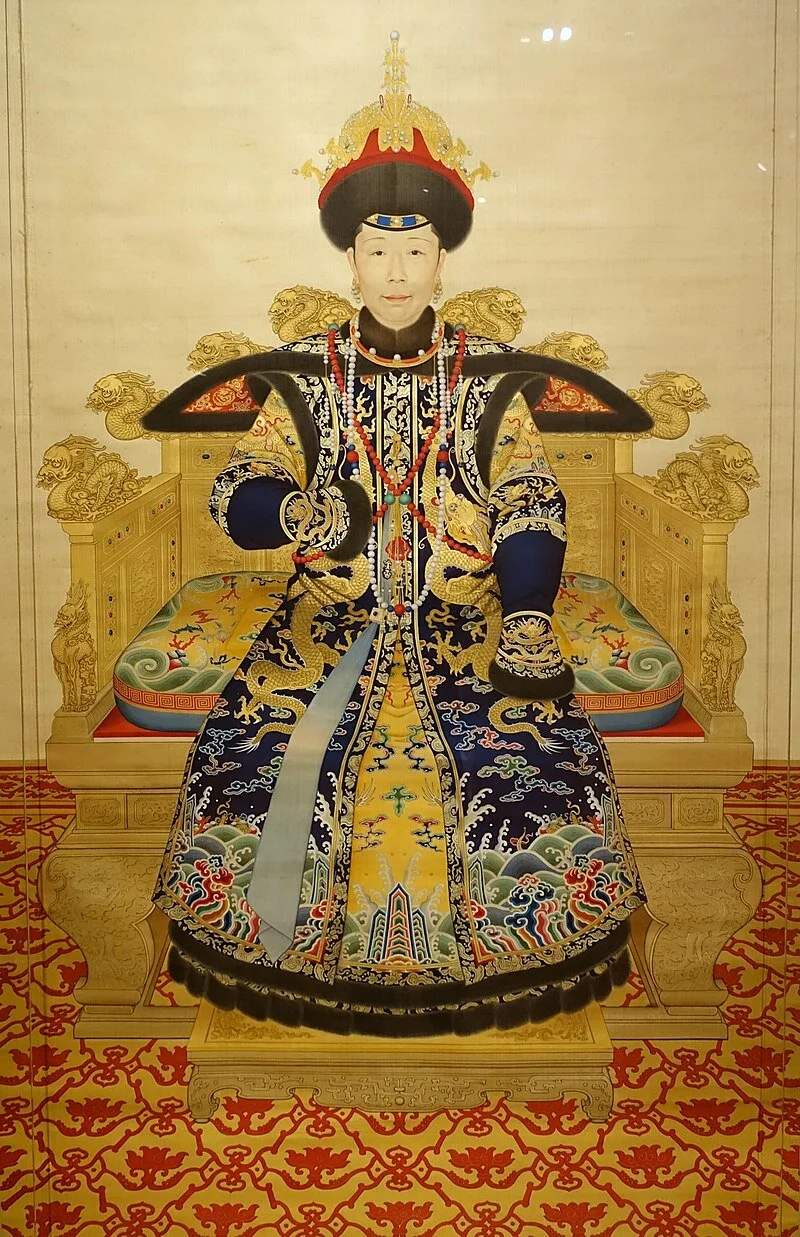
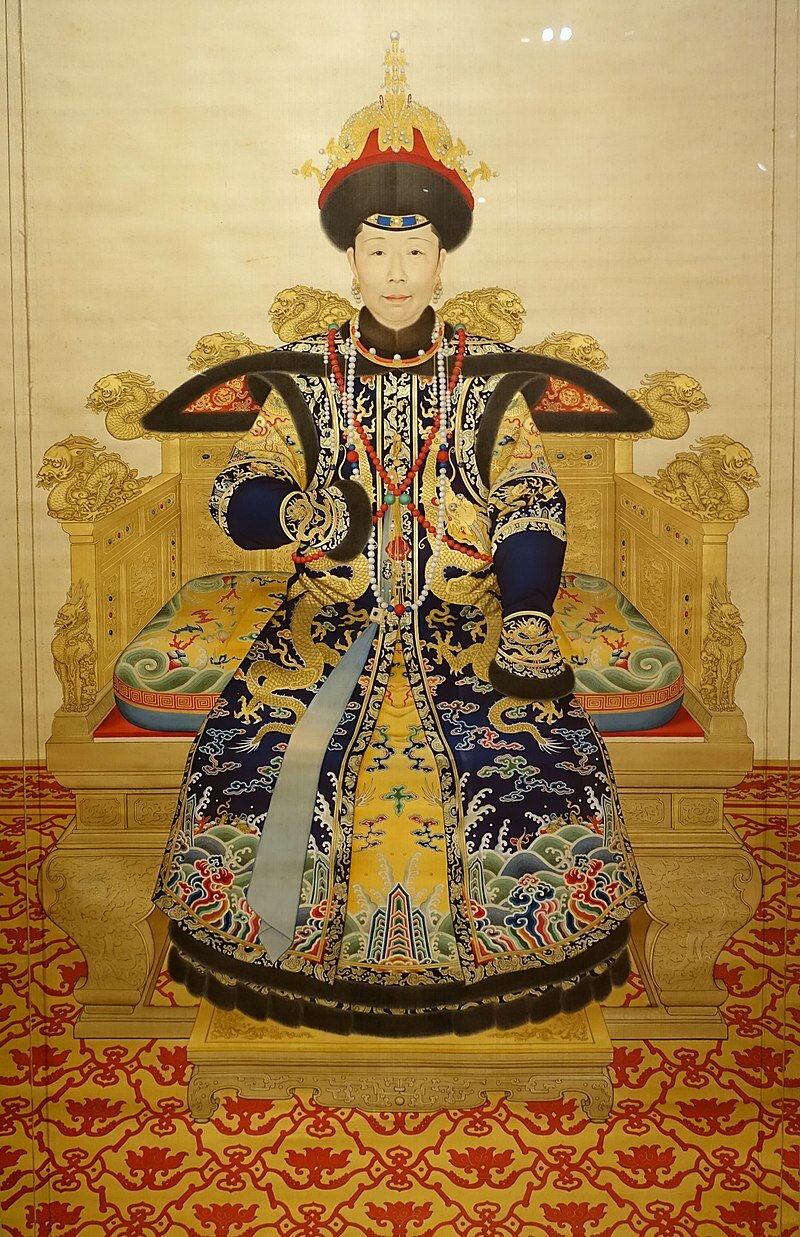
A classic metaphor to qualify Yin at this Qi Node is the image of a dowager empress acting as regent for her young son. She has been ruling things for several years and her power is absolute (Qi Node 22: Winter Solstice), but the young emperor is getting older and it will not be much longer before she will have to cede the throne to her son. She is still very much in control of her surroundings, but she too is getting older and the knowledge that she will not be able to remain in her post forever is now undeniable.
This narrative helps us to understand the movement of Yin and Yang during this time of the year where Yin is still the dominant force, and its ability to shape everything in our environments is just like the powerful Empress Regent. Yang is young, just reborn at the height of the Empress’s power during solstice and is growing toward self-awareness every day. Yang is still vulnerable though and easily misdirected. It has little of its own identity and relies almost entirely on the nurturing depth of Yin to keep it safe. Yet despite this dependence, the Empress Regent Yin feels the drain of constantly nourishing her burgeoning young Emperor Yang more than she did in the past. Her resources are beginning to wane, and it is time to prepare for transition.
Experiencing 小寒 Xiǎohán
Often people start to inhabit an emotional space called the “Winter Blues” during this time of the year. It now even has a loose diagnosis called SAD or seasonal affective disorder and has been biomedically linked to reduced exposure to sunlight and lower levels of Vitamin D. In response to this biomedical explanation, there has been a proliferation of desktop lamps that mimic sunlight and an increase in supplements of Vitamin D to help “counteract” the effects of the season. Interestingly, even in more equatorial parts of the world where the variance in daily sunlight hours is much smaller than in more polar regions, many people still report feeling more melancholic, less-motivated, and nostalgic or regretful. Our modern desire to avoid these types of feelings has motivated researchers and product manufacturers to create tools to help us minimize these emotions and continually reorient ourselves toward activity and ebullience.
Why we are so driven as modern people to skirt any association with non-exuberant emotion is a much longer conversation of Western (read modern) people’s negative relationship with Yin stuff and the celebration, and even worship, of Yang stuff for thousands of years. For now, let me say that the movement toward inactivity, slower days, longer hours sleeping, deep reflection, a want to apologize for past transgressions, and a sense that there is a deep yawning void “out there” is completely normal and appropriate. It is the nature of Yin to stretch out endlessly in front of us during this time of the year, and as we stand on the precipice of that enormity, it can make us feel small, insignificant, and utterly without value in the great scheme of things. The beauty of looking at the movement of life through the various qi nodes and the seasons is that even in the face of Yin’s disconcerting profundity, we know that its overwhelm is temporary. It is a glimpse at what our, and many other’s, reality is made from and stitched with, but it is not an end in-and-of-itself. In fact, it is this very complexity that creates the nursery for Yang, for activity, for analysis, for execution of tasks and plans. So, sit with your reminiscence. Spend time with your feelings of inadequacy. Embrace your lack of motivation to do big things and make the things you do smaller. Take the experience of your past and the pasts of other people and begin the soft stages of imagining what the next year could be. Weave regret into the fabric of who you are so that you can rely on what it has taught you as you spin the cloth of a coming new year.
Conduct During the 23rd Qi Node
Historically, many Chinese people used this and the next qi node to begin cleaning the interior of their homes in preparation for the socialization of Spring. They spent time indoors and eschewed many social engagements (often because in Northern China it was literally too cold and snow-covered to go outside and travel anywhere), eating foods that had been long-cooked and then reheated or even eaten cold when the dish suited it.
For contemporary people, 小寒 Xiǎohán is an opportunity to think about the coming year. To take it easy and brew cups of coffee or tea to drink as you spend time with yourself or your immediate family and avoid overextending yourself in work, tasks at home, or social obligations. The time for revelry is coming in about a month, but it’s not here yet. Creative efforts should be limited to planning stages and brainstorming, but real creation, especially of anything new, should be tabled until later in Spring. Exercise should be slow and minimal, focusing on stretching, shaking, tapping, and simple calisthenics. Definitely no marathon runs or intense mountain hikes, and minimize your sweating above all else. That kind of vigorous activity demands that Yang qi get up from its nest and rise to the surface to provide the necessary energy and force to get those tasks done, and it is far too young and fragile to have such demands made of it. Yang will respond to your call (you are still alive of course), but the cost to its available resources later in the year will be greater and could reduce the amount of available Yang over the course of your life. It is much better to wait and sync those vigorous types of activities with the right seasons.
Take your time. Take your rest. Appreciate the constantly changing nature of your environment. After all, experience is the point of embodiment.
Qi Node 22: Winter Solstice
The grandeur of Yin is on display during the longest night of the year. Learn more about what this point in the annual Yin Yang Cycle means for you.

Seeing The Qi All Around Us
The movement of qi in the environment is an endless and inevitable process. Yin and Yang are constantly interacting with one another in the smallest of circumstances as well as on a cosmic level. Solstice days are great opportunities to look at the annual cycle when it has more clear definition. That is, Winter and Summer solstice have visible and palpable qualities that virtually any human being can see or experience making it easier to understand what all this discussion of qi movement is really getting at.
The Peak of Yin
Yin is one side of the Yin Yang movement that is represented by various related qualities: Darkness, moisture, cool and cold temperatures, substance, form, heaviness, history, blood, ancestry, rumination, nostalgia. Yin is the definition of substance and it transcends the boundaries of what we think of us the world around us and connects all the substantive material of the universe. Yin qi is profoundly complex and because of that depth, it is intrinsically mysterious. Even if you could stare at it endlessly, analyze it and take it apart, Yin qi would always seem entirely familiar and simultaneously out-of-reach. Yin and Yang both ebb and flow at various times in the year and Winter Solstice is the time when the Yin qi has gathered and matured to fullest self. It is now a powerful feminine force that is both nurturing and demanding.
Winter Solstice marks the longest night and shortest day of the year. In many parts of the world the temperatures are cold and the ground is covered in snow. Even if the weather does not make it as easy to see the strength of Yin where you live, rest assured that the forces at work in our environment are much more potent than the temperature of the air or soil. Even in warm or tropical climates, the qi of the Winter is more retrospective and reserved, demanding that we eat differently, think differently and conduct ourselves differently than we do in the Summer.
Your Food Should Be Warm and Slow-Cooked
Because there is less Yang Qi available in the Winter generally, but especially around Solstice, your meals should be prepared in a way that deeply extracts their stored flavors and natures. Soups, braises, slow-roasts, and simmering are all great ways to use cooking to dig into what is hidden deep, making it available to nourish your body. Season your meats and vegetables with mild, warm spices like cumin, cinnamon, and nutmeg. Add some ginger and garlic to your sautee bases or in with your roasted vegetables. Take advantage of the squashes still stored from the end of the summer like Delicata, Kabocha, and Acorn. Drink a slightly salty broth with your meals or make a whole soup several times per week. This moisture helps to keep your digestion running smoothly. Avoid overeating as much as you can. No raw foods, smoothies, or salads this time of year.
Your Conduct Is Restrained
The enormity of Yin at the time of Solstice permeates our environs. People feel nostalgic or homesick, we yearn for connections with our friends and families, we are more oriented to naps and lazy days. These feels and inclinations are right and appropriate at this time of year. Yin gives us the opportunity to nourish ourselves from its depths — the same place that our lineage and memory come from. Even emotions that our Western culture categorizes as negative ones like sadness and regret are appropriate this time of year. Yin in its fullness makes it easier for us to reflect on the past and to glean wisdom from our actions both good and bad.
Significantly, the time around Winter Solstice is not the time of the year to start new projects, nor the time of the year to increase your marathon training regimen. It is a time for soft and mild activity that does not cause a person to sweat, for stretching and breathing. It is a time to imagine the possibilities for the coming year and to slowly organize your thoughts and goals. It is not time to plan exactly, just the time to wonder and hope and imagine. Let your mind be carried into the myriad variations of your life, your family, and your work.
Treating every month of the year as if it were July is like driving your car with your foot pressed hard on the gas. You can do it, but your fuel will not last and in many contexts, your driving will be dangerous. You can keep doing everything you do in the summer all through the winter but it costs more. You will require your diminished yang qi to rouse itself from its hibernation and to flare bright and strong for you to get things done the way you want. It will respond to your call but for how long and to what degree? Are you always fighting fatigue, drinking cups of coffee or cans of redbull? Is your hair thinner than you’d like? Your metabolism slower? your bowels less reliable? These and many more can all be signs of your yang qi being overextended and your body’s lack of yin nourishment. If we do what we’ve always done, we will get what we’ve always got. Can you begin to reorganize your life to allow for more replenishment? For more introspection? How can you take steps to ease the demands you place on your body? It can start with something as small as drinking tea while starting out your front window, thinking about the last time you spent with nothing on your mind.

Qi Node 21: Greater Snow Dàxuě 大雪
Qi Node 21 Greater Snow is a time of visions and magic. Our inner yang sees strange images in the Greater Yin dominating the environment.
Yin Has Matured
Throughout the course of Fall and early Winter Yin qi has been growing and expanding, taking over the seasonal tasks and encouraging an editing and reflection on the work of Yang and the Summer.
The Peak of Yin
Yin is one side of the Yin Yang movement that is represented by various related qualities: Darkness, moisture, cool and cold temperatures, substance, form, heaviness, history, blood, ancestry, rumination, nostalgia. Yin is the definition of substance and it transcends the boundaries of what we think of us the world around us and connects all the substantive material of the universe. Yin qi is profoundly complex and because of that depth, it is intrinsically mysterious. Even if you could stare at it endlessly, analyze it and take it apart, Yin qi would always seem entirely familiar and simultaneously out-of-reach. Yin and Yang both ebb and flow at various times in the year and Winter Solstice is the time when the Yin qi has gathered and matured to fullest self. It is now a powerful feminine force that is both nurturing and demanding.
Winter Solstice marks the longest night and shortest day of the year. In many parts of the world the temperatures are cold and the ground is covered in snow. Even if the weather does not make it as easy to see the strength of Yin where you live, rest assured that the forces at work in our environment are much more potent than the temperature of the air or soil. Even in warm or tropical climates, the qi of the Winter is more retrospective and reserved, demanding that we eat differently, think differently and conduct ourselves differently than we do in the Summer.
Your Food Should Be Warm and Slow-Cooked
Because there is less Yang Qi available in the Winter generally, but especially around Solstice, your meals should be prepared in a way that deeply extracts their stored flavors and natures. Soups, braises, slow-roasts, and simmering are all great ways to use cooking to dig into what is hidden deep, making it available to nourish your body. Season your meats and vegetables with mild, warm spices like cumin, cinnamon, and nutmeg. Add some ginger and garlic to your sautee bases or in with your roasted vegetables. Take advantage of the squashes still stored from the end of the summer like Delicata, Kabocha, and Acorn. Drink a slightly salty broth with your meals or make a whole soup several times per week. This moisture helps to keep your digestion running smoothly. Avoid overeating as much as you can. No raw foods, smoothies, or salads this time of year.
Your Conduct Is Restrained
The enormity of Yin at the time of Solstice permeates our environs. People feel nostalgic or homesick, we yearn for connections with our friends and families, we are more oriented to naps and lazy days. These feels and inclinations are right and appropriate at this time of year. Yin gives us the opportunity to nourish ourselves from its depths — the same place that our lineage and memory come from. Even emotions that our Western culture categorizes as negative ones like sadness and regret are appropriate this time of year. Yin in its fullness makes it easier for us to reflect on the past and to glean wisdom from our actions both good and bad.
Significantly, the time around Winter Solstice is not the time of the year to start new projects, nor the time of the year to increase your marathon training regimen. It is a time for soft and mild activity that does not cause a person to sweat, for stretching and breathing. It is a time to imagine the possibilities for the coming year and to slowly organize your thoughts and goals. It is not time to plan exactly, just the time to wonder and hope and imagine. Let your mind be carried into the myriad variations of your life, your family, and your work.
Treating every month of the year as if it were July is like driving your car with your foot pressed hard on the gas. You can do it, but your fuel will not last and in many contexts, your driving will be dangerous. You can keep doing everything you do in the summer all through the winter but it costs more. You will require your diminished yang qi to rouse itself from its hibernation and to flare bright and strong for you to get things done the way you want. It will respond to your call but for how long and to what degree? Are you always fighting fatigue, drinking cups of coffee or cans of redbull? Is your hair thinner than you’d like? Your metabolism slower? your bowels less reliable? These and many more can all be signs of your yang qi being overextended and your body’s lack of yin nourishment. If we do what we’ve always done, we will get what we’ve always got. Can you begin to reorganize your life to allow for more replenishment? For more introspection? How can you take steps to ease the demands you place on your body? It can start with something as small as drinking tea while starting out your front window, thinking about the last time you spent with nothing on your mind.

Qi Node 20: 小雪 Xiǎoxuě (Lesser Snow)
Xiǎoxuě 小雪, “Lesser Snow,” marks Winter’s quiet commitment.
Snow may not yet fall, but the cold has settled. Stillness becomes structure. This is the time to refine, not to begin—nourish deeply, seal the body from wind, and allow the descent. Let what remains grow deeper, smaller, and more essential.
The name of this node carries restraint: Xiǎoxuě 小雪, “Lesser Snow.” That first character Xiǎo 小 is the same character we use for “little” or for “small” in English. So it’s not no snow and not heavy snow. It’s just a hint of snow or in some climates the suggestion of snow, basically just enough to tell you Winter is deepening, but not yet in full expression. This node marks a subtle uptick in the potency of Winter—a refinement in the season’s character rather than a dramatic turn.
Lesser Snow does not mean lesser importance. It means the cold has arrived in earnest, but its most severe manifestations are still to come. The weather bites, but does not yet bruise. The frost lingers, but the earth has not sealed. It is Winter’s quiet overture, the first real layering of stillness over the surface of the world.
The descent of yīn qì 陰氣 has settled into structure. The days are brief and the light is pale. The cold is not momentary anymore—it is defining. And with it comes the seasonal instruction: simplify further, quiet more deeply, trust the small and consistent patterns.
Snow in Potential, Not in Force
Like all seasonal changes, Xiǎoxuě 小雪 doesn’t bring Winter in one dramatic stroke. Instead the season arrives in stages, like breath against a window—barely visible, but unmistakably present. In most climates, snow doesn’t yet accumulate in this phase, and in some, it doesn’t fall at all. But its possibility is in the air. The world smells different. The wind has lost all softness.
The presence of snow in this node is more symbolic than literal. It represents the crystallization of qi. The contraction of moisture, the compression of movement, the beginning of form born from stillness. Even when there is no snow on the ground, we can feel its intent settling in. The grasses stiffen. The trees stop speaking. Water loses its eagerness to flow.
There’s a tension in this potential—a coiled stillness that hints at what’s to come. It’s a teaching moment, cosmologically speaking. We’re asked to understand the value of potential energy, not just the kinetic kind. This qi node encourages us to learn how to sit inside a moment that isn’t fully formed, and to draw nourishment from what hasn’t quite arrived.
This is an ideal time for observing without interpreting and for sensing patterns before they become explicit. Just as snow rests in the clouds before falling, this moment asks you to rest in awareness before action. It’s a kind of pause pregnant with meaning.
Embracing the Subtle Descent
By Xiǎoxuě 小雪, the descent of the season is no longer theory—it is embodied. But unlike the dramatic drop-offs of equinoxes or solstices, this descent moves like sediment through water—slow, consistent, undeniable. You may not even notice how much has changed until you pause and look around.
The most vital aspect of this qi node is learning how to meet the descent without resistance. There’s a cultural reflex, especially in Western life, to brace against slowing down. We try to sustain brightness long past the natural point of dimming. But Xiǎoxuě 小雪 offers a different kind of intelligence—the kind that teaches us to lean into the weight of the season instead of fighting it.
You may notice yourself longing for more time alone, or becoming less interested in social plans, noise, or fast-moving schedules. These are not signs of burnout. These are signs of alignment. Your system is responding to the deeper pull of yīn 陰.
The descent also brings a subtle reorganization of the emotional landscape. What once felt urgent no longer commands attention. Certain worries lose their teeth. Your internal focus narrows. This is not retreat in the negative sense—it is return. Return to what matters. Return to the inner hearth.
To embrace the descent is to stop asking for permission to slow down. It is to inhabit the season as it is, and to trust that what is pared down is not lost, but clarified.
This is the node that teaches you how to be with what remains—and how to let that be enough.
Aligning Conduct with Xiǎoxuě 小雪
Let your actions now become smaller but more rooted. This is the time to keep your systems warm, your days simple, and your inner fire steady—not stoked, but tended.
1. Honor the Dry Cold
As temperatures drop, so does ambient moisture. This is taxing for the Lungs, skin, and sinuses. Nourish your system with foods that moisten and warm—pear with honey, roasted squash, barley with lily bulb and dates. Add sesame, walnuts, and small amounts of warming herbs like ginger and cardamom.
A humidifier in the home, especially where you sleep, can ease the transition.
2. Practice Short Outdoor Contact
Let your body feel the cold, but briefly. A ten-minute walk wrapped in layers. A few breaths on the back porch before tea. Contact with the elements now reminds your system what season it’s in—so it can adjust more intelligently. But don’t linger. Cold is to be acknowledged, not absorbed.
3. Protect the Periphery
Cover your neck and lower back. Keep the feet warm at all times. Avoid direct wind exposure. At this stage, drafts are not neutral—they’re depleting. Keep yourself sealed, as the trees now are, as the seeds underground have always been.
Warmth now is your shield, not your indulgence.
4. Refine, Don’t Rearrange
No more life overhauls. No productivity sprints. Let go of reinvention. Instead, hone what already exists. Refine your rhythms, reinforce your rituals. Let your habits become the bones of your day. This is not the time to start something new. It is the time to stay with what is working.
5. Nourish from the Bones Out
Continue cooking with depth: broths, stews, porridges, braises. Use bone-in meats and root vegetables. Think rich but digestible. The Kidney system, which governs Winter, thrives on long, slow nourishment. Avoid raw food. Avoid icy drinks. Cook with time, and eat with attention.
Xiǎoxuě 小雪 is the most understated of the Winter nodes. But its wisdom is profound. It teaches that preparation is not always loud. That rest does not mean absence. That stillness is not stagnation.
Let this node guide you into the quieter center of Winter. Wrap yourself in rhythm. Choose warmth. Choose quiet. Choose the small, deliberate action over the dramatic shift.
Lesser Snow can remind you that subtle is not the opposite of powerful but is often its truest expression.

Qi Node 19: 立冬 Lìdōng (Winter Begins)
Lìdōng 立冬 marks the moment when Winter stands upright—cold, still, and clear.
The descent is no longer gradual. Big Yin is here. Let your body turn inward. Wrap up early. Sleep deeply. Cook slowly. What looks like quiet from the outside is becoming depth from within. The season asks for presence, not performance.
It happens quietly, but definitively. One morning you step outside, and the light has changed. The dampness in the air is no longer soft or fragrant—it bites. The earth, once pliable and generous, begins to firm beneath your feet. You can feel it in your bones. Lìdōng 立冬 has arrived.
This is the beginning of Winter—not just by calendar, but by qi. The character lì 立 means “to stand” or “to establish,” and dōng 冬 means “winter.” So Lìdōng 立冬 literally means "Winter stands." It is no longer forming. It is here.
In this phase, the world doesn’t just get cold—it begins to embody Cold as a force. This is not a temporary chill. This is a new energetic dominance. Yīn qì 陰氣 is no longer growing or gathering. It now governs. This is the start of dà yīn 大陰—Big Yin—and the world is leaning into its long descent.
From Damp to Cold, From Metal to Water
The previous node, Shuāngjiàng 霜降, lingered in Earth’s holding pattern—dense air, early frost, soft ground soaked with Autumn’s letting go. But here, with Lìdōng 立冬, the qi shifts definitively from damp to cold, from yielding to firm, from Earth to Water.
What was heavy with moisture is now sharp with chill. The moisture doesn’t cling anymore—it recedes, stiffens, crystallizes. The fog no longer wraps gently around your ankles. Now it bites at the skin, whispering of ice. The world is paring down, not just shedding, but locking in. The wet decay of fallen leaves gives way to hardening soil. You may find yourself surprised at how suddenly it happens—how quickly the earth begins to resist your steps, how suddenly the plants go from golden to gray.
The Water phase begins here, not as element but as worldview. Water doesn’t push. It carves. It seeps. It endures. In the cosmological sequence, Water follows Metal. The clarity and refinement of Autumn now give way to depth, to stillness, to duration. There is nothing hasty about Water. And there is nothing quick about Winter. We are being called into the long game now.
Enjoy the Cold While It Is Young
Before the deep freeze settles in, there is a brief and often overlooked pleasure in early Winter’s clarity. The cold is not yet brutal. It doesn’t yet weigh down the spirit or stiffen the joints. It enlivens. You may find that the first truly cold morning of the season wakes you up in a way nothing else can. The air feels honest. The sky, newly scrubbed of humidity, offers sharp edges and long, clean light.
This early phase of Winter holds a kind of promise—a reminder that stillness can also be invigorating. There’s something deeply satisfying about bundling up for a brisk walk and returning to a warm room, a pot on the stove, the contrast between cold skin and inner warmth. It’s a moment of sensual awareness that doesn’t come in the seasons of abundance or even in the cozy depths of January. This is clarity with gentleness. A sharpness that doesn’t yet cut.
So walk in it. Feel it. Let it speak to your skin and your breath. Just don’t stay long. Lìdōng 立冬 is not about challenging the cold, but greeting it. You’re not meant to brave the elements. You’re meant to acknowledge them. Nod at the gate before going back inside.
Aligning Conduct with Lìdōng 立冬
This is the season to start acting like Winter is here, even if it doesn’t quite look that way yet. Begin reinforcing your internal systems. Your practices now should preserve, protect, and fortify—not push, extend, or challenge.
1. Keep Warm and Contained
Layer your clothing. Wrap your neck. Cover your lower back. These are not just comfort choices—they are energetic boundaries. Wind and cold are among the most invasive of the six evils in Chinese medicine, and this is the time of year they slip in when we’re not paying attention.
Even brief exposure to cold wind can throw off the system now. Avoid bare feet on cold floors. Wear socks indoors. Bundle early.
2. Reinforce the Evening Ritual
The quiet of Winter begins with early nights. Darkness falls sooner and should be welcomed, not fought. Begin your winding down process before the sun disappears if you can. Avoid screen time at night—particularly in the hour before bed. Let your eyes and nervous system recalibrate.
Now is the time to get excited about sleep. Not just as rest, but as restoration. Dreaming becomes part of your medicine now.
3. Eat Richer, Deeper
This is when the slow-cooker takes center stage. Cook with bones, roots, and warming spices. Focus on dishes that take time—soups, stews, porridges. Let the kitchen be a place of low, consistent heat. No raw foods now. No cold drinks. And minimize sugar, which can deplete the Kidneys, the core organ system associated with Winter.
Begin to include more seaweeds, dark leafy greens, black sesame, walnuts, and mushrooms—foods that nourish jīng 精 and support depth.
4. Start Your Winter Reading
Let your mind follow the season. It’s time to get back into the long books, the slow podcasts, the hobbies that don’t reward speed. Knit something. Paint something. Write something no one will read. Sit with silence.
Winter favors introspection. Let your inner world expand now that the outer one is narrowing.
5. Reduce Sweating and Intensity
It’s time to retire intense cardio, hot yoga, and anything that produces heavy perspiration. Sweating now leads to fluid depletion and weakens your ability to retain heat. Movement should be internal and conserving—tai chi, qi gong, gentle strength training, restorative yoga, walking.
Keep your body active, but never to the point of exhaustion.
There is a confidence to Lìdōng 立冬. It does not beg for attention. It simply arrives. There’s a stillness that isn’t sleepy but poised—like a mountain at dawn. That’s what this node offers: the chance to begin deepening, to prepare without panic, and to enjoy the clarity of a season that makes no apologies for what it is.
Let the cold awaken you. Let the dark slow you. Let the season shape your conduct with its quiet instructions.
Winter is not on the horizon. It is here. Stand with it.

Qi Node 17: 寒露 Hánlù (Cold Dew)
Hánlù 寒露 marks the final retreat of yáng qì 陽氣 and the deepening of stillness.
As Autumn tips toward Winter, nature condenses and conserves. We are called to slow, simplify, and store. Begin rituals. Protect your fluids. Let silence shape your days. The hush before the frost has meaning—listen to it.
Yang Is in Its Final Retreat
The name is spare, but precise: Cold Dew. Hánlù 寒露 is not the frost. Not yet. But the promise of frost hangs in the air like the breath you can now see in the morning. The temperatures dip just low enough to remind you that the peak of Autumn has passed. The plants know it. The animals know it. And so do we, if we are paying attention.
This is the moment when yáng qì 陽氣—so expansive and dominant through the brighter months—begins its final descent. It has been withdrawing since the Summer Solstice, quietly, steadily. But now its presence above the surface is almost gone. What remains is the deepening strength of yīn 陰. What remains is stillness.
It is not yet Winter. But we can feel its shape forming.
The Season Withdraws
All around us, the visible world is stepping back. Leaves have begun to fall in earnest. Sap retreats into roots. Seeds harden and tuck themselves into the soil. The animal world moves underground—burrowing, storing, waiting. The bustle of Summer and even the golden exhale of early Autumn has faded into a slower rhythm. Life is no longer reaching outward. It is turning inward.
In Chinese medicine, we say that the body mirrors this pattern. In Summer, the yīn fluids are drawn up toward the surface to cool and protect us, especially through sweat. But in this phase, those same fluids begin to retreat. Moisture condenses and thickens, moving inward to preserve. For most healthy people, this shift happens without notice. But for those with latent imbalances—especially in the Lungs or digestive system—it may present as congestion, seasonal allergies, sluggish digestion, or emotional weariness.
This is not a problem to solve. It is a signal to heed.
Listening to the Silence
Hánlù 寒露 is not dramatic. It doesn’t shout. It doesn’t demand. It suggests. And the suggestion is this: continue to quiet everything.
Not stop. Not abandon. Just slow. Simplify. Feel for the rhythms that no longer serve and begin the gentle work of editing. This is the time to begin settling into rituals—not for productivity, but for stability. You don’t need to do more. You need to do less, but more intentionally.
The theme of Autumn has been quiet. But Hánlù 寒露 is something deeper. It is quiet that begins to lean toward silence. And in that silence is the opportunity to restore in a way that the brighter seasons simply do not allow.
Aligning Conduct with Cold Dew
The energy of the world is drawing down and in. Your conduct should reflect the same.
1. Let Your Mornings and Evenings Become Ritual

Now is the time to set—or reset—your daily rhythms. Begin the day with a cup of warm tea or coffee and a few moments of aimless thought. Let your mind wander without purpose. In the evening, dim the lights earlier. Put on socks. Read something old or familiar. Find a rhythm that carries you through the dark gently, not out of discipline, but out of care.
2. Solidify Inward Movement
Retire vigorous outdoor workouts, especially cardio that leads to sweating. Avoid cold winds and chilly conditions that invite xie qi 邪氣 (pernicious influences) into the body. Instead, focus on calisthenics, gentle strength training, and long, nourishing stretches. Qi gong, slow yoga, and bodyweight movement indoors are especially helpful now.
Even more important than what you do is where: indoors, away from drafts, and during the late afternoon to early evening when the qì is most balanced.
3. Conserve Your Moisture
Perspiration is no longer your ally. It is a loss of fluid you cannot easily replace during this season. Choose warm, moistening foods. Avoid raw salads and excessive spices. Congee, soup, roasted vegetables, and herbal teas will serve you better than smoothies or iced anything.
Think warmth, density, and hydration.
4. Harvest What Remains
If you have a garden, this is your final chance to bring in what’s left. Roots, greens, herbs—gather them in. If your harvest is metaphorical, the guidance is the same. What have you grown this year that still needs processing? What needs preserving? Canning, fermenting, jamming, pickling—these are not just seasonal chores, but energetic alignments.
Even restarting your sourdough mother becomes a ritual act of continuity—tying Summer’s abundance to Winter’s stability.
5. Tend the Inner World
Return to your favorite podcast or book series. Not necessarily to learn, but to nestle into something that carries you gently. Watch less news. Scroll less. Sit with stories. Sit with yourself.
This is the time to turn toward the inner harvest. What thoughts want to be tucked away for slow ferment? What projects need to be finished, not launched?
This is not the season for ambition. It is the season for practice.
Hánlù 寒露 is the last whisper before the hush. It does not yet freeze, but it reminds us that we are not far from the frost. The world is still, but not inert. It is gathering. Thickening. Preparing.
So should we.
Make your life smaller, but fuller. Make your habits fewer, but stronger. Let silence guide you to the next thing—not the next achievement, but the next depth.
The Earth is folding itself inward. Follow.

Qi Node 16: Qiūfēn 秋分 (Autumn Equinox)
This is not stillness, but a poised turning. Nature leans toward inwardness, and so should we. Refine routines, nourish gently, walk more slowly. The season tilts toward rest. Let your conduct follow the descent. Let balance become your teacher.
The Balance Tips
There is a moment in the year when light and dark meet on equal terms. When the days and nights are nearly the same length, and the weight of the year feels, if only briefly, perfectly distributed. This is Qiūfēn 秋分—the Autumn Equinox—and it is less a celebration than a subtle pause in the middle of descent.
It is a turning point. Not dramatic, but meaningful.
We tend to imagine balance as something static. As if standing evenly between opposites brings peace. But Qiūfēn 秋分 reminds us that balance is dynamic. It is not the moment when nothing moves, but when everything is held in temporary, delicate tension. The tipping point is here, and while the day may feel calm, the underlying qi is in motion. Descent has dominated for some time and now we see its effects. The dark grows stronger.
If the earlier Autumn nodes were the gathering of yīn 陰, Qiūfēn 秋分 is its quiet coronation. This is the season of harvesting what we’ve cultivated—not just the food grown from the Earth, but the internal practices, the mental shifts, and the emotional edits we’ve made along the way.
And just like harvesting crops, this work is both practical and symbolic. What are we gathering? What are we willing to release into the Earth again, to rot and reseed in seasons to come?
Equinox Conduct: Living with the Tipping Point
This time of year is not a peak. It is a slope. The descent into the darker half of the year becomes evident here, not with a crash, but with a lean. Aligning with this movement requires care—not urgency.
1. Do Less, But Do It with Intention
Qiūfēn 秋分 isn’t the time to push projects to completion or set major goals. Instead, focus your energy on maintenance and refinement. What systems are already in motion that could be adjusted or improved? What parts of your day feel rushed, uneven, or imbalanced? Use this node to smooth those places.
2. Rise with the Sun, Sleep with the Dark
Daylight and darkness are in equal measure now. Let that guide your rhythm. Wake up as the sky brightens. Wind down as it dims. A few minutes spent outside at dawn or dusk can reorient your body to the seasonal qi in a profound way.
Avoid artificial stimulation after nightfall. Let your evenings grow quieter. Sleep is becoming a primary form of nourishment now.
3. Eat What Balances, Not What Excites
Favor foods that nourish without overstimulating. This is the time for simple grains, roasted roots, and the lingering bounty of Late Summer vegetables. Add moistening elements to support the lungs—pear, lily bulb, sesame, or honey. Avoid extreme flavors or temperature contrasts. Let meals bring steadiness, not intensity.
Eat slowly. Digest fully. Let the act of eating reinforce your seasonal rhythm.
4. Walk More, Run Less
Movement should continue, but the pace should slow. Walks, especially in the morning or early evening, are deeply beneficial. Take in the shifting colors, the rustling leaves, the lowering light. Autumn is not a season for personal records. It is a season for attunement.
Stretching and gentle strength work can help maintain structure without overexertion.
5. Begin the Emotional Inventory
Now is the time to take emotional stock. What habits or thought patterns are you ready to release? What griefs have ripened? What joys do you still carry from the brighter half of the year?
Write. Reflect. Talk with someone you trust. Qiūfēn 秋分 opens a portal to deeper seeing. Let yourself look.
The balance of light and dark will not last. Qiūfēn 秋分 offers a rare moment of symmetry before the tilt becomes obvious. It is the hinge on which the door of the year turns, opening us toward Winter.
Do not cling to the light. Do not rush the dark.
Just notice the balance. And let it guide you.

Qi Node 15: 白露 Báilù (White Dew)
The air cools, mornings are damp with dew, and activity begins to soften. This is a time for preservation—of energy, fluids, and focus. Slow down. Eat warm foods. Let stillness shape your days as Autumn deepens.
Yin Descends to Take Charge

Young girl leads her grandfather by the hand
The yáng 陽 energy of Summer is no longer fierce. Its bright enthusiasm has faded, and its sharp edges have softened with the turning of the season. In its place, something subtler begins to rise. The early morning dew appears like a whisper—gentle but insistent—reminding us that cooler months are approaching. Although the sun still warms your shoulders at midday, the evenings now bring a chill, and the heat of the day fades more quickly than it did just weeks ago.
This is the time when yīn 陰 energy coalesces. It is no longer a distant presence. No longer hidden behind heatwaves and long days. Now it steps forward—not to dominate, but to quietly take command.
At this point in the cycle, yáng 陽 is not absent, but it is no longer steering the movement of the year. It is slowing, retreating, and allowing yīn 陰 to rise. This transition is not marked by conflict or abrupt change, but by the natural rhythm of exchange between these two fundamental forces. One of the clearest metaphors for this moment is that of a young girl taking her aging grandfather by the hand. He forgets things—where he left the keys, when he last ate—but she is his helper. Though slower now and less certain, he carries stories and memories that she listens to carefully. Her presence brings clarity and reordering. She helps him recall who he has been, even as she quietly shapes what will come next. This is yīn 陰 not as darkness or absence, but as a guide and stabilizer.
Aligning Conduct with the Descent of Yin
Báilù is a moment to begin preparing for the interior months. The shifts need not be large, but they should be conscious. Below are a few ways to align your lifestyle and choices with the season’s changing qi.
1. Preserve Body Fluids
As the air becomes dry and the wind picks up, the body becomes more vulnerable to depletion. Avoid strenuous exercise that leads to heavy sweating. Instead, favor gentle, fluid movement—stretching, tai chi, slow walks, or restorative practices that promote circulation without overexertion.
2. Let Activity Follow the Light
Begin winding down earlier in the evening. Try to finish eating before 7 p.m. and resist late-night tasks that demand high cognitive or physical effort. Yáng qì 陽氣 is weakest in the evening, and pushing against that low tide only leads to depletion. Let the outer dark remind you to retreat inward.
3. Favor Moist and Warming Foods
This is the time for broths, stews, and lightly cooked vegetables. Enjoy the last of the tomatoes and squashes, and begin to incorporate grains like millet and barley. Potatoes, corn, and sweet roots provide gentle sweetness and grounding. Avoid raw and cold foods that tax digestion, and begin to minimize greasy, spicy, or heavily stimulating meals.
4. Explore the Dew Ritual
For those managing latent heat or damp-heat conditions, take a few moments each morning for a barefoot walk through the dew. Bundle up, step outside, and walk gently through the cool, wet grass. Let the morning qi settle into your feet. Then return inside, dry them thoroughly, warm them with your hands, and put on socks. This simple practice aligns the body with the cool clarity of early Autumn and helps guide heat down and out.
5. Begin the Harvest of the Mind
You’ve likely been editing your internal life in small ways—letting go of unneeded habits, shedding a few things that felt heavy. Now is the time to gather what remains. Begin organizing your thoughts and intentions. What routines are sustainable? What behaviors feel aligned? What insights want to stay?
This isn’t about goal-setting. It’s about noticing the contours of your inner landscape and preparing to live with them more fully in the months to come.
Yīn 陰 descends now not as silence, but as structure. Not as absence, but as remembering. It brings with it the opportunity to reconnect with what supports and sustains. Let your choices soften. Let your movement slow. Let your attention settle into the subtler rhythms that are already calling you inward.
The year is turning again. Let yourself turn with it.

Hungry Ghost Festival: When the Dead Show Up Starving
The Hungry Ghost Festival honors spirits left wandering, unsatisfied and unseen.
Rooted in Buddhist and Daoist tradition, it is a season for compassion, ritual, and remembrance. Offer food. Burn paper. Float lanterns. Feed the forgotten—not just the dead, but the unmet longings we carry. Memory, here, becomes nourishment.
Every year, as the seventh lunar month deepens, a peculiar hush settles across parts of East and Southeast Asia. It’s a quiet that lives in alleyways and courtyards, broken only by the rustle of paper flames and the low murmur of offerings spoken into the dark. It is said that during this time, the gates between the realms of the living and the dead swing open, and what comes through is not just memory or metaphor—it is longing.
This is the Hungry Ghost Festival, a cultural and spiritual event that marks a specific time in the lunar calendar—typically the fifteenth night of the seventh month—when spirits are believed to roam freely among the living. But not all spirits are honored ancestors or celestial visitors. Some are the forgotten. The neglected. The unremembered. They are the éguǐ 餓鬼—hungry ghosts.
And they are starving.
What Does It Mean to Be Hungry?
The term “hungry ghost” is more than a dramatic flourish. It’s a precise designation. In both Buddhist and Daoist cosmologies, the world is layered—visible life atop a vast substratum of unseen realities. The realm of hungry ghosts is one such layer. It’s not Hell in the fire-and-brimstone sense, but it is a place of torment. Not by punishment imposed, but by craving unfulfilled.
A hungry ghost is often described as having a huge, distended belly and a neck too thin to pass even a grain of rice. It is the very image of insatiable desire paired with the inability to ever be satisfied. These beings are not evil. They are pitiable. They wander, not because they want to harm, but because they are desperate to remember who they were or to be remembered by someone, anyone.
In this way, the Hungry Ghost Festival is not a horror story. It is an act of compassion. It’s a recognition of how thin the veil between nourishment and neglect really is—how easily one can become unseen.
Origins and Mythic Threads

A classical chinese painting of a hungry ghost with a distended belly and a tiny throat
The festival has roots in both Buddhist and Daoist traditions, although the stories and interpretations vary depending on the source. In Buddhist telling, the origin lies in the story of Mùlián 目連, a disciple of the Buddha who sought to save his mother from the torments of the hungry ghost realm. She had, in life, accumulated karmic debts through greed and selfishness, and in death was condemned to a state of perpetual hunger. Despite his powers, Mùlián could not feed her. Every offering he made would turn to flames or ash in her mouth.
Eventually, the Buddha instructed him to gather the monastic community and make offerings on her behalf during the seventh lunar month. Through the transfer of merit, her suffering was lessened. This narrative reinforces a foundational value in East Asian culture: filial piety. It suggests that even in death, we have responsibilities to our kin. It also hints at a wider truth—our actions ripple outward, touching not only the living, but those who linger beyond our reach.
In Daoist practice, the same festival is called Zhōngyuán Jié 中元節 and is connected to the cosmological belief that this is the time when the heavens open for divine judgment. The underworld’s gatekeeper, Dìguān Dàdì 地官大帝, descends to record the sins of the living and offer reprieves for the suffering dead. The festival thus becomes both a moral checkpoint and a moment of shared obligation between the living and the deceased.
But even with mythic backstories and ritual protocols, the festival is deeply human. It’s not just about ghosts. It’s about memory, loss, and the deep ache of disconnection.
Rituals of Nourishment and Remembrance
During the Hungry Ghost Festival, the rituals are as much for the living as for the dead.

Food and incense laid out on an altar for the ancestors
Families prepare altars of food—not for their own consumption, but for the spirits. Dishes are laid out carefully, incense is lit, and prayers are murmured into the smoke. Outside homes, especially at crossroads and open public spaces, people burn joss paper—symbolic offerings shaped like money, clothing, and household goods. These are sent to the spirit world in hopes of easing the discomforts of those trapped in liminal existence.
In southern China and parts of Southeast Asia, lanterns are floated on rivers or released into the night sky. The idea is simple but haunting: help the lost find their way home. Even street performances—operas, dances, or puppet shows—might be staged with front-row seats left conspicuously empty. Those are for the guests who no longer walk in flesh but are welcome all the same.
Yet, for all the care shown, there is also caution. One does not casually walk home late on this night. One does not speak ill of the dead or turn over earth needlessly. The ghosts are hungry, yes—but they are also fragile. Unpredictable. Their needs are vast, and the boundary between honoring and offending is thin.
Why This Matters Now
For modern Americans, the Hungry Ghost Festival may seem distant, a piece of folklore from another time and place. But if you look past the burning paper and the moonlit ceremonies, the relevance is startling.
We live in a culture increasingly marked by disconnection. The dead are tidily buried in cemeteries we rarely visit. Grief is expected to resolve itself in polite time. Elders are often sidelined. Memory fades quickly, not from cruelty, but from the sheer pace of modern life. If someone is not directly in our feed, we may not even realize they’re missing.
The Hungry Ghost Festival presents a radical alternative. It asks us to remember deliberately. It gives space—ritual, symbolic, literal—for the unspoken griefs and unacknowledged lives. And in doing so, it suggests that forgetting has consequences—not just for those passed, but for us.
In psychological terms, the hungry ghost is unresolved trauma. It is inherited pain. It is the part of our family history that no one wants to talk about, now roaming unaddressed through our decisions and relationships. In ecological terms, it is the consequence of living in a world where we extract endlessly without reciprocating. The world itself becomes a hungry ghost—parched, burnt, hollowed.
And yet, the response is simple: remember. Feed what is hungry. Sit down at the table with your ghosts—those of family, culture, and self—and offer something nourishing. Time. Attention. Acknowledgment.
A Contemporary Practice
You don’t need a joss paper bank or a lunar calendar to honor this season. You only need a moment.
Light a candle for someone you’ve lost. Not just the beloved dead, but those who left quietly. The ones you didn’t grieve properly. The parts of yourself you abandoned out of necessity. Write a letter. Cook a dish someone used to love and set a portion aside. Say their name.
If you feel brave, take a walk at dusk. Reflect on what you have inherited—not just your grandmother’s smile or your father’s stubbornness, but the silence, the questions, the ache. What stories were never told? What hungers were never fed?
And then, as best you can, feed them. Feed with attention. With ritual. With small acts that say: I remember you. You mattered. You still matter.
The gates are open during this time. Whether that means spirits of the dead or simply the hidden parts of our own inner lives depends on your view. But something rises. Something comes looking. And not with malice. With need.
The Hungry Ghost Festival is not a celebration of fear. It is an invitation to compassion. To memory. To reckoning.
And perhaps, in this time of endless distractions and chronic forgetting, it is exactly the kind of feast we need.

Qi Node 14: 處暑 Chùshǔ (Heat Ends)
Summer lingers, but the energy begins to descend. This qi node invites steadiness—ease back into routine, nourish with warm foods, and make gentle space for change. It’s not about ending abruptly, but softening into transition. Let the shift happen slowly, intentionally, with care.
The name tells you everything and nothing all at once. Chùshǔ—“Heat Ends” (处暑)—suggests relief, a cooling off, a return to balance. But in practice? The heat doesn’t always end on cue. The air might still hum with humidity. The sun, still insistent. And the body, caught between wanting to let go of summer and still clinging to its long, light-filled days, doesn’t always know how to respond.
This is the paradox of Chùshǔ: we’ve crossed a seasonal threshold, but the world hasn’t caught up yet.
We’re entering the last phase of Late Summer—a strange, in-between time in Chinese cosmology. It’s not quite Fall, not really Summer. It’s transitional. Earth phase qi is still humming from the transition period between 大暑 Dàshǔ and 立秋 Lìqiū , which means the concerns of the Spleen and Stomach systems—digestion, nourishment, stability—are still impacted by conduct in this period. But quietly, almost imperceptibly, the energy is beginning to sink. The outward push of Summer is yielding to inward motion. The descent has begun.
When the Season Hesitates
What makes Chùshǔ especially interesting (and occasionally frustrating) is the way it resists a clean break. After all, it’s not called “Fall Begins” or “First Frost.” It’s “Heat Ends,” which is more of an intention than a certainty. In many parts of the Northern hemisphere, it’s still pretty hot during this qi node, but remember that qi nodes express shifts in the qi not necessarily in the weather. These shifts portend changes in the future more than an immediately observable change. For Chùshǔ, it’s a transitional moment when the qi in the environment starts to pull downward, but we’re not quite ready to follow it.
This is the season of lingering.
Tomatoes are still on the vine. Kids aren’t back in school yet—or maybe they just started, but summer break energy is still in the air. Vacations taper off. Work resumes. The fire of summer isn’t out, but it’s starting to burn lower. And there’s often a sense of restlessness as we try to find our rhythm again.
Cosmically, Chùshǔ isn’t telling us to stop. It’s asking us to start considering what it means to shift.
We often think of seasonal transitions as clean slates. But more often, they are layered. Old expectations overlap with new intentions. We still feel warm and outwardly focused while being asked to begin preparing for inward movement. It can feel awkward. Confusing. Tiring.
And that’s completely natural.
The Descent Begins
Chinese medicine views this period as a crucial turning point. The yang qi, which has been rising and expanding since early spring, is now preparing to descend. But it doesn’t plummet. It spirals down slowly, recalibrating as it goes.
Chùshǔ marks the beginning of that descent. Which means this is the time to soften your pace, simplify your routines, and prepare your body and mind for a quieter, more introspective season ahead.
All seasonal change is moderated by the Earth phase, but Late Summer in particular has the most direct alignement with the Qi of Earth: represented by the center—physically, emotionally, and energetically. It’s a time to ground. To stabilize. To gather yourself before the winds of Autumn arrive.
And because we are, in many ways, still warm, still moving, still doing, this qi node is also about recognizing when we’ve had enough. Not out of exhaustion or failure—but because seasons are meant to change.
How to Align with Chùshǔ (处暑)
This is not a time for dramatic transformation. It’s a time for attunement—small shifts that help you match pace with the season’s changing rhythm.
1. Ease into Routine
Start rebuilding rhythm. Think regular sleep, consistent meals, and a little structure—not rigid, but supportive. Your Spleen system loves routine. Offer it a bit of predictability after the spontaneity of Summer.
2. Ground Through Food
Earth phase loves food that is simple, warm, and comforting. Late Summer produce—like squash, corn, carrots, and sweet potatoes—supports both digestion and transition. Keep it cooked, lightly spiced, and balanced. Avoid too many cold or greasy foods, which can burden an already tired digestive system.
Try soups with barley, stewed mung beans, or roasted root vegetables. Tea with ginger and orange peel is a lovely seasonal ally.
3. Create Space Gently
This is a good moment to start editing—not purging but letting go of small clutter, unnecessary tasks, or mental noise that has carried over from the peak of Summer. This isn’t the active and forceful cleaning and clearing of Spring but instead the first evaluation of what you’d like to keep and to let go as you prepare for Winter.
4. Observe Instead of React
You might feel a little unsettled right now. That’s part of the transition. Instead of trying to fix it, watch it. Track your moods, cravings, and thoughts. Let the internal landscape shift without needing to define it just yet.
5. Prioritize Rest Before You Feel Exhausted
Just because you're not crashing doesn't mean you're not ready to slow down. Begin to reintroduce rest into your days. Go to bed a little earlier. Take more time in the morning. Schedule less. Rest isn’t just recovery—it’s how we match our pace to nature’s.
Chùshǔ (处暑) is a quiet invitation to begin the journey inward. Not as retreat, but as rhythm. It reminds us that not all endings are final. Some endings arrive gradually, with warmth still in the air and leaves still on the trees. But that doesn’t make the shift any less real.
This is your moment to begin the descent—gracefully, intentionally, and with full presence. Let the heat end slowly. Let yourself linger at the edge. Let the season take its time.
And take yours, too.

Qi Node 13: 立秋 Lìqiū (Autumn Begins)
As autumn quietly begins, Lìqiū marks the rise of Yin and the first inward turn of the year. This essay explores the subtle wisdom of seasonal restraint, the risks of lingering summer heat, and how to align with the cycle through reflection, refinement, and gentle shifts in daily conduct.
The Quiet Arrival of Something New

It is still hot outside. The sun still rises early and lingers late. The air still hums with the weight of summer. And yet, something is changing.
This is the qi node of Lìqiū, “Autumn Begins.” The name alone feels implausible. How could autumn already be here?
But Chinese cosmology doesn’t wait for the leaves to fall to announce the shift of season. It listens earlier, more carefully. It marks the moment Yin begins to rise.
It begins slowly, almost imperceptibly. The mornings are cooler—barely, but enough to make you notice. The breeze carries a different edge. The crickets sound thinner. The world doesn’t feel quite as outward as it did in July. Yang has begun its descent, and Yin is stirring from its long sleep.
The First Turning Inward
In the Daoist calendar, this is not just the start of a new season. It is a turning of the entire cosmological tide.
Where summer was a time of expression, expansion, and manifestation, autumn begins the return toward refinement, containment, and reflection. If summer is the fullness of fruit on the branch, autumn is the seed within that fruit—small, hidden, holding potential.
Lìqiū invites us to begin the long, slow process of turning inward. Not all at once. Not dramatically. Just a gentle shift—a lessening of outward striving, a softening of urgency, a reorientation toward what lies within.
In the natural world, trees begin to draw sap back toward their roots. Grains start to dry. Insects begin to burrow. Life contracts in preparation for rest. So should we.
Unresolved Summer and the Burden of Lingering Heat
The classics warn that if summer heat is not properly released before autumn begins, it can lead to disease. Heat that lingers in the system may combine with the dryness of fall and produce patterns that are difficult to resolve—dry coughs, skin eruptions, stubborn constipation, unprocessed emotional agitation.
In this sense, Lìqiū is not just a threshold—it’s an audit. It shows us what remains unprocessed. What hasn’t cleared. What must be addressed before the descent continues.
If Yang has not been allowed to recede, it may now stagnate. If we refuse to soften our activity, the transition can become jagged. And when we treat this time as an extension of summer, we miss the invitation to begin shedding what we no longer need.
The Philosophy of Restraint
Modern life rarely makes space for seasonal restraint. We are taught to push through, stay productive, plan ahead. But Lìqiū offers a different kind of wisdom: one that values clarity over volume, precision over pace.
This is the season of distillation—of editing your life down to what still matters. It is the beginning of discernment. The first whisper that says: not everything you gathered in summer will serve you in fall.
To align with Lìqiū is to begin listening for what is essential.
What to Do
This node calls for a quieting—not a full retreat, but a subtle downshift. Begin to treat your body like the season is changing, even if the temperature hasn’t caught up yet.
Wake slightly earlier. Mornings now carry the clearest air of the day.
Start to eat more simply. Warm grains and lightly cooked foods support digestion as the air dries.
Ease out of raw fruits and salads. Cooked apples, pears, and steamed greens begin to replace summer’s melon and cucumber.
Drink teas that clear lingering heat. Chrysanthemum, mint, or mulberry leaf can help.
Protect your lungs. Avoid late-night outdoor exposure and breathing in too much dry air.
Walk at dusk. Let the evening wind remind your body of its own rhythm.
Let go of one thing. A habit, a task, a demand you’ve outgrown. Not in grief—just in rhythm.

Qi Node 6: 谷雨 Gǔyǔ (Grain Rain)
The nature of Earth is to hold space and to create context. This qi node sets the stage for the coming summer and gives us insight into how we dealt with the qi of last Fall.

This is the first of the interseasonal transition nodes in the year. Each season belongs to one of the five Chinese phases of qi movement:
Spring: Wood
Summer: Fire
Fall: Metal
Winter: Water
But what of the fifth phase, Earth?
The nature of Earth is to hold space, to be the literal ground upon which everything else is built. It functions as the counterpoint to the ephemeral nature of Heaven by being solid, heavy, and slow to move. This constancy is exactly what is necessary when the qi of the seasons shifts. Moving from any one seasonal qi to another would be jarring without a stabilizing force. The upward and outward movement of Wood, for example, would be severely exacerbated by the intense vertical nature of Fire and would likely result in stronger heat pathogens, more violent storms, and irregular plant growth that could result in die-offs and less yield. All these problems are prevented by the nature of Earth, which presents at four qi nodes throughout the year, each placed between seasons so that Earth can be a neutral meeting place, a context for one season to hand off its reigns to the next season without jostling for control or position. Grain Rain is the first of such Earth influenced Qi nodes.
Of course, this node has its own flavour beyond being an Earth node. It represents the increasing warmth of Yang qi and thus infuses the growing process with a tendency to expand and to replicate. Blossoms appear everywhere, nectar-rich fruit trees call the pollinators from near and far, and the ground is abuzz with activity, promising future abundance. The booming sound of thunder forecasts a healthy coming season and functions to welcome the potency of Summer Yang Qi.
Now is the time to make your own transitions:
Graduate from school, take that new promotion, move to a new house,
play music, and dance.
Special Note: All Earth aligned transition qi nodes pose potential health problems related to Chinese medicine dampness. For Grain Rain, this usually means Wind Dampness showing as nasal congestion, dry throat, seasonal allergies, and indigestion. In many ways, your experience during this node highlights your conduct from last autumn and your investment in cultivating the qi of Spring. If you find your health to be less than optimal, this Fall will provide you another opportunity to make a shift that could benefit you next Spring. Each part of the cycle gives us insight into the way we have adapted to previous parts of the year and provides the opportunity to conform our conduct to our circumstances. Every moment is an opportunity to leverage our activity and headspace in the service of our own wellbeing.