The Classical Map of Women’s Health
Human life runs in certain cycles. 7 years for women and 8 years for men. Learn more about the classical aspects of aging and life stage management for women here.
Seven Times Seven:
Understanding the classical stages of life for female bodies
The first chapter of the Sùwèn 素問, the older half of the Huángdì Nèijīng 黃帝內經 and one of the foundational texts of Chinese medicine, compiled circa 100 BCE to 100 CE, contains a short passage that lays out the whole arc of a woman's physical life in seven-year stages. Development moves in steps of seven years, and two of those steps mark the boundaries of reproductive life. At the second, around age fourteen, the capacity for reproduction matures and menstruation begins. At the seventh, around age forty-nine, that capacity is spent and menstruation ends. The number the text arrives at for the close of fertility, forty-nine, sits within about two years of the median age of menopause in modern populations, which is around fifty-one, and that median has changed little over the centuries the measurement spans. For a framework two thousand years old and built entirely from observation, the accuracy at that endpoint is striking.
The map rests on a single concept, Kidney Jīng 精, sometimes translated as essence. The phrase clinicians still use for what happens at menopause, declining Kidney Jīng, describes something specific and observable. The seven-year stages are the tradition's way of tracking that decline across a life, and nearly every marker it uses is something a person can see.
The Seven-Year Stages
The text assigns each seven-year step a physical change, and read in order the sequence is recognizable as ordinary human development. At seven, it says the Kidney qì 氣 becomes abundant, and the visible signs are familiar ones: the baby teeth loosen and are replaced, and the hair grows in thick. At fourteen comes the change that opens reproductive life. Tiān guǐ 天癸 arrives, the Rèn 任脈 vessel begins to flow and the Chōng 衝脈 vessel fills, menstruation begins, and conception becomes possible. Tiān guǐ is the term the passage uses for the matured reproductive capacity itself. It is sometimes translated as heavenly water, and the tradition understands it as the point at which the deep reproductive potential held in the Kidney ripens into function.
The Chōng and Rèn are two of the eight extraordinary vessels, the deep channels the tradition ties most closely to reproduction. The Rèn runs up the front midline of the body and governs the uterus and pregnancy. The Chōng is called the sea of Blood and supplies the Blood that fills and releases in the menstrual cycle. When the passage says these two vessels fill at fourteen and empty at forty-nine, it is describing the opening and closing of the reproductive years in the tradition's own anatomy, with the monthly cycle running in between as the visible sign that the vessels are full and working.
Between those two boundaries the text tracks the body's rise and its slow turn downward. At twenty-one it places the Kidney qì at an even fullness, with the last teeth, the third molars, coming in. At twenty-eight the bones and sinews are at their firmest and the body is at its physical peak. At thirty-five the first decline appears, and the text is specific about where it shows: the Yángmíng 陽明 channel, which passes over the face, begins to weaken, so the face starts to lose its fullness and the hair begins to thin. At forty-two the decline has spread, the face ages further, and the hair begins to whiten. At forty-nine the reproductive vessels empty, tiān guǐ is exhausted, and menstruation ends.
Two features of this scheme stand out. Its markers are observable throughout: teeth erupting and being lost, hair thickening and thinning and graying, the firmness of bone, the onset and end of menstruation, the changes in the face. These are the plain events of a life, and the text arranges them in the order biology actually follows. The number seven, meanwhile, is doing organizing work. The tradition pairs it with eight and runs the parallel account of men's development in eight-year stages, and the tidy arithmetic of seven twos and seven sevens is a classical ordering device laid over an approximate biology. Menarche today arrives earlier than fourteen, closer to twelve, and the fit at each step is loose. What holds is the shape of the curve and, at its far end, a figure for menopause that modern data has barely moved.
What "Declining Kidney Jīng" Describes
Jīng is the deep and finite resource the Kidney is said to store, the material basis of growth, reproduction, and aging. A person receives a fixed endowment of it at birth, inherited from the parents, supplemented over a lifetime by food and rest. The endowment is not entirely fixed, since the tradition distinguishes the Jīng inherited at birth from the Jīng the body makes from food across a life, and the second can support and partly conserve the first. Still, the inherited portion sets the underlying curve, and once it is spent it is not replaced. Growth and maturation are that Jīng accumulating and expressing itself, and aging is that Jīng declining. The seven-year stages map this single curve, rising to the peak the text places near twenty-eight and falling away from there.
The particular markers the passage chose follow the tradition's own logic. The Kidney governs the bones and produces the marrow that fills them, it manifests outwardly in the head hair, and it controls the teeth, which are understood as a surplus of bone. Tracking Jīng through the teeth, the bones, and the hair is consistent with what the Kidney is held to govern. The eruption of teeth at seven and twenty-one, the firmness of bone at twenty-eight, and the thinning and whitening of hair from thirty-five on are, in this scheme, signs of the state of Kidney Jīng, visible in the tissues the tradition assigns to it.
In biomedical terms, this curve is the maturation and decline of the reproductive endocrine system, set inside the broader aging of the body. The ovaries mature at puberty and wind down through the forties. The reproductive hormones, high and cyclic through the fertile years, fluctuate and then fall across the transition, and bone, skin, and hair change as they do. The tradition's picture of a finite endowment spent across a lifetime has a genuine parallel in the biology of the ovarian reserve. A woman is born with her entire supply of egg cells already formed, a store that is never added to and that declines steadily until it runs low around the age the text names.
The parallel should not be pushed too far. The Chōng and Rèn are not blood vessels, tiān guǐ is not a hormone, and the seven-year scheme is not an endocrine theory in disguise. What the two accounts share is the object they describe, the observable arc of a woman's reproductive life from its opening to its close, and the recognition that the arc is governed by a deep, finite resource that matures, sustains fertility for a few decades, and then runs down. Chinese medicine named that resource Jīng and followed it through the body's visible tissues. Biomedicine names its reproductive part in ovarian and hormonal terms and follows it through the blood. The two descriptions meet on the same timeline.
The framework also located what modern medicine calls perimenopause, the years of transition before the final period. The Sùwèn presents forty-nine as the last step of a long, gradual decline. It marks that decline starting much earlier, at thirty-five and again at forty-two, so the end of menstruation is the final stage of a process the text has been following for more than a decade. The window the classical scheme brackets, roughly forty-two to forty-nine, lines up with what a clinician now calls the perimenopausal transition, the years when the reproductive vessels are emptying, tiān guǐ is nearly spent, and the cycle grows irregular before it stops. Read this way, perimenopause is the tradition's long descent from the twenty-eight-year peak, watched and named two thousand years ago.
The table stops at forty-nine because reproductive capacity ends there. Life does not, and neither does Kidney Jīng. The seven-year list maps one function, the reproductive arc, and its close marks the end of that function alone. The chapter these tables sit inside is concerned with something longer. It opens with a question about why people no longer live out their full natural span, the tiān nián 天年, which it reckons at around a hundred years, and it answers that a long life depends on conserving Jīng rather than spending it carelessly. Placed in that frame, forty-nine falls near the middle of a well-lived life.
In the tradition's terms, the post-reproductive stage has its own physiology. Through the fertile years the body spends Blood on the monthly cycle and holds the capacity to carry a pregnancy, both of which draw steadily on its resources. When menstruation ends, that monthly expenditure ends with it. The Chōng and Rèn no longer fill and empty each month, and that change is a turn from outward spending toward conservation, with the resources those vessels once moved now kept in reserve. For this reason the tradition treats the close of menstruation as a consolidation, the point at which a decades-long output stops and the body holds what it has.
For a clinician, this framework shapes how the menopausal transition is approached. If the years around menopause are a known stage in a lifelong curve, the symptoms that gather there, the disrupted sleep, the heat, the changes in mood and body, become the expected features of that stage, signs of declining Jīng that the medicine has seen and treated for centuries. The work is to support the body through the transition, easing the symptoms it produces and helping the body settle into the stage that follows.
The framing matters as much as the treatment. In the common contemporary picture, menopause reads mainly as loss, the start of the body's decline toward its end. The classical map sets a different default. Forty-nine closes the reproductive stage and opens a post-reproductive one that the same text expects to run for decades. At forty-nine a woman is partway through the map, entering a stage the medicine has understood for two thousand years as a part of life in its own right.
Qi Node 23: 小寒 Xiǎohán (Lesser Cold)
The decline of Yin begins with this node and sets up the transition toward the young Yang of Spring.
Seeing with More than Your Eyes
Yin is the more subtle of the two interacting forces that shape the world around us. Remember that Yin is substance and form, heavy and deep, dark and complex and also remember that it is fundamentally mysterious. The nature of Yin collects and holds the wisdom of our ancestors, the knowledge of how life was lived and what was valued both for humans on this plane, and for every other being, and every other manifestation on every other wavelength and on every other dimension throughout time, space, and beyond. Woah! If you feel like you need to reread that sentence a few times — I had to rewrite it a few times so that it made any sort of sense at all. That’s because of the very properties of Yin the sentence is trying to describe. There aren’t any words that can capture it completely. How it works in our lives can be glimpsed and sometimes analyzed, but never truly known.
In particular, the dynamic of the 23rd Qi Node, 小寒 Xiǎohán, is even harder to discern. We don’t have the direct experience of an incredibly long night like at Winter Solstice, nor do we have the palpable change in the weather patterns that help us see the movement of Qi in the environment like in late spring or late fall. Instead, much of our ability to understand this node has to do with softer sensations like our emotional needs, our dreams (or lack thereof), and the reminiscence and reflection that move to the fore of this time of the year.
The Imminent Decline of Yin
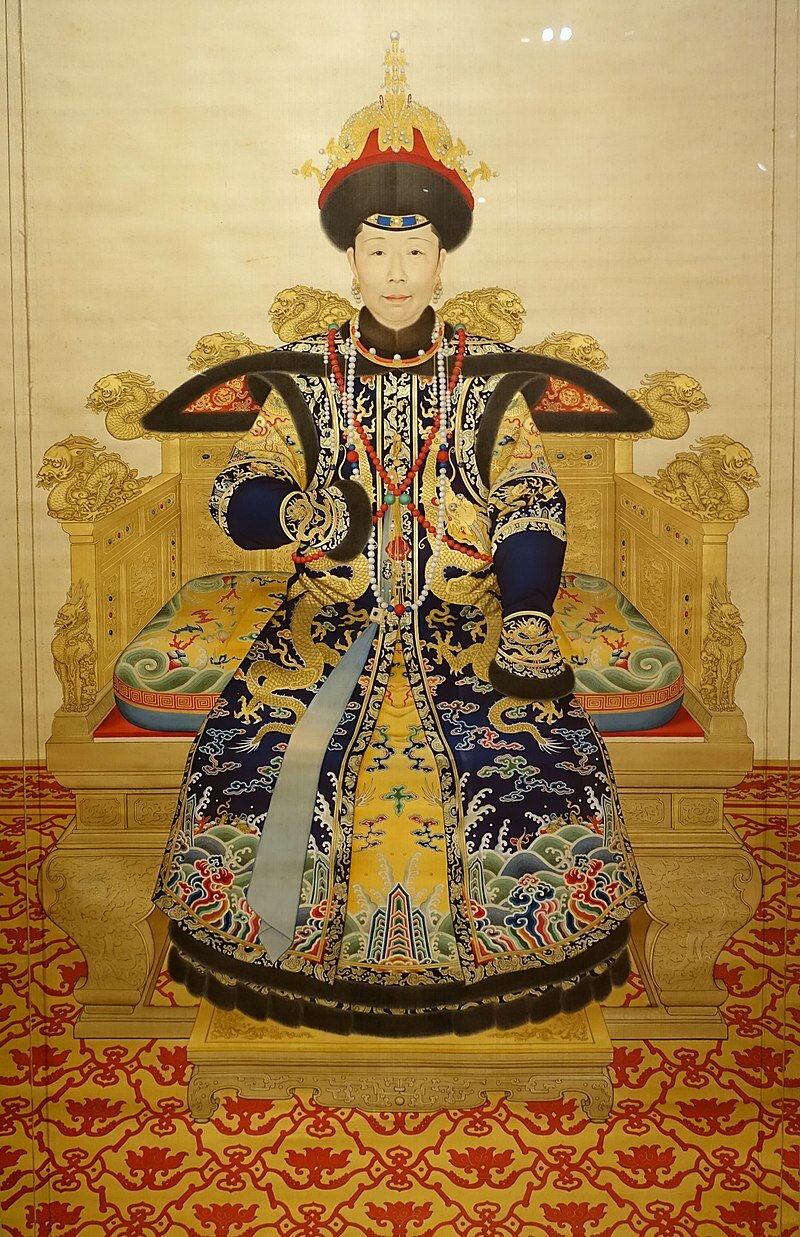
A classic metaphor to qualify Yin at this Qi Node is the image of a dowager empress acting as regent for her young son. She has been ruling things for several years and her power is absolute (Qi Node 22: Winter Solstice), but the young emperor is getting older and it will not be much longer before she will have to cede the throne to her son. She is still very much in control of her surroundings, but she too is getting older and the knowledge that she will not be able to remain in her post forever is now undeniable.
This narrative helps us to understand the movement of Yin and Yang during this time of the year where Yin is still the dominant force, and its ability to shape everything in our environments is just like the powerful Empress Regent. Yang is young, just reborn at the height of the Empress’s power during solstice and is growing toward self-awareness every day. Yang is still vulnerable though and easily misdirected. It has little of its own identity and relies almost entirely on the nurturing depth of Yin to keep it safe. Yet despite this dependence, the Empress Regent Yin feels the drain of constantly nourishing her burgeoning young Emperor Yang more than she did in the past. Her resources are beginning to wane, and it is time to prepare for transition.
Experiencing 小寒 Xiǎohán
Often people start to inhabit an emotional space called the “Winter Blues” during this time of the year. It now even has a loose diagnosis called SAD or seasonal affective disorder and has been biomedically linked to reduced exposure to sunlight and lower levels of Vitamin D. In response to this biomedical explanation, there has been a proliferation of desktop lamps that mimic sunlight and an increase in supplements of Vitamin D to help “counteract” the effects of the season. Interestingly, even in more equatorial parts of the world where the variance in daily sunlight hours is much smaller than in more polar regions, many people still report feeling more melancholic, less-motivated, and nostalgic or regretful. Our modern desire to avoid these types of feelings has motivated researchers and product manufacturers to create tools to help us minimize these emotions and continually reorient ourselves toward activity and ebullience.
Why we are so driven as modern people to skirt any association with non-exuberant emotion is a much longer conversation of Western (read modern) people’s negative relationship with Yin stuff and the celebration, and even worship, of Yang stuff for thousands of years. For now, let me say that the movement toward inactivity, slower days, longer hours sleeping, deep reflection, a want to apologize for past transgressions, and a sense that there is a deep yawning void “out there” is completely normal and appropriate. It is the nature of Yin to stretch out endlessly in front of us during this time of the year, and as we stand on the precipice of that enormity, it can make us feel small, insignificant, and utterly without value in the great scheme of things. The beauty of looking at the movement of life through the various qi nodes and the seasons is that even in the face of Yin’s disconcerting profundity, we know that its overwhelm is temporary. It is a glimpse at what our, and many other’s, reality is made from and stitched with, but it is not an end in-and-of-itself. In fact, it is this very complexity that creates the nursery for Yang, for activity, for analysis, for execution of tasks and plans. So, sit with your reminiscence. Spend time with your feelings of inadequacy. Embrace your lack of motivation to do big things and make the things you do smaller. Take the experience of your past and the pasts of other people and begin the soft stages of imagining what the next year could be. Weave regret into the fabric of who you are so that you can rely on what it has taught you as you spin the cloth of a coming new year.
Conduct During the 23rd Qi Node
Historically, many Chinese people used this and the next qi node to begin cleaning the interior of their homes in preparation for the socialization of Spring. They spent time indoors and eschewed many social engagements (often because in Northern China it was literally too cold and snow-covered to go outside and travel anywhere), eating foods that had been long-cooked and then reheated or even eaten cold when the dish suited it.
For contemporary people, 小寒 Xiǎohán is an opportunity to think about the coming year. To take it easy and brew cups of coffee or tea to drink as you spend time with yourself or your immediate family and avoid overextending yourself in work, tasks at home, or social obligations. The time for revelry is coming in about a month, but it’s not here yet. Creative efforts should be limited to planning stages and brainstorming, but real creation, especially of anything new, should be tabled until later in Spring. Exercise should be slow and minimal, focusing on stretching, shaking, tapping, and simple calisthenics. Definitely no marathon runs or intense mountain hikes, and minimize your sweating above all else. That kind of vigorous activity demands that Yang qi get up from its nest and rise to the surface to provide the necessary energy and force to get those tasks done, and it is far too young and fragile to have such demands made of it. Yang will respond to your call (you are still alive of course), but the cost to its available resources later in the year will be greater and could reduce the amount of available Yang over the course of your life. It is much better to wait and sync those vigorous types of activities with the right seasons.
Take your time. Take your rest. Appreciate the constantly changing nature of your environment. After all, experience is the point of embodiment.
Qi Node 22: Winter Solstice
The grandeur of Yin is on display during the longest night of the year. Learn more about what this point in the annual Yin Yang Cycle means for you.

Seeing The Qi All Around Us
The movement of qi in the environment is an endless and inevitable process. Yin and Yang are constantly interacting with one another in the smallest of circumstances as well as on a cosmic level. Solstice days are great opportunities to look at the annual cycle when it has more clear definition. That is, Winter and Summer solstice have visible and palpable qualities that virtually any human being can see or experience making it easier to understand what all this discussion of qi movement is really getting at.
The Peak of Yin
Yin is one side of the Yin Yang movement that is represented by various related qualities: Darkness, moisture, cool and cold temperatures, substance, form, heaviness, history, blood, ancestry, rumination, nostalgia. Yin is the definition of substance and it transcends the boundaries of what we think of us the world around us and connects all the substantive material of the universe. Yin qi is profoundly complex and because of that depth, it is intrinsically mysterious. Even if you could stare at it endlessly, analyze it and take it apart, Yin qi would always seem entirely familiar and simultaneously out-of-reach. Yin and Yang both ebb and flow at various times in the year and Winter Solstice is the time when the Yin qi has gathered and matured to fullest self. It is now a powerful feminine force that is both nurturing and demanding.
Winter Solstice marks the longest night and shortest day of the year. In many parts of the world the temperatures are cold and the ground is covered in snow. Even if the weather does not make it as easy to see the strength of Yin where you live, rest assured that the forces at work in our environment are much more potent than the temperature of the air or soil. Even in warm or tropical climates, the qi of the Winter is more retrospective and reserved, demanding that we eat differently, think differently and conduct ourselves differently than we do in the Summer.
Your Food Should Be Warm and Slow-Cooked
Because there is less Yang Qi available in the Winter generally, but especially around Solstice, your meals should be prepared in a way that deeply extracts their stored flavors and natures. Soups, braises, slow-roasts, and simmering are all great ways to use cooking to dig into what is hidden deep, making it available to nourish your body. Season your meats and vegetables with mild, warm spices like cumin, cinnamon, and nutmeg. Add some ginger and garlic to your sautee bases or in with your roasted vegetables. Take advantage of the squashes still stored from the end of the summer like Delicata, Kabocha, and Acorn. Drink a slightly salty broth with your meals or make a whole soup several times per week. This moisture helps to keep your digestion running smoothly. Avoid overeating as much as you can. No raw foods, smoothies, or salads this time of year.
Your Conduct Is Restrained
The enormity of Yin at the time of Solstice permeates our environs. People feel nostalgic or homesick, we yearn for connections with our friends and families, we are more oriented to naps and lazy days. These feels and inclinations are right and appropriate at this time of year. Yin gives us the opportunity to nourish ourselves from its depths — the same place that our lineage and memory come from. Even emotions that our Western culture categorizes as negative ones like sadness and regret are appropriate this time of year. Yin in its fullness makes it easier for us to reflect on the past and to glean wisdom from our actions both good and bad.
Significantly, the time around Winter Solstice is not the time of the year to start new projects, nor the time of the year to increase your marathon training regimen. It is a time for soft and mild activity that does not cause a person to sweat, for stretching and breathing. It is a time to imagine the possibilities for the coming year and to slowly organize your thoughts and goals. It is not time to plan exactly, just the time to wonder and hope and imagine. Let your mind be carried into the myriad variations of your life, your family, and your work.
Treating every month of the year as if it were July is like driving your car with your foot pressed hard on the gas. You can do it, but your fuel will not last and in many contexts, your driving will be dangerous. You can keep doing everything you do in the summer all through the winter but it costs more. You will require your diminished yang qi to rouse itself from its hibernation and to flare bright and strong for you to get things done the way you want. It will respond to your call but for how long and to what degree? Are you always fighting fatigue, drinking cups of coffee or cans of redbull? Is your hair thinner than you’d like? Your metabolism slower? your bowels less reliable? These and many more can all be signs of your yang qi being overextended and your body’s lack of yin nourishment. If we do what we’ve always done, we will get what we’ve always got. Can you begin to reorganize your life to allow for more replenishment? For more introspection? How can you take steps to ease the demands you place on your body? It can start with something as small as drinking tea while starting out your front window, thinking about the last time you spent with nothing on your mind.
Qi Node 21: Greater Snow Dàxuě 大雪
Qi Node 21 Greater Snow is a time of visions and magic. Our inner yang sees strange images in the Greater Yin dominating the environment.
Yin Has Matured
Throughout the course of Fall and early Winter Yin qi has been growing and expanding, taking over the seasonal tasks and encouraging an editing and reflection on the work of Yang and the Summer.
The Peak of Yin
Yin is one side of the Yin Yang movement that is represented by various related qualities: Darkness, moisture, cool and cold temperatures, substance, form, heaviness, history, blood, ancestry, rumination, nostalgia. Yin is the definition of substance and it transcends the boundaries of what we think of us the world around us and connects all the substantive material of the universe. Yin qi is profoundly complex and because of that depth, it is intrinsically mysterious. Even if you could stare at it endlessly, analyze it and take it apart, Yin qi would always seem entirely familiar and simultaneously out-of-reach. Yin and Yang both ebb and flow at various times in the year and Winter Solstice is the time when the Yin qi has gathered and matured to fullest self. It is now a powerful feminine force that is both nurturing and demanding.
Winter Solstice marks the longest night and shortest day of the year. In many parts of the world the temperatures are cold and the ground is covered in snow. Even if the weather does not make it as easy to see the strength of Yin where you live, rest assured that the forces at work in our environment are much more potent than the temperature of the air or soil. Even in warm or tropical climates, the qi of the Winter is more retrospective and reserved, demanding that we eat differently, think differently and conduct ourselves differently than we do in the Summer.
Your Food Should Be Warm and Slow-Cooked
Because there is less Yang Qi available in the Winter generally, but especially around Solstice, your meals should be prepared in a way that deeply extracts their stored flavors and natures. Soups, braises, slow-roasts, and simmering are all great ways to use cooking to dig into what is hidden deep, making it available to nourish your body. Season your meats and vegetables with mild, warm spices like cumin, cinnamon, and nutmeg. Add some ginger and garlic to your sautee bases or in with your roasted vegetables. Take advantage of the squashes still stored from the end of the summer like Delicata, Kabocha, and Acorn. Drink a slightly salty broth with your meals or make a whole soup several times per week. This moisture helps to keep your digestion running smoothly. Avoid overeating as much as you can. No raw foods, smoothies, or salads this time of year.
Your Conduct Is Restrained
The enormity of Yin at the time of Solstice permeates our environs. People feel nostalgic or homesick, we yearn for connections with our friends and families, we are more oriented to naps and lazy days. These feels and inclinations are right and appropriate at this time of year. Yin gives us the opportunity to nourish ourselves from its depths — the same place that our lineage and memory come from. Even emotions that our Western culture categorizes as negative ones like sadness and regret are appropriate this time of year. Yin in its fullness makes it easier for us to reflect on the past and to glean wisdom from our actions both good and bad.
Significantly, the time around Winter Solstice is not the time of the year to start new projects, nor the time of the year to increase your marathon training regimen. It is a time for soft and mild activity that does not cause a person to sweat, for stretching and breathing. It is a time to imagine the possibilities for the coming year and to slowly organize your thoughts and goals. It is not time to plan exactly, just the time to wonder and hope and imagine. Let your mind be carried into the myriad variations of your life, your family, and your work.
Treating every month of the year as if it were July is like driving your car with your foot pressed hard on the gas. You can do it, but your fuel will not last and in many contexts, your driving will be dangerous. You can keep doing everything you do in the summer all through the winter but it costs more. You will require your diminished yang qi to rouse itself from its hibernation and to flare bright and strong for you to get things done the way you want. It will respond to your call but for how long and to what degree? Are you always fighting fatigue, drinking cups of coffee or cans of redbull? Is your hair thinner than you’d like? Your metabolism slower? your bowels less reliable? These and many more can all be signs of your yang qi being overextended and your body’s lack of yin nourishment. If we do what we’ve always done, we will get what we’ve always got. Can you begin to reorganize your life to allow for more replenishment? For more introspection? How can you take steps to ease the demands you place on your body? It can start with something as small as drinking tea while starting out your front window, thinking about the last time you spent with nothing on your mind.