
Qi Node 13: 立秋 Lìqiū (Autumn Begins)
As autumn quietly begins, Lìqiū marks the rise of Yin and the first inward turn of the year. This essay explores the subtle wisdom of seasonal restraint, the risks of lingering summer heat, and how to align with the cycle through reflection, refinement, and gentle shifts in daily conduct.
The Quiet Arrival of Something New

Lìqiū 立秋, which means Autumn Begins, arrives in early August as the first of Autumn's six Qi Nodes. The name sits oddly against the weather, since early August is often the hottest stretch of the year and nothing in the afternoon suggests a change of season. The turn Lìqiū marks shows up in the light before it shows up in the heat. Days have been shortening since the Summer solstice in late June, and by early August the loss is noticeable at both ends, a later sunrise and an earlier dusk. The sun sits lower, the evening light turns more golden, and dew collects in the mornings where a month ago there was none. Late summer crops come in at their peak all at once, tomatoes, corn, and stone fruit. The heat still rules the day, and beneath it the year has started to turn.
The Qi Node series treats the year as one continuous cycle rather than four separate seasons, and each of the 24 nodes marks a stage in the movement between Yīn 陰 and Yáng 陽. Lìqiū is a hinge. Through the whole first half of the year, from deep Winter to the height of Summer, Yáng has been rising and then ruling. Lìqiū is the point where that direction reverses and Yīn, the cool, inward, consolidating aspect, begins to return. We have just passed Dàshǔ 大暑, Major Heat, the hottest node of the year, and Yáng still dominates everything the senses report. At Lìqiū the direction reverses first, and the degree follows over the weeks ahead.
Metal, the Lung, and the Turn Toward Autumn
Autumn belongs to the Metal phase, Jīn 金, in the Five Phases system. Where Fire, the phase of Summer, moved upward and outward, Metal moves inward and downward. Its qualities are contraction, refinement, and boundary. Metal gives a thing its edge and its structure, and across the year it is the phase that gathers the expansiveness of Summer back into a smaller, denser form. The tradition's image for it is the harvest, when the growth of the warm months is cut, sorted, and stored, and the rest is let go.
In Chinese medicine, Metal governs the Lung and its paired organ, the Large Intestine. The Lung carries a wider role than the biomedical lungs. It governs qì 氣 and breathing, it controls the skin and the body's surface, and it manages the defensive qì (wèi qì 衛氣) that guards the boundary between the body and the outside air. The Lung is also the organ most exposed to the quality of the air itself, which is why Autumn, the season when the air begins to dry, asks the most of it. The emotion associated with Metal and the Lung is grief, and the capacity the phase cultivates is the ability to let go of what the year no longer needs.
This node carries a specific clinical concern, and it is the reason the classics single it out. The heat of Summer, especially the humid heat of the weeks around Major Heat, can leave a residue in the body, a lingering warmth and dampness that was never fully cleared. As Autumn brings drier air, that retained heat meets the new dryness, and the combination is hard to resolve. It tends to produce mixed patterns that cross several systems at once: a dry cough that will not settle, dry or irritated skin, constipation, and a low background agitation with no obvious cause. Damp-heat held over from Summer and dryness arriving with Autumn pull in opposite directions, which is what makes these presentations slow to clear.
Biomedicine describes the same window from another angle. Early August still carries a full heat load, with the cardiovascular and fluid demands that come with it, and it sits at the approach of late-summer allergy season in much of the country, as ragweed and mold spores begin to rise. The respiratory tract and the skin are the body's interface with all of this, the same boundary the Lung governs in Chinese medicine. As humidity starts to fall later in the season, the mucous membranes of the airways dry out, which is part of why coughs and skin complaints become more common heading into Autumn.
What the Season Asks of Us
Lìqiū asks for the first, gentle turn inward after the outward months of Summer. The work here is small, and the timing matters, because the heat is still here, and shifting into full Autumn behavior while it is ninety degrees outside helps no one. Most of what the node asks is to finish clearing the heat of Summer before the dryness of Autumn arrives to complicate it. A person who has been running hot, sleeping poorly, and carrying the accumulated load of a long Summer has a short window now to cool and settle the system while cooling is still the right instruction.
Alongside that, Lìqiū is the moment to begin easing down from Summer's pace. The outward push of the warm months, the long social evenings and the packed weekends, can continue by habit well past the point where the season supports it, and now is when to start reining it in. The node is also the start of the Metal work of consolidation. Summer produces a great deal, in a garden and in a life, and not all of it is worth carrying forward. Autumn is the season for sorting what was grown, keeping what has value, and setting the rest down, and that sorting starts now. The grief that Metal carries belongs to this. Letting go of something that mattered, even a habit or a plan, holds a small loss in it, and the season makes room for that.
Living with Lìqiū
The recommendations below carry through the Qi Node series, with the fourth adjusted to the organ of the season. Small, consistent adjustments across eating, moving, resting, and cultivating work better than an abrupt overhaul, and that holds especially at Lìqiū, where the turn is only beginning.
Eat with the season
The shift in eating is toward moisture, because as the air dries over the coming weeks, moistening foods help the airways and skin keep up. Cooked pears and apples are the easy example, both at their best now and both more moistening when stewed or baked with a little honey. Whole grains like rice and oats, cooked vegetables, and soups add moisture and sit more easily than raw food as the season turns. Because the heat has not broken, the change is gradual. Cooling foods like melon and cucumber still have a place on hot afternoons, and the move is to begin making cooked, moistening food the default. Go easy on what dries and heats the body, particularly heavy alcohol, fried food, and a steady excess of spicy dishes, which the Lung feels first as the air loses its humidity.
Move with the season
Movement follows the same gradual downshift. The timing from high Summer still holds while the heat does, so keep vigorous exercise to the cooler morning and evening hours and stay out of the midday sun. What starts to change at Lìqiū is intensity. The season stops rewarding the maximal outward push of June and July, and this is a good time to let the peak of the training year come down, favoring steady, sustainable movement over all-out effort. Walking suits the node well, especially at dawn or dusk when the air is coolest and increasingly carries the first edge of the turning season.
Rest with the season
Sleep begins to lengthen as the nights do, and the body will want a little more than it did in July. The classical guidance for Autumn, from the Sùwèn 素問, is to go to bed earlier while still rising early, which gathers the qì inward and matches the lengthening dark. Lìqiū is early for the full version of that, though the direction is right: begin protecting sleep, wind the evenings down a little sooner, and let the late Summer nights start to contract. A calmer, earlier evening also helps clear the residual heat this node is concerned with, since a nervous system that settles at night sheds accumulated heat more easily than one kept running late.
Tend your Lungs
This is the cultivation specific to Lìqiū, and the one that changes with each node. The Lung governs the boundary between the body and the air, and the season's work is to protect that boundary as the air begins to dry. Keep your own hydration up, and keep the air around you from getting too dry while indoor cooling runs. Because the Lung governs qì and the breath, slow breathing supports it directly, and a few minutes of long, even breaths in the cooler morning air does real work for the Lung and the nervous system together. The other half of tending the Lung now is the Metal work of letting go. Autumn is when the year starts setting things down, and doing the same in a life, reviewing what Summer built and releasing what is not worth carrying into the colder months, is what the season is actually asking for. It can be as small as ending one commitment that has run its course.
Lìqiū is the opening node of Autumn, and the heat it works around will break over the nodes ahead. Chǔshǔ 處暑, the End of Heat, comes next in late August, and Báilù 白露, White Dew, follows in early September, when the cooling already visible in the morning grass becomes the season's main feature. What you begin now, clearing the last of the Summer heat and starting the turn inward, is what carries into that cooler, drier stretch without the complications the classics warn about.

Qi Node 9: 芒種 Mángzhong (Grain Matures)
You’ve been conserving, planning, and preparing all year. Now it is time to DO!

Close-up image of grains of wheat on the grass stalk
The Season of Awakened Action
Mángzhǒng 芒種, the third of Summer's six Qi Nodes, arrives in early June. The name translates as "Grain in Beard" and refers to the moment when wheat and barley grains develop their awns, the fine bristles that mark the final stage before harvest. In the fields, the grains that had been filling quietly through Xiǎomǎn 小滿 are now nearly mature, and the agricultural work shifts from tending toward gathering. Farmers who have been maintaining the crop for weeks now move into the more urgent and physically demanding work of bringing it in.
The node sits between Xiǎomǎn and Xiàzhì 夏至, the Summer solstice, and its character reflects the position. Yáng qì is still climbing toward its peak, the days are still lengthening, and the heat is building reliably toward its annual high. Mángzhǒng carries more urgency than the earlier Summer nodes because the agricultural window is narrowing (grain that is not harvested in time will shatter or spoil) and because the body responds to longer days and higher temperatures with more available capacity for activity. The solstice is still two to three weeks away, which means the season has not yet reached the peak heat of Xiǎoshǔ and Dàshǔ in July, and the work done now happens under conditions the body can still sustain.
Fire at full volume, with Earth in the mix
Mángzhǒng belongs to the Fire phase, the phase that governs the whole of Summer, and the Heart remains the lead organ of the season. By this point in the calendar, the Fire is burning at sustained volume. The cardiovascular system is working harder to thermoregulate, sweating increases its draw on fluids and electrolytes, sleep shortens naturally, and the nervous system runs warmer. These are the same physiological shifts that began at Lìxià 立夏, now at higher intensity.
What distinguishes Mángzhǒng from the earlier Summer nodes is the presence of Earth. The grain-ripening imagery that gives the node its name belongs to Earth, the phase associated with the Spleen, digestion, and the transformation of food into usable substance. Classical commentary on this node observes that the heat of full Summer combined with the rising humidity of the rainy season produces the damp-heat conditions that place the heaviest load on the Spleen. In clinical terms, this shows up as bloating that tracks with humid weather, heaviness in the limbs, a foggy or sluggish quality of mind, and the sensation of being weighed down despite not having done particularly heavy work. The Chinese medical framing is that the damp conditions the Spleen has to contend with are also the conditions the Fire of Summer is generating in the body, and the two together compound each other.
What the season asks of us
Mángzhǒng is the node that most directly rewards action. The planning of Spring is complete, the steady development of early Summer has accumulated enough momentum to work with, and the projects that have been waiting for their moment generally have it now. The story that has been living in your head gets written, the difficult conversation gets scheduled, the deck gets built, the garden gets the second planting. The season supports sustained work across multiple fronts in a way that the quieter seasons do not.
The risk of the node is the mirror image of its gift. When the season supports action, the temptation to push past a reasonable pace is strong, and the cost of doing so compounds faster now than at Lìxià or Xiǎomǎn. The patients who arrive in late July and August with Summer-heat patterns (insomnia, irritability, exhaustion, inflammatory flares, digestive disruption) often trace the pattern back to three or four weeks of running hard in early-to-middle June without adequate recovery. Mángzhǒng is where the work of Summer is done, and it is also where the conditions for Summer burnout are established if the pace is not managed.
Emotional heat is also a genuine feature of this node. Irritability, impatience, and short tempers appear more readily in hot weather, and brief emotional releases can actually serve a clinical function by discharging accumulated heat. The pattern to watch for is the shift from occasional release to sustained churn. Anger that comes and passes is part of a working system. Anger that settles into a baseline state damages the Heart and sets up the deficiency patterns that follow in the later Summer and early Autumn.
Living with Mángzhong
Eat with the season
Build meals around foods that support digestion under damp-heat conditions. Barley, lentils, white beans, and black beans all have a draining quality that helps the body clear accumulated damp, and barley soup is one of the simplest and most season-appropriate meals you can make. Lightly cooked seasonal vegetables, cooked grains, and simple broths remain the steady base. Bitter greens continue to suit the season, and any of dandelion, arugula, endive, radicchio, or watercress work well. Mung beans and adzuki beans are the ingredients the traditional literature most directly recommends for this season, and they are worth using if you have them, but the functional work they do is available in a normal pantry.
Meal timing matters more at Mángzhǒng than at other times of year. A substantial breakfast, a reasonable midday meal, and a lighter evening meal fits the season's energetics better than the common pattern of skipping breakfast and eating a large dinner. The Spleen functions most strongly in the morning hours, and loading the day's heaviest meal into that window gives the digestion its best chance to handle the increased load. Green tea or chrysanthemum tea through the day supports digestion and helps clear damp-heat without the stimulant load of coffee; peppermint and hibiscus also work well as cooling summer teas. Continue pairing cooler and lighter Summer foods with warm cooked elements in the same meal, as discussed in the Xiǎomǎn post, and watch the cumulative cold load across the day.
Move with the season
Move consistently and keep the sessions well within what the heat allows. Mángzhǒng supports longer walks, swimming, cycling, tài jí, and the kind of sustained outdoor activity the season invites. The important adjustments are timing and recovery. Exercise in the cooler parts of the day, hydrate with attention to electrolytes as well as water, and build genuine rest days into the weekly pattern. Midday exertion in the heat of early June puts real strain on the cardiovascular system and depletes faster than recovery can keep up.
Stretching and mobility work earn their place at Mángzhǒng because damp-heat conditions tend to make the body feel stiff and heavy. Ten minutes of focused mobility in the morning often pays back more through the day than an additional thirty minutes of cardio would.
Rest with the season
Sleep tends to shorten further and become more fragmented at Mángzhǒng, and insomnia patterns often begin or worsen in this window. Keep the sleeping space genuinely cool, eat the last meal at least two to three hours before bed, limit alcohol in the evening, and despite the lingering light, hold bedtimes closer to the sun's schedule than to the clock's. Going to bed two hours after sunset rather than four hours after tends to protect sleep quality noticeably.
A midday rest of fifteen or twenty minutes remains a genuine clinical recommendation through Summer and is especially worthwhile at Mángzhǒng when the day's pace is higher. Deep breathing into the belly before sleep helps settle a nervous system that has been running warm, and ten minutes outside in the evening light, without screens, helps the body register the transition from day to night.
Tend your Heart
The cultivation work specific to Mángzhǒng is pacing the Fire. The season supports intense engagement and is also the node at which over-engagement produces the most predictable damage. Notice when you are saying yes to invitations you do not actually want, when afternoon irritability starts tracking with skipped meals, when your mind keeps racing after you lie down, or when small provocations produce disproportionate reactions. These are Heart signals, and they are worth taking seriously before they become patterns.
Occasional emotional release belongs to the season and is not a problem. A good argument that clears the air, a real cry, or a burst of frustration that passes within the hour all serve a clinical function by moving accumulated heat. The pattern to watch for is the shift from release to rumination. Anger that keeps looping, irritation that builds across days, and the sense of being constantly aggravated are signs that the Fire has tipped from warming to burning, and the response is more rest, more stillness, and more protected time alone.
Mángzhǒng is where much of the year's most meaningful work gets done, and it is also where the conditions for late-Summer depletion are established. The solstice is still ahead, and the major heat nodes of Xiǎoshǔ 小暑 and Dàshǔ 大暑 are weeks away. The patients who move through August and September well are usually the ones who committed to Mángzhǒng fully and who also protected their recovery while doing so.

Everyday Alchemy: The Power of Gentle Warming
As winter settles in, many bodies feel colder, stiffer, and more fatigued. Foot baths, moxa, and hot packs offer an easy way to restore warmth, improve circulation, support digestion, and make the season easier to move through.
Winter changes how the body functions in ways many people notice physically. Blood flow concentrates closer to the core, which often leaves the hands and feet colder. Muscles and connective tissue tighten more easily. Digestion tends to slow, and appetite shifts toward heavier foods. Sleep becomes more irregular for some people and deeper for others, shaped by shorter days and colder nights. These seasonal changes emerge from familiar physiological processes involving circulation, hormone signaling, and metabolism. Within Chinese medicine, cold is understood as something that influences how well the body moves, transforms, and generates warmth internally. Over time, persistent cooling can appear as joint pain, fatigue, digestive discomfort, frequent urination, or a baseline sense of chill that lingers even indoors.
Modern life encourages people to push through winter without much adjustment. Homes remain brightly lit after sunset, heating systems hold indoor temperatures steady, and work schedules rarely reflect seasonal changes. The body, however, responds continuously to light, temperature, and activity level whether or not routines acknowledge those influences. Gentle warming practices provide a practical way to support the body during months that naturally place more demand on circulation and heat production. They encourage blood flow, relax tissues that stay contracted in the cold, and support digestion at a time of year when metabolic activity tends to run lower.

Foot Baths
Foot baths are one of the simplest ways to introduce warmth into the body in a sustained way. Immersing the feet in hot water draws circulation downward and outward, improving warmth in the extremities while easing tension elsewhere. Many people notice that their shoulders relax, their breathing deepens, and their sense of restlessness decreases after a single session. This response reflects how closely circulation, muscle tone, and nervous system activity are linked.
A foot bath works best when treated as direct care for the body rather than a symbolic or decorative act. Ten to twenty minutes provides enough time for meaningful circulatory changes to occur. Water should feel genuinely hot without being painful. Wrapping the ankles and lower legs in a towel helps retain warmth and extend its effects. In the evening, this practice prepares the body for sleep by raising core temperature and then allowing it to fall gradually afterward. Many people find that they fall asleep more easily and wake less often during the night after making foot baths part of their winter routine.
Find a foot soaking tub/bowl/pot/bucket that is deep enough to get water up to your mid-calf. You can get a decent effect from a classic ankle-deep foot tub but a deeper tub will warm you more deeply and in less time. You might also want to keep the just boiled kettle near to your soaking area so you can add little bits of hot water to the tub to keep the temperature warm throughout the soak. If you’re getting super creative: towel insulators, sous-vide circulators, and even warming trays can help to keep your soak toasty for the whole duration.
Hot Packs
Hot packs, or electric heating pads, offer similar benefits through simpler means. Placed on the low back, abdomen, neck, or shoulders, they increase local blood flow and soften tissue that tends to remain contracted during colder months. Heat in these areas improves flexibility, reduces pain, and supports circulation to underlying organs. For people experiencing menstrual discomfort, digestive upset, or chronic back tension, daily use often produces visible improvement in comfort and function.
Warmth also engages the nervous system directly. Heat encourages relaxation in skeletal and smooth muscle, opens blood vessels, and shifts breathing into a slower rhythm. These changes reflect increased parasympathetic activity, which supports digestion, recovery, and sleep. As winter progresses and dryness, cold, and reduced sunlight accumulate, many people neglect how much their nervous systems are working to maintain balance. Heat therapy offers a simple way to ease that load.
Moxibustion
Moxibustion introduces warmth through combustion rather than water or electrical heat. It involves the burning of processed Artemisia argyi near the body, allowing heat and aromatic compounds from the plant to penetrate the tissues gradually. The warmth produced by moxa reaches more deeply than most external methods. Practitioners use it to warm muscles, joints, and specific areas associated with digestion, circulation, and reproductive health. This form of heat often reaches tissue that remains cool even when covered with blankets or hot packs.
In clinical settings, moxa is frequently used for digestive weakness, chronic pain, low energy, and gynecological concerns related to cold sensitivity. People who become ill easily in winter or feel persistently chilled tend to respond especially well. The warmth develops slowly and remains after treatment ends. Many patients describe a deep internal warmth that continues for hours, sometimes longer.
Moxa also influences breathing patterns and nervous system tone. Treatment often produces slower respiration, reduced muscle tension, and a sense of physical settling. Over time, repeated treatments can improve resilience for people whose systems feel depleted by chronic stress or illness. During winter, when immune systems are under greater strain and circulation works harder to maintain warmth, these effects offer meaningful physiological support.
The General Importance of Warmth
What foot baths, moxa, and hot packs share is their direct influence on circulation and tissue tone. Cold reduces movement in tissues and blood vessels. Warming restores pliability and flow. Over time, these changes affect how nutrients are delivered, how waste is cleared, and how energy is produced. Temperature quietly shapes every aspect of internal physiology. When the body stays chronically cool, systems slow. When warmth circulates efficiently, function improves.
These practices also invite a slower rhythm into daily life. They give the body a clear signal that it is allowed to rest. During winter, when many people carry a steady undercurrent of tension, these moments of sustained warmth help reset baseline tone. A basin on the floor, a warm cloth across the abdomen, the faint scent of moxa smoke in the room. These experiences engage the body through sensation and attention rather than instruction.
People who respond most strongly to warming therapies often describe themselves as tired without knowing why, cold even indoors, or uncomfortable in their bodies in ways that defy clear explanation. Their symptoms develop gradually. Circulation thins. Digestion weakens. Sleep loses depth. When warmth is introduced consistently, these patterns begin to unwind. Energy stabilizes, limbs feel warmer, discomfort becomes easier to manage, and rest becomes more accessible.
Winter requires practical adjustments even when daily life does not permit major changes in schedule or environment. Gentle warming therapies offer support without complexity. A foot bath before bed. A hot pack during evening reading. Warm beverages throughout the day. These small interventions accumulate steadily, and their effects deepen when they become part of routine rather than reserved for moments of discomfort.
The body reorganizes itself each winter as part of its annual cycle, and sometimes, particularly in cases of age or infirmity, that reorganization can be unfomfortable if we don’t take speicfic steps to shape it to our needs. Gentle warming practices influence that reorganization directly and help us to maintain movement where stagnation might otherwise develop. They preserve warmth where cold would accumulate quietly over months.
Warmth communicates with the body in a way no instruction can. It influences circulation, muscle tone, breathing, and sleep simultaneously. During winter, these small signals add up. Foot baths, moxa, and hot packs offer a steady form of care that fits naturally into the season. They support the body’s tendency toward conservation and restoration rather than fighting against it.
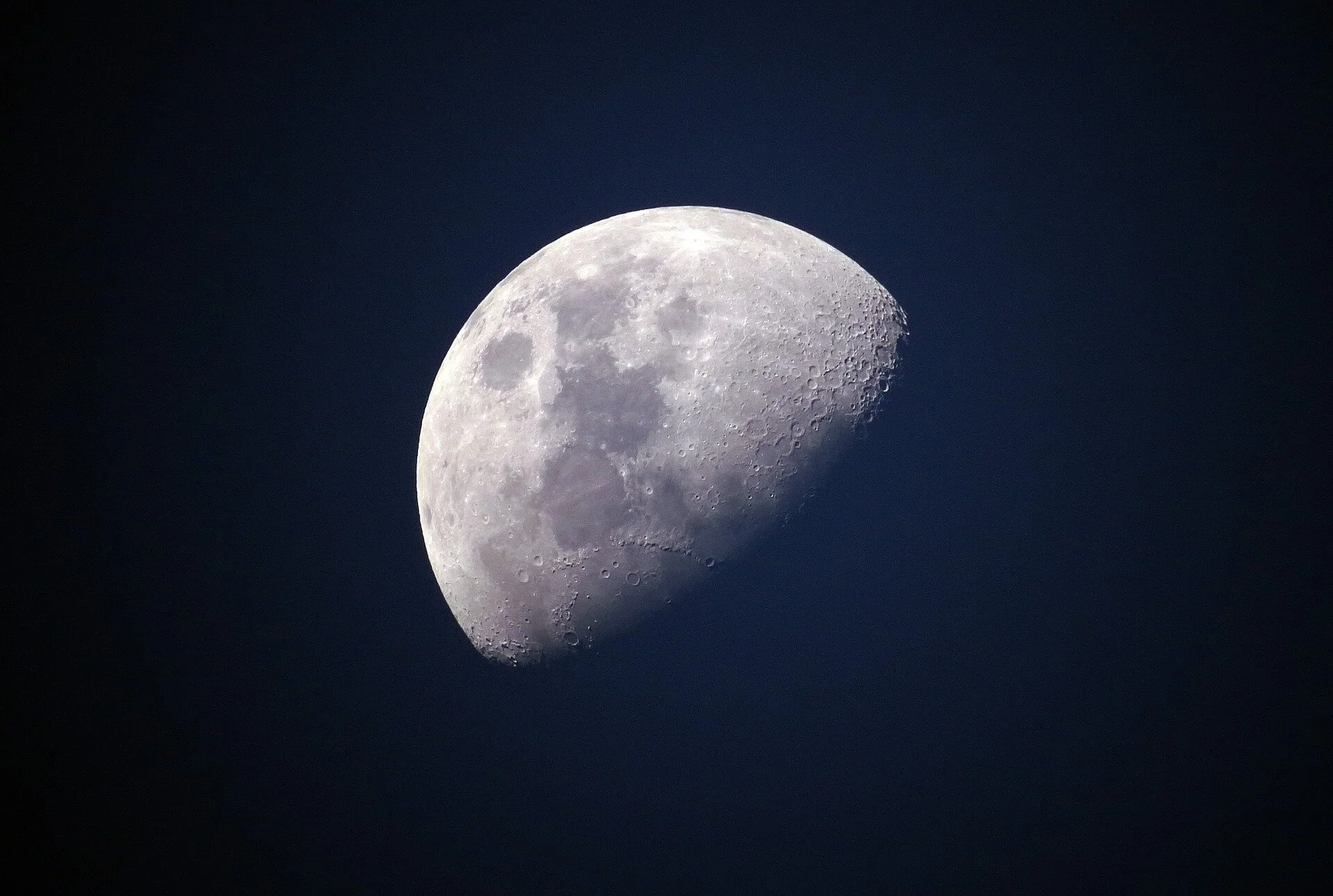
Qi Node 22: Winter Solstice
The grandeur of Yin is on display during the longest night of the year. Learn more about what this point in the annual Yin Yang Cycle means for you.

Seeing The Qi All Around Us
The movement of qi in the environment is an endless and inevitable process. Yin and Yang are constantly interacting with one another in the smallest of circumstances as well as on a cosmic level. Solstice days are great opportunities to look at the annual cycle when it has more clear definition. That is, Winter and Summer solstice have visible and palpable qualities that virtually any human being can see or experience making it easier to understand what all this discussion of qi movement is really getting at.
The Peak of Yin
Yin is one side of the Yin Yang movement that is represented by various related qualities: Darkness, moisture, cool and cold temperatures, substance, form, heaviness, history, blood, ancestry, rumination, nostalgia. Yin is the definition of substance and it transcends the boundaries of what we think of us the world around us and connects all the substantive material of the universe. Yin qi is profoundly complex and because of that depth, it is intrinsically mysterious. Even if you could stare at it endlessly, analyze it and take it apart, Yin qi would always seem entirely familiar and simultaneously out-of-reach. Yin and Yang both ebb and flow at various times in the year and Winter Solstice is the time when the Yin qi has gathered and matured to fullest self. It is now a powerful feminine force that is both nurturing and demanding.
Winter Solstice marks the longest night and shortest day of the year. In many parts of the world the temperatures are cold and the ground is covered in snow. Even if the weather does not make it as easy to see the strength of Yin where you live, rest assured that the forces at work in our environment are much more potent than the temperature of the air or soil. Even in warm or tropical climates, the qi of the Winter is more retrospective and reserved, demanding that we eat differently, think differently and conduct ourselves differently than we do in the Summer.
Your Food Should Be Warm and Slow-Cooked
Because there is less Yang Qi available in the Winter generally, but especially around Solstice, your meals should be prepared in a way that deeply extracts their stored flavors and natures. Soups, braises, slow-roasts, and simmering are all great ways to use cooking to dig into what is hidden deep, making it available to nourish your body. Season your meats and vegetables with mild, warm spices like cumin, cinnamon, and nutmeg. Add some ginger and garlic to your sautee bases or in with your roasted vegetables. Take advantage of the squashes still stored from the end of the summer like Delicata, Kabocha, and Acorn. Drink a slightly salty broth with your meals or make a whole soup several times per week. This moisture helps to keep your digestion running smoothly. Avoid overeating as much as you can. No raw foods, smoothies, or salads this time of year.
Your Conduct Is Restrained
The enormity of Yin at the time of Solstice permeates our environs. People feel nostalgic or homesick, we yearn for connections with our friends and families, we are more oriented to naps and lazy days. These feels and inclinations are right and appropriate at this time of year. Yin gives us the opportunity to nourish ourselves from its depths — the same place that our lineage and memory come from. Even emotions that our Western culture categorizes as negative ones like sadness and regret are appropriate this time of year. Yin in its fullness makes it easier for us to reflect on the past and to glean wisdom from our actions both good and bad.
Significantly, the time around Winter Solstice is not the time of the year to start new projects, nor the time of the year to increase your marathon training regimen. It is a time for soft and mild activity that does not cause a person to sweat, for stretching and breathing. It is a time to imagine the possibilities for the coming year and to slowly organize your thoughts and goals. It is not time to plan exactly, just the time to wonder and hope and imagine. Let your mind be carried into the myriad variations of your life, your family, and your work.
Treating every month of the year as if it were July is like driving your car with your foot pressed hard on the gas. You can do it, but your fuel will not last and in many contexts, your driving will be dangerous. You can keep doing everything you do in the summer all through the winter but it costs more. You will require your diminished yang qi to rouse itself from its hibernation and to flare bright and strong for you to get things done the way you want. It will respond to your call but for how long and to what degree? Are you always fighting fatigue, drinking cups of coffee or cans of redbull? Is your hair thinner than you’d like? Your metabolism slower? your bowels less reliable? These and many more can all be signs of your yang qi being overextended and your body’s lack of yin nourishment. If we do what we’ve always done, we will get what we’ve always got. Can you begin to reorganize your life to allow for more replenishment? For more introspection? How can you take steps to ease the demands you place on your body? It can start with something as small as drinking tea while starting out your front window, thinking about the last time you spent with nothing on your mind.
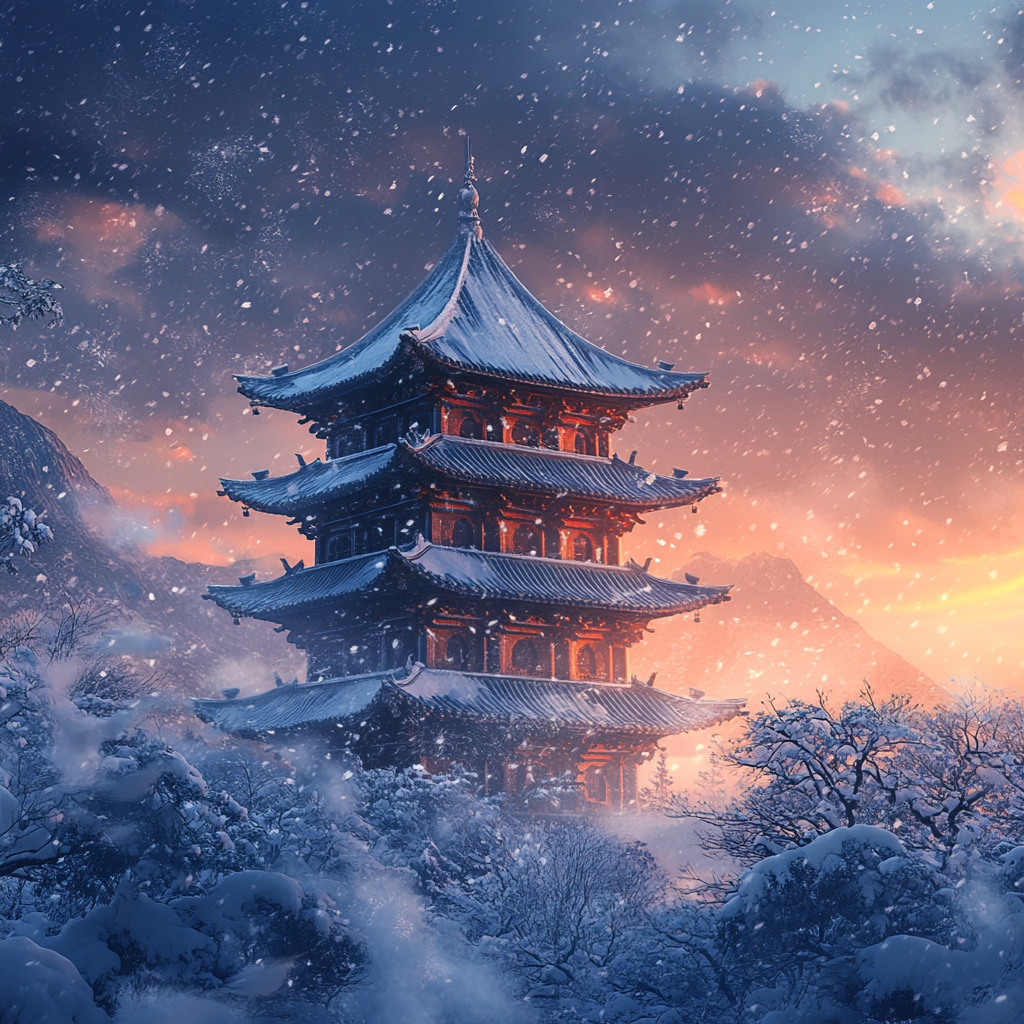
Qi Node 21: Greater Snow Dàxuě 大雪
Qi Node 21 Greater Snow is a time of visions and magic. Our inner yang sees strange images in the Greater Yin dominating the environment.
Yin Has Matured
Throughout the course of Fall and early Winter Yin qi has been growing and expanding, taking over the seasonal tasks and encouraging an editing and reflection on the work of Yang and the Summer.
The Peak of Yin
Yin is one side of the Yin Yang movement that is represented by various related qualities: Darkness, moisture, cool and cold temperatures, substance, form, heaviness, history, blood, ancestry, rumination, nostalgia. Yin is the definition of substance and it transcends the boundaries of what we think of us the world around us and connects all the substantive material of the universe. Yin qi is profoundly complex and because of that depth, it is intrinsically mysterious. Even if you could stare at it endlessly, analyze it and take it apart, Yin qi would always seem entirely familiar and simultaneously out-of-reach. Yin and Yang both ebb and flow at various times in the year and Winter Solstice is the time when the Yin qi has gathered and matured to fullest self. It is now a powerful feminine force that is both nurturing and demanding.
Winter Solstice marks the longest night and shortest day of the year. In many parts of the world the temperatures are cold and the ground is covered in snow. Even if the weather does not make it as easy to see the strength of Yin where you live, rest assured that the forces at work in our environment are much more potent than the temperature of the air or soil. Even in warm or tropical climates, the qi of the Winter is more retrospective and reserved, demanding that we eat differently, think differently and conduct ourselves differently than we do in the Summer.
Your Food Should Be Warm and Slow-Cooked
Because there is less Yang Qi available in the Winter generally, but especially around Solstice, your meals should be prepared in a way that deeply extracts their stored flavors and natures. Soups, braises, slow-roasts, and simmering are all great ways to use cooking to dig into what is hidden deep, making it available to nourish your body. Season your meats and vegetables with mild, warm spices like cumin, cinnamon, and nutmeg. Add some ginger and garlic to your sautee bases or in with your roasted vegetables. Take advantage of the squashes still stored from the end of the summer like Delicata, Kabocha, and Acorn. Drink a slightly salty broth with your meals or make a whole soup several times per week. This moisture helps to keep your digestion running smoothly. Avoid overeating as much as you can. No raw foods, smoothies, or salads this time of year.
Your Conduct Is Restrained
The enormity of Yin at the time of Solstice permeates our environs. People feel nostalgic or homesick, we yearn for connections with our friends and families, we are more oriented to naps and lazy days. These feels and inclinations are right and appropriate at this time of year. Yin gives us the opportunity to nourish ourselves from its depths — the same place that our lineage and memory come from. Even emotions that our Western culture categorizes as negative ones like sadness and regret are appropriate this time of year. Yin in its fullness makes it easier for us to reflect on the past and to glean wisdom from our actions both good and bad.
Significantly, the time around Winter Solstice is not the time of the year to start new projects, nor the time of the year to increase your marathon training regimen. It is a time for soft and mild activity that does not cause a person to sweat, for stretching and breathing. It is a time to imagine the possibilities for the coming year and to slowly organize your thoughts and goals. It is not time to plan exactly, just the time to wonder and hope and imagine. Let your mind be carried into the myriad variations of your life, your family, and your work.
Treating every month of the year as if it were July is like driving your car with your foot pressed hard on the gas. You can do it, but your fuel will not last and in many contexts, your driving will be dangerous. You can keep doing everything you do in the summer all through the winter but it costs more. You will require your diminished yang qi to rouse itself from its hibernation and to flare bright and strong for you to get things done the way you want. It will respond to your call but for how long and to what degree? Are you always fighting fatigue, drinking cups of coffee or cans of redbull? Is your hair thinner than you’d like? Your metabolism slower? your bowels less reliable? These and many more can all be signs of your yang qi being overextended and your body’s lack of yin nourishment. If we do what we’ve always done, we will get what we’ve always got. Can you begin to reorganize your life to allow for more replenishment? For more introspection? How can you take steps to ease the demands you place on your body? It can start with something as small as drinking tea while starting out your front window, thinking about the last time you spent with nothing on your mind.

Qi Node 20: 小雪 Xiǎoxuě (Lesser Snow)
Xiǎoxuě 小雪, “Lesser Snow,” marks Winter’s quiet commitment.
Snow may not yet fall, but the cold has settled. Stillness becomes structure. This is the time to refine, not to begin—nourish deeply, seal the body from wind, and allow the descent. Let what remains grow deeper, smaller, and more essential.
The name of this node carries restraint: Xiǎoxuě 小雪, “Lesser Snow.” That first character Xiǎo 小 is the same character we use for “little” or for “small” in English. So it’s not no snow and not heavy snow. It’s just a hint of snow or in some climates the suggestion of snow, basically just enough to tell you Winter is deepening, but not yet in full expression. This node marks a subtle uptick in the potency of Winter—a refinement in the season’s character rather than a dramatic turn.
Lesser Snow does not mean lesser importance. It means the cold has arrived in earnest, but its most severe manifestations are still to come. The weather bites, but does not yet bruise. The frost lingers, but the earth has not sealed. It is Winter’s quiet overture, the first real layering of stillness over the surface of the world.
The descent of yīn qì 陰氣 has settled into structure. The days are brief and the light is pale. The cold is not momentary anymore—it is defining. And with it comes the seasonal instruction: simplify further, quiet more deeply, trust the small and consistent patterns.
Snow in Potential, Not in Force
Like all seasonal changes, Xiǎoxuě 小雪 doesn’t bring Winter in one dramatic stroke. Instead the season arrives in stages, like breath against a window—barely visible, but unmistakably present. In most climates, snow doesn’t yet accumulate in this phase, and in some, it doesn’t fall at all. But its possibility is in the air. The world smells different. The wind has lost all softness.
The presence of snow in this node is more symbolic than literal. It represents the crystallization of qi. The contraction of moisture, the compression of movement, the beginning of form born from stillness. Even when there is no snow on the ground, we can feel its intent settling in. The grasses stiffen. The trees stop speaking. Water loses its eagerness to flow.
There’s a tension in this potential—a coiled stillness that hints at what’s to come. It’s a teaching moment, cosmologically speaking. We’re asked to understand the value of potential energy, not just the kinetic kind. This qi node encourages us to learn how to sit inside a moment that isn’t fully formed, and to draw nourishment from what hasn’t quite arrived.
This is an ideal time for observing without interpreting and for sensing patterns before they become explicit. Just as snow rests in the clouds before falling, this moment asks you to rest in awareness before action. It’s a kind of pause pregnant with meaning.
Embracing the Subtle Descent
By Xiǎoxuě 小雪, the descent of the season is no longer theory—it is embodied. But unlike the dramatic drop-offs of equinoxes or solstices, this descent moves like sediment through water—slow, consistent, undeniable. You may not even notice how much has changed until you pause and look around.
The most vital aspect of this qi node is learning how to meet the descent without resistance. There’s a cultural reflex, especially in Western life, to brace against slowing down. We try to sustain brightness long past the natural point of dimming. But Xiǎoxuě 小雪 offers a different kind of intelligence—the kind that teaches us to lean into the weight of the season instead of fighting it.
You may notice yourself longing for more time alone, or becoming less interested in social plans, noise, or fast-moving schedules. These are not signs of burnout. These are signs of alignment. Your system is responding to the deeper pull of yīn 陰.
The descent also brings a subtle reorganization of the emotional landscape. What once felt urgent no longer commands attention. Certain worries lose their teeth. Your internal focus narrows. This is not retreat in the negative sense—it is return. Return to what matters. Return to the inner hearth.
To embrace the descent is to stop asking for permission to slow down. It is to inhabit the season as it is, and to trust that what is pared down is not lost, but clarified.
This is the node that teaches you how to be with what remains—and how to let that be enough.
Aligning Conduct with Xiǎoxuě 小雪
Let your actions now become smaller but more rooted. This is the time to keep your systems warm, your days simple, and your inner fire steady—not stoked, but tended.
1. Honor the Dry Cold
As temperatures drop, so does ambient moisture. This is taxing for the Lungs, skin, and sinuses. Nourish your system with foods that moisten and warm—pear with honey, roasted squash, barley with lily bulb and dates. Add sesame, walnuts, and small amounts of warming herbs like ginger and cardamom.
A humidifier in the home, especially where you sleep, can ease the transition.
2. Practice Short Outdoor Contact
Let your body feel the cold, but briefly. A ten-minute walk wrapped in layers. A few breaths on the back porch before tea. Contact with the elements now reminds your system what season it’s in—so it can adjust more intelligently. But don’t linger. Cold is to be acknowledged, not absorbed.
3. Protect the Periphery
Cover your neck and lower back. Keep the feet warm at all times. Avoid direct wind exposure. At this stage, drafts are not neutral—they’re depleting. Keep yourself sealed, as the trees now are, as the seeds underground have always been.
Warmth now is your shield, not your indulgence.
4. Refine, Don’t Rearrange
No more life overhauls. No productivity sprints. Let go of reinvention. Instead, hone what already exists. Refine your rhythms, reinforce your rituals. Let your habits become the bones of your day. This is not the time to start something new. It is the time to stay with what is working.
5. Nourish from the Bones Out
Continue cooking with depth: broths, stews, porridges, braises. Use bone-in meats and root vegetables. Think rich but digestible. The Kidney system, which governs Winter, thrives on long, slow nourishment. Avoid raw food. Avoid icy drinks. Cook with time, and eat with attention.
Xiǎoxuě 小雪 is the most understated of the Winter nodes. But its wisdom is profound. It teaches that preparation is not always loud. That rest does not mean absence. That stillness is not stagnation.
Let this node guide you into the quieter center of Winter. Wrap yourself in rhythm. Choose warmth. Choose quiet. Choose the small, deliberate action over the dramatic shift.
Lesser Snow can remind you that subtle is not the opposite of powerful but is often its truest expression.

Qi Node 19: 立冬 Lìdōng (Winter Begins)
Lìdōng 立冬 marks the moment when Winter stands upright—cold, still, and clear.
The descent is no longer gradual. Big Yin is here. Let your body turn inward. Wrap up early. Sleep deeply. Cook slowly. What looks like quiet from the outside is becoming depth from within. The season asks for presence, not performance.
It happens quietly, but definitively. One morning you step outside, and the light has changed. The dampness in the air is no longer soft or fragrant—it bites. The earth, once pliable and generous, begins to firm beneath your feet. You can feel it in your bones. Lìdōng 立冬 has arrived.
This is the beginning of Winter—not just by calendar, but by qi. The character lì 立 means “to stand” or “to establish,” and dōng 冬 means “winter.” So Lìdōng 立冬 literally means "Winter stands." It is no longer forming. It is here.
In this phase, the world doesn’t just get cold—it begins to embody Cold as a force. This is not a temporary chill. This is a new energetic dominance. Yīn qì 陰氣 is no longer growing or gathering. It now governs. This is the start of dà yīn 大陰—Big Yin—and the world is leaning into its long descent.
From Damp to Cold, From Metal to Water
The previous node, Shuāngjiàng 霜降, lingered in Earth’s holding pattern—dense air, early frost, soft ground soaked with Autumn’s letting go. But here, with Lìdōng 立冬, the qi shifts definitively from damp to cold, from yielding to firm, from Earth to Water.
What was heavy with moisture is now sharp with chill. The moisture doesn’t cling anymore—it recedes, stiffens, crystallizes. The fog no longer wraps gently around your ankles. Now it bites at the skin, whispering of ice. The world is paring down, not just shedding, but locking in. The wet decay of fallen leaves gives way to hardening soil. You may find yourself surprised at how suddenly it happens—how quickly the earth begins to resist your steps, how suddenly the plants go from golden to gray.
The Water phase begins here, not as element but as worldview. Water doesn’t push. It carves. It seeps. It endures. In the cosmological sequence, Water follows Metal. The clarity and refinement of Autumn now give way to depth, to stillness, to duration. There is nothing hasty about Water. And there is nothing quick about Winter. We are being called into the long game now.
Enjoy the Cold While It Is Young
Before the deep freeze settles in, there is a brief and often overlooked pleasure in early Winter’s clarity. The cold is not yet brutal. It doesn’t yet weigh down the spirit or stiffen the joints. It enlivens. You may find that the first truly cold morning of the season wakes you up in a way nothing else can. The air feels honest. The sky, newly scrubbed of humidity, offers sharp edges and long, clean light.
This early phase of Winter holds a kind of promise—a reminder that stillness can also be invigorating. There’s something deeply satisfying about bundling up for a brisk walk and returning to a warm room, a pot on the stove, the contrast between cold skin and inner warmth. It’s a moment of sensual awareness that doesn’t come in the seasons of abundance or even in the cozy depths of January. This is clarity with gentleness. A sharpness that doesn’t yet cut.
So walk in it. Feel it. Let it speak to your skin and your breath. Just don’t stay long. Lìdōng 立冬 is not about challenging the cold, but greeting it. You’re not meant to brave the elements. You’re meant to acknowledge them. Nod at the gate before going back inside.
Aligning Conduct with Lìdōng 立冬
This is the season to start acting like Winter is here, even if it doesn’t quite look that way yet. Begin reinforcing your internal systems. Your practices now should preserve, protect, and fortify—not push, extend, or challenge.
1. Keep Warm and Contained
Layer your clothing. Wrap your neck. Cover your lower back. These are not just comfort choices—they are energetic boundaries. Wind and cold are among the most invasive of the six evils in Chinese medicine, and this is the time of year they slip in when we’re not paying attention.
Even brief exposure to cold wind can throw off the system now. Avoid bare feet on cold floors. Wear socks indoors. Bundle early.
2. Reinforce the Evening Ritual
The quiet of Winter begins with early nights. Darkness falls sooner and should be welcomed, not fought. Begin your winding down process before the sun disappears if you can. Avoid screen time at night—particularly in the hour before bed. Let your eyes and nervous system recalibrate.
Now is the time to get excited about sleep. Not just as rest, but as restoration. Dreaming becomes part of your medicine now.
3. Eat Richer, Deeper
This is when the slow-cooker takes center stage. Cook with bones, roots, and warming spices. Focus on dishes that take time—soups, stews, porridges. Let the kitchen be a place of low, consistent heat. No raw foods now. No cold drinks. And minimize sugar, which can deplete the Kidneys, the core organ system associated with Winter.
Begin to include more seaweeds, dark leafy greens, black sesame, walnuts, and mushrooms—foods that nourish jīng 精 and support depth.
4. Start Your Winter Reading
Let your mind follow the season. It’s time to get back into the long books, the slow podcasts, the hobbies that don’t reward speed. Knit something. Paint something. Write something no one will read. Sit with silence.
Winter favors introspection. Let your inner world expand now that the outer one is narrowing.
5. Reduce Sweating and Intensity
It’s time to retire intense cardio, hot yoga, and anything that produces heavy perspiration. Sweating now leads to fluid depletion and weakens your ability to retain heat. Movement should be internal and conserving—tai chi, qi gong, gentle strength training, restorative yoga, walking.
Keep your body active, but never to the point of exhaustion.
There is a confidence to Lìdōng 立冬. It does not beg for attention. It simply arrives. There’s a stillness that isn’t sleepy but poised—like a mountain at dawn. That’s what this node offers: the chance to begin deepening, to prepare without panic, and to enjoy the clarity of a season that makes no apologies for what it is.
Let the cold awaken you. Let the dark slow you. Let the season shape your conduct with its quiet instructions.
Winter is not on the horizon. It is here. Stand with it.

The Cosmic Cycle: Yin and Yang
In a palace shaped by seasons, Yang rises from a spark to a blazing emperor before fading into shadow. Yin, steady and wise, expands through stillness and reflection. This tale of cosmic succession weaves through joy, unraveling, and return—an eternal dance of power, presence, and the rhythm of time.
Years ago I listened to a recorded lecture from one of my favorite Chinese cosmological teachers, Liu Ming, where he off-handedly talked about Yang as an emperor of China. That is, he had crafted a neat metaphor for the movement of qi through the lens of Chinese imperial intrigue. He never fully told the story, but you’d get little snippets here and there that gave me a little taste for this remarkably vivid tale of cosmic enfolding. So, I decided to finally write it out. Below is a storybook telling of the endless cycle of Yin and Yang. Thanks for the inspiration Ming, you are deeply missed.
A Tale of Yin and Yang Through the Seasons
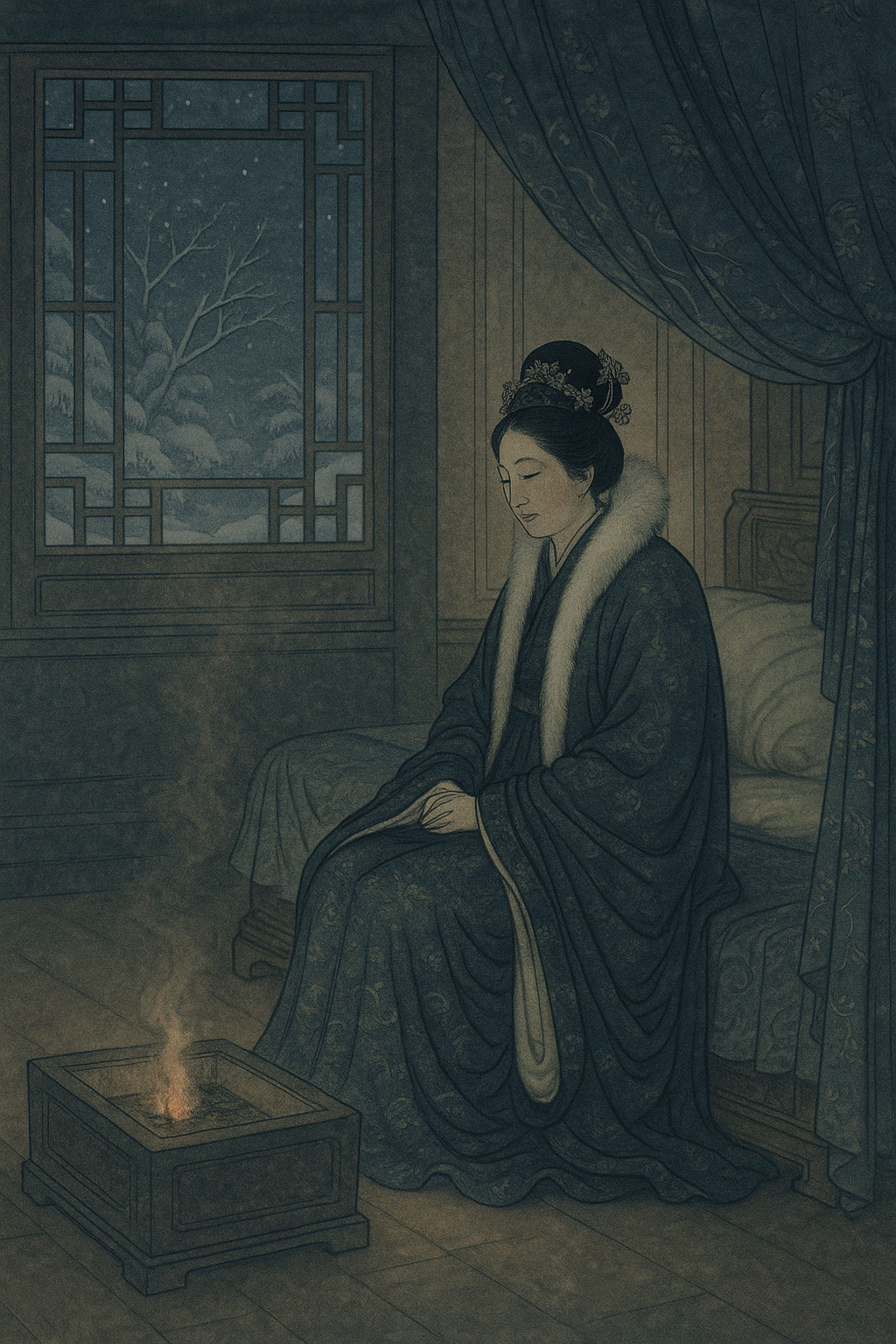
At the waning edge of winter, atop frozen soil and beside deep snow drifts, the palace lies quiet. In its dim corridors, Empress Yin rules through the pull of her intrinsic gravity. She is composed, ageless, elegant. She wears robes the color of smoke and old bone, and she walks with the authority of someone who has seen many cycles. The court respects her deeply, though few understand the depth of her wisdom. She watches the land with calm eyes, aware that her time is nearing its turn.
Beneath her care, a subtle fire barely glows in the brazier of Heaven's hearth. From a glowing ember, a child is born. He is small, restless, always moving. This is Yang, a prince of heaven, but still just a seed of what he will become. She wraps him in thick robes, feeds him warm broths, keeps him close. She sees in him not just potential, but inevitability. The future will be his. But not yet.
As the calendar turns toward spring (Lìchūn 立春 ), the air still holds winter's bite. Yang, the young prince, plays carefully in cold courtyards, his laughter muffled by woolen layers. He presses his hands to the frost-covered windows, watches birds stir in bare branches, and kicks up dry leaves still left from autumn. His breath fogs the air. He is not ready to bloom, but he is watching, waiting, and learning the rhythm of the light.
Empress Yin keeps him close to the hearth. She feeds him rich congee, wraps his small hands in silk, and murmurs old stories about the seasons to come. She is still in full command, her court steady and dignified, her presence the axis upon which the world turns.
As the days grow longer, the garden soil begins to warm. Buds swell, and small green shoots push through cracks in stone paths (Jīngzhé 惊蛰). Yang grows stronger, his voice louder. He sheds his layers more eagerly now, dashing barefoot in moments, though still called back to warmth when the wind rises. His laughter returns to the courtyards with a new brightness, his curiosity sharpening as he questions the guards, the gardeners, and the scholars who pass through the halls.
By the time of Spring Equinox (Chūnfēn 春分), Yang stands taller. His movements are confident, his energy infectious. He begins to take small roles in court life, bringing light and warmth with him. The empire stirs under his presence. Though Yin still governs, her posture has softened and her courtiers begin to include the young Yang in their discussions. She watches his rise not with worry, but with knowing.


As the weather reflects a real warmth the people associate with Spring (Gǔyǔ 谷雨), Yang is now a young man. The trees explode with flowers, anticipating the fruit that will grow and spring crops push through soil with excitement. Yang begins to speak in council, not just to learn but to lead. His clarity, his vision, his energy inspire the court, and people feel more alive around him. Empress Yin has grown more grandmotherly—her presence softer now, more distant. She no longer walks far from her chambers, but her gaze remains sharp. She watches as her grandson comes into his power and smiles softly to herself.
As Summer begins (Lìxià 立夏), Yang is crowned Emperor, and he sits upon the throne of Heaven. He is golden and tall -- his robes shimmering like sunlight on water. Under his rule, the empire blooms and fields overflow; rivers rush. Trade, laughter, and labor all dance in the heat of his glory. He builds bridges, leads hunts, reforms old laws. Artists and philosophers flourish under his protection. Festivals stretch into the night, and the common people sing his praises in poems and songs. He is not only powerful, but admired—a symbol of vitality, purpose, and light.
Empress Yin no longer appears in court. Her strength has waned. In her final days, she watches the gardens from her window, her hands folded, her face serene. Just before solstice, she slips away without fanfare, returning to the Earth she once ruled.
At the peak of Summer (Xiàzhì 夏至), Yang reaches his zenith. His courtiers sing his praises in endless scrolls. The empire is dazzling. The land pulses with vitality. Yang stands at the center of it all—radiant, resplendent, unstoppable.
But something in him has begun to flicker. At night, he dreams of cold winds and quiet halls, waking with unease. He notices new lines at his temples and a tremor in his fingers after speeches. He begins to wonder—who will come next? Will they honor what he has built, or sweep it away?

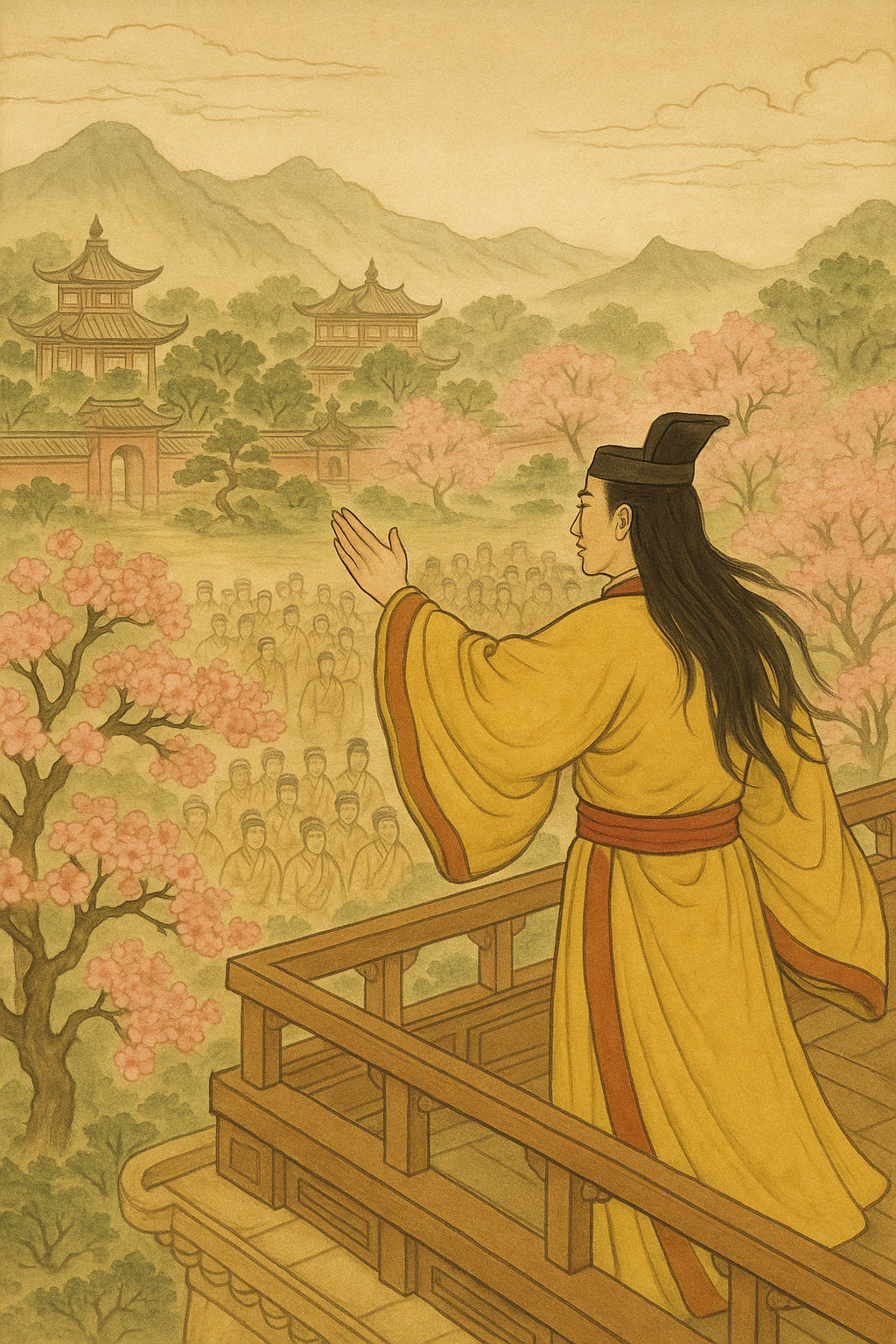

He feels his hold on power growing soft, so he tightens his grip. He grows wary of succession. Questions in council grow sharp, and he rewrites old laws — not to be more just, but to preserve his influence. His greatness has not vanished, but now it counsels agression and control rather that generosity and growth.
Yang's smoldering paranoia begins to burn too hot (Dàshǔ 大暑 ). The more he clings, the more the fire turns inward. Ministers walk in fear. The once-lively court grows hushed. Where once he inspired, he now watches shadows on the walls, convinced they conspire against him.
What he built now feels fragile, something easily taken by a greedy successor, and the weight of preserving what he has made presses heavily on his shoulders. His sons whisper in the corridors. He hears their voices, but never their words, imagining them discussing how to take his throne and cast him out. His meals are tasted three times. His sleep is broken by dreams of the scrolls detailing his mighty deeds burning to ash — the smoke obscuring his vision and leaving him in darkness.
He lashes out, throwing goblets and shouting in anger. He storms through halls in the dead of night. The land dries, fires spark, storms become violent. Crops wither. Even the sky grows weary of his rage.
He begins to consider darker things -- rewrites to the rules of ascension; purges of his heirs and theirs. His legacy looms large, but he can no longer see where it ends and he begins.
In a quiet corridor of the palace, a child coalesces from the darkness and a mild evening breeze. She is barely more than a whisper: Yin reborn. Not the old Empress, but her descendant. She wears no crown. She carries no sword. But her presence cools the air.
When she takes the Emperor's hand, something stirs deep within him—an echo of a memory, soft and piercing. He sees the old Empress Yin, his grandmother, as she once was: her steady gaze, her warm bowls of broth, her hands wrapping his in silk. He remembers the way she ruled—not through command, but through presence.
The child does not speak. She does not need to. Her silence contains the weight of lineage, the rhythm of seasons, the calm inevitability of change.
Yang looks into her eyes and realizes that the changes he has been fighting are not a threat, but are part of an infinite continuity. The shifting focus is not erasure, but remembrance. His fire, long untamed, begins to settle. The roar within him quiets to his own steady heartbeat. The raging heat in his chest gives way to a soft, aching warmth.
He weeps—not in despair, but in relief.
And he begins to fade.


The season turns and Autumn begins (Lìqiū 立秋). The whole empire’s posture changes, becoming softer as its leader shifts. Yang no longer commands attention, but walks with quiet dignity. He has rescinded his violent orders and made space for child Yin's training and encouragement. He watches her growing stronger. Yin asks questions. She studies the stars and the scrolls. Her mind is sharp. Her movements graceful. The court begins to notice her—not as a novelty, but as a presence.
For some people in the court, Yang's decline feels like a loss. They miss his vibrancy, his potency. But Yang reminds them that this is not a time of mourning, but of transition. As Yang fades, Yin blossoms. Her elegance deepens. Her voice is low, steady. She is a student of history and a keeper of lineage. She walks with her grandmother’s memories in her blood.
This is not the end of Yang. It is the maturation of Yin.
Yin ascends to the throne as Winter begins (Lìdōng 立冬). There is no parade of trumpets, no grand decree—only the silent, seamless knowing of the court. She does not seize power. She inhabits it. Her posture carries the gravity of the ancestors. Her crown is delicately woven silver studded with opals and saphires. Her presence is cool and luminous, a lantern in a long corridor.
Under her rule, the palace deepens (Xiǎoxuě 小雪). The music grows slower, more intricate, more complex. Dignitaries speak in lower tones. Rich foods—root vegetable stews, glutinous rice, spiced broths—are served with quiet reverence. She recalls the lineage of rulers past, weaving their memory into her counsel.
Yang, now fully faded, lingers only in warmth—by the hearth, in dreams, in the firelight of her gaze.


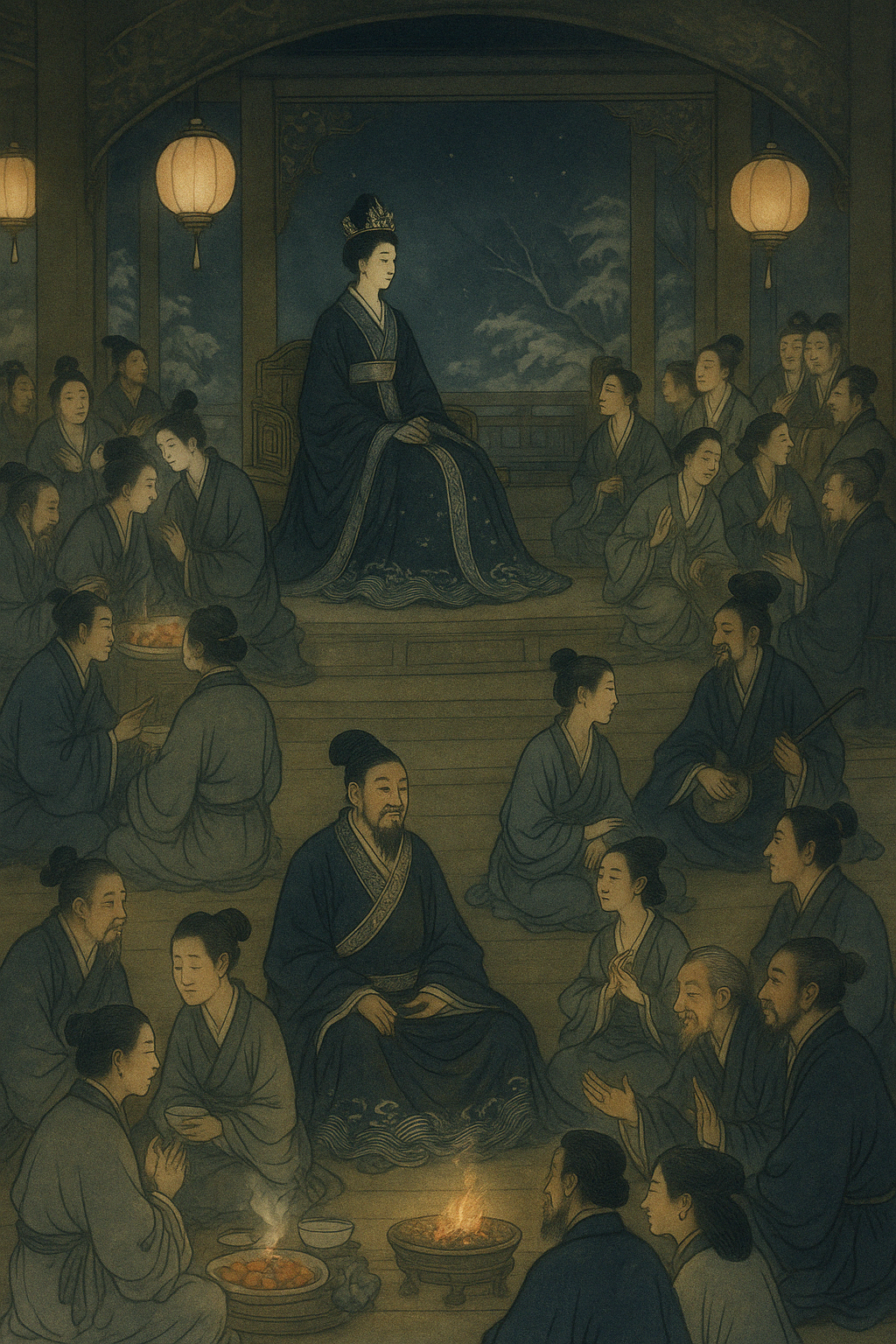
In the deepening dark of Winter (Dōngzhì 冬至) the palace glows with lantern light. The air is cold, but the halls are full. Empress Yin presides over a court rich in song and ceremony. Musicians play ancient melodies. The scent of braised meats and warm grains fills the air. Elders share stories beside braziers. Children recite poems beneath embroidered banners. Time slows.
There is no shouting, no striving—only a deep, reflective stillness. A quiet majesty. Her reign is one of nourishment, memory, and depth. She gathers the past into the present like a cloak and wears it lightly, beautifully.
Yet even after Solstice, Yin's power expands. The days remain short, the wind sharper (Dàhán 大寒). Snow thickens on the stone steps of the palace, and frost etches the windows with delicate, unspoken truths. Her court grows even quieter, not with absence but with reminiscence.
Yin moves through the chambers like a dream remembered. Her presence invites silence, reflection, restoration. It is a time of keeping close, of drawing inward, of sitting with what is real. The foods are darker now—black sesame, fermented beans, strong teas. The songs echo farther in the cold, their notes clinging to the walls like stories.
She does not seek stimulation, only stillness. She does not resist the coming end. In this, she is different from Yang. She will not fight the fading of her influence, because she knows it is not an ending. It is a return.
And in the quietest room of the palace, she watches the hearth. And at its center, a single ember stirs again.
The cycle begins anew

The Whole Story


