Everyday Alchemy: The Power of Gentle Warming
Winter changes how the body functions in ways many people notice physically. Blood flow concentrates closer to the core, which often leaves the hands and feet colder. Muscles and connective tissue tighten more easily. Digestion tends to slow, and appetite shifts toward heavier foods. Sleep becomes more irregular for some people and deeper for others, shaped by shorter days and colder nights. These seasonal changes emerge from familiar physiological processes involving circulation, hormone signaling, and metabolism. Within Chinese medicine, cold is understood as something that influences how well the body moves, transforms, and generates warmth internally. Over time, persistent cooling can appear as joint pain, fatigue, digestive discomfort, frequent urination, or a baseline sense of chill that lingers even indoors.
Modern life encourages people to push through winter without much adjustment. Homes remain brightly lit after sunset, heating systems hold indoor temperatures steady, and work schedules rarely reflect seasonal changes. The body, however, responds continuously to light, temperature, and activity level whether or not routines acknowledge those influences. Gentle warming practices provide a practical way to support the body during months that naturally place more demand on circulation and heat production. They encourage blood flow, relax tissues that stay contracted in the cold, and support digestion at a time of year when metabolic activity tends to run lower.
Foot Baths
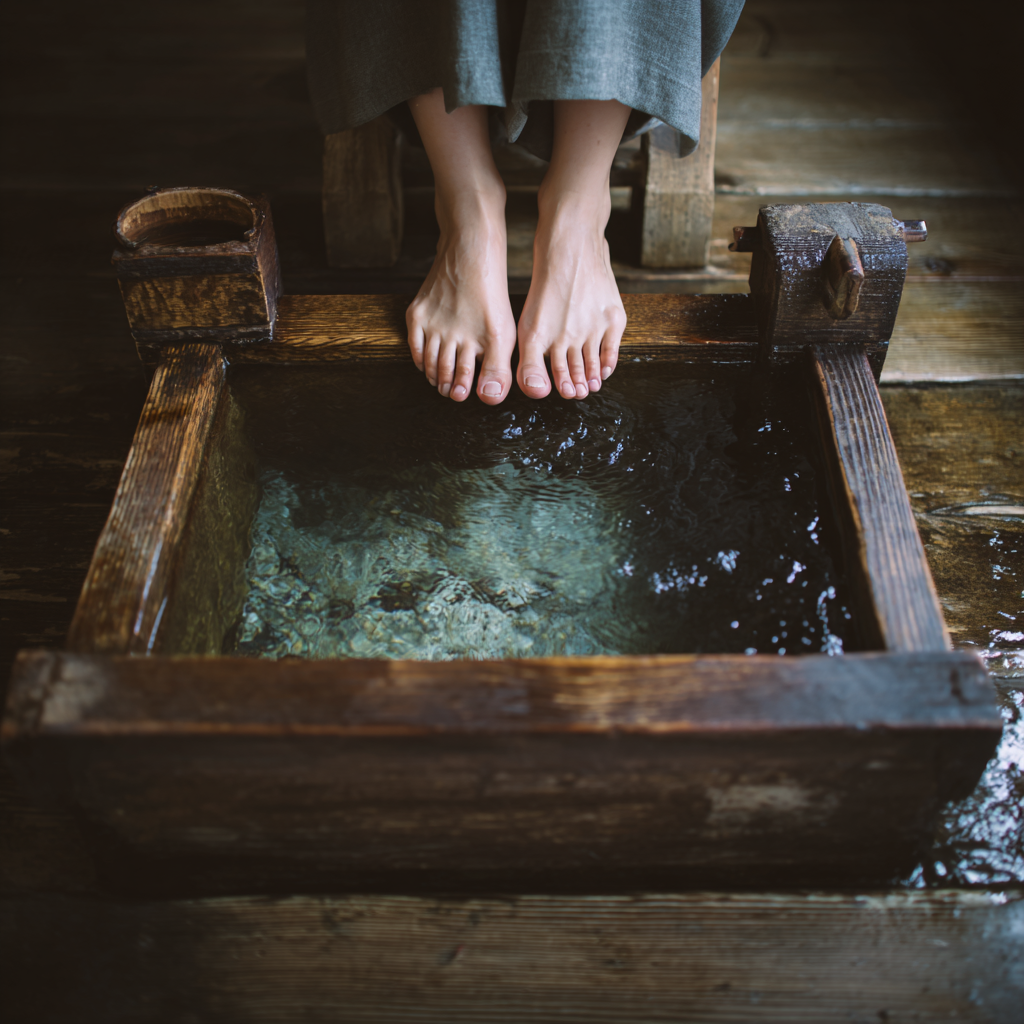
Foot baths are one of the simplest ways to introduce warmth into the body in a sustained way. Immersing the feet in hot water draws circulation downward and outward, improving warmth in the extremities while easing tension elsewhere. Many people notice that their shoulders relax, their breathing deepens, and their sense of restlessness decreases after a single session. This response reflects how closely circulation, muscle tone, and nervous system activity are linked.
A foot bath works best when treated as direct care for the body rather than a symbolic or decorative act. Ten to twenty minutes provides enough time for meaningful circulatory changes to occur. Water should feel genuinely hot without being painful. Wrapping the ankles and lower legs in a towel helps retain warmth and extend its effects. In the evening, this practice prepares the body for sleep by raising core temperature and then allowing it to fall gradually afterward. Many people find that they fall asleep more easily and wake less often during the night after making foot baths part of their winter routine.
Find a foot soaking tub/bowl/pot/bucket that is deep enough to get water up to your mid-calf. You can get a decent effect from a classic ankle-deep foot tub but a deeper tub will warm you more deeply and in less time. You might also want to keep the just boiled kettle near to your soaking area so you can add little bits of hot water to the tub to keep the temperature warm throughout the soak. If you’re getting super creative: towel insulators, sous-vide circulators, and even warming trays can help to keep your soak toasty for the whole duration.
Hot Packs
Hot packs, or electric heating pads, offer similar benefits through simpler means. Placed on the low back, abdomen, neck, or shoulders, they increase local blood flow and soften tissue that tends to remain contracted during colder months. Heat in these areas improves flexibility, reduces pain, and supports circulation to underlying organs. For people experiencing menstrual discomfort, digestive upset, or chronic back tension, daily use often produces visible improvement in comfort and function.
Warmth also engages the nervous system directly. Heat encourages relaxation in skeletal and smooth muscle, opens blood vessels, and shifts breathing into a slower rhythm. These changes reflect increased parasympathetic activity, which supports digestion, recovery, and sleep. As winter progresses and dryness, cold, and reduced sunlight accumulate, many people neglect how much their nervous systems are working to maintain balance. Heat therapy offers a simple way to ease that load.
Moxibustion
Moxibustion introduces warmth through combustion rather than water or electrical heat. It involves the burning of processed Artemisia argyi near the body, allowing heat and aromatic compounds from the plant to penetrate the tissues gradually. The warmth produced by moxa reaches more deeply than most external methods. Practitioners use it to warm muscles, joints, and specific areas associated with digestion, circulation, and reproductive health. This form of heat often reaches tissue that remains cool even when covered with blankets or hot packs.
In clinical settings, moxa is frequently used for digestive weakness, chronic pain, low energy, and gynecological concerns related to cold sensitivity. People who become ill easily in winter or feel persistently chilled tend to respond especially well. The warmth develops slowly and remains after treatment ends. Many patients describe a deep internal warmth that continues for hours, sometimes longer.
Moxa also influences breathing patterns and nervous system tone. Treatment often produces slower respiration, reduced muscle tension, and a sense of physical settling. Over time, repeated treatments can improve resilience for people whose systems feel depleted by chronic stress or illness. During winter, when immune systems are under greater strain and circulation works harder to maintain warmth, these effects offer meaningful physiological support.
The General Importance of Warmth
What foot baths, moxa, and hot packs share is their direct influence on circulation and tissue tone. Cold reduces movement in tissues and blood vessels. Warming restores pliability and flow. Over time, these changes affect how nutrients are delivered, how waste is cleared, and how energy is produced. Temperature quietly shapes every aspect of internal physiology. When the body stays chronically cool, systems slow. When warmth circulates efficiently, function improves.
These practices also invite a slower rhythm into daily life. They give the body a clear signal that it is allowed to rest. During winter, when many people carry a steady undercurrent of tension, these moments of sustained warmth help reset baseline tone. A basin on the floor, a warm cloth across the abdomen, the faint scent of moxa smoke in the room. These experiences engage the body through sensation and attention rather than instruction.
People who respond most strongly to warming therapies often describe themselves as tired without knowing why, cold even indoors, or uncomfortable in their bodies in ways that defy clear explanation. Their symptoms develop gradually. Circulation thins. Digestion weakens. Sleep loses depth. When warmth is introduced consistently, these patterns begin to unwind. Energy stabilizes, limbs feel warmer, discomfort becomes easier to manage, and rest becomes more accessible.
Winter requires practical adjustments even when daily life does not permit major changes in schedule or environment. Gentle warming therapies offer support without complexity. A foot bath before bed. A hot pack during evening reading. Warm beverages throughout the day. These small interventions accumulate steadily, and their effects deepen when they become part of routine rather than reserved for moments of discomfort.
The body reorganizes itself each winter as part of its annual cycle, and sometimes, particularly in cases of age or infirmity, that reorganization can be unfomfortable if we don’t take speicfic steps to shape it to our needs. Gentle warming practices influence that reorganization directly and help us to maintain movement where stagnation might otherwise develop. They preserve warmth where cold would accumulate quietly over months.
Warmth communicates with the body in a way no instruction can. It influences circulation, muscle tone, breathing, and sleep simultaneously. During winter, these small signals add up. Foot baths, moxa, and hot packs offer a steady form of care that fits naturally into the season. They support the body’s tendency toward conservation and restoration rather than fighting against it.