
Qi Node 2: 雨水 Yǔshui (Rain Water)
Anticipating the rise of Yang qi and how to feel the change in the season
The second qì node of the year, Yǔshuǐ, arrives as winter begins to loosen its grip. The literal meaning—“rain water”—marks a clear transition: the world is no longer dominated by snow and frost. Now, water returns in a different form, falling from the sky in softer, more frequent rain. The air still carries a chill, but there's movement again, a murmur of life beginning to rise from the dormant soil.

This moment in the calendar falls not long after the new moon of the Lunar New Year. It is the first seasonal node to carry a sense of outward movement, even if tentative. While Lìchūn 立春, the beginning of spring, opens the gate, it’s Yǔshuǐ that begins to push qi forward in a more noticeable way. Think of this as the time when the snowmelt starts to trickle, the early bulbs swell underground, and animals stir a little more boldly.
The quality of this time is awakening, but it's not yet firm or clear. There's a vulnerability to early spring, when it still feels like winter, that is easy to overlook if we rush ahead. In clinic, we often see patients come in with colds that linger, flares of old patterns—especially those related to the Liver and Spleen—and a kind of irritability that isn't quite definable yet. These aren’t just accidents of weather or luck. The upward push of spring qi meets whatever has been stuck, and in that encounter, things move—but not always gracefully.
This is a good time to begin gently reintroducing movement into your routines. Not the full sprint of spring cleaning or new plans, but simple, flowing actions: stretching, walking, spending time in the changing air. It’s also a time to be mindful of wind. In Chinese medicine, wind is the great instigator—it enters when we’re unguarded and can stir up both physical and emotional disruption. Scarves are still your friend. So is warmth at the feet. The chill hasn’t fully left, and early movement can create vulnerability if we’re too quick to abandon the protections of winter.
Dietarily, this is the moment to shift very slightly away from the dense, deeply warming foods of winter. Begin to lighten broths, introduce slightly more green vegetables or pickels, and wake up the palate. Pungent flavors like scallion, ginger, and citrus peel help disperse lingering stagnation without shocking the system. This is not the time for detoxes or dramatic changes—it’s a time for coaxing, encouraging, and watching how your body responds.
Yǔshuǐ also brings attention to water itself. How does it move in your body? Do you feel fluid or swollen? Dry or sluggish? The rains that fall outside mirror internal processes. Now is a good time to check in on hydration, but not just in the modern sense. Are you drinking warm things? Are your fluids moving? Is your digestion helping or hindering that movement? Is your mind flowing—or circling the drain?
Emotionally, Yǔshuǐ is often an unsteady time. It may bring unexpected tears, odd dreams, a sense that something is rising that you can’t quite name. That’s part of the shift from the deep yin of winter toward the yang of spring. We are each thawing. Not all at once. Not evenly. But something inside begins to move toward light again. Try not to judge the pace.
In Chinese cosmology, spring belongs to the Liver, and this node reminds us that Liver qi, like the season it governs, wants to move freely. Anything that clogs it—stress, overplanning, repression, excessive control—can cause irritation and misalignment. But freedom doesn’t mean chaos. It means ease. It means responding rather than forcing. Let your schedule breathe. Let your body speak. Let the water fall where it may.
Aligning Your Life with the Qì Node: Yǔshuǐ 雨水
Dress for changeable weather. The wind is still sharp, and the damp can penetrate easily. Keep your neck, feet, and low back covered, even on the milder days.
Let things move, gently. Begin stretching, walking, or shaking off winter’s stillness. Think flowing, not forceful.
Eat with an eye toward lightness. Start tapering off the heaviest stews and meats. Add scallions, fresh ginger, or lightly cooked leafy greens to your meals.
Warm your fluids. Sip hot water or teas made with chen pí (aged citrus peel) or fresh ginger to help transform internal dampness and move qi.
Watch your mood. Irritability, frustration, or sighing may signal liver qi constraint. Don’t push through it—move with it, or let something go.
Reassess your pace. If your schedule or mindset is too tight, things will start to snag. Make room for change by easing up on rigid plans.
Keep an eye on dreams. This is a transitional time. Unusual or emotionally charged dreams may be your subconscious adjusting to the new season.

Qi Node 1: 立春 Lìchūn (Spring Begins)
This first qi node of the year is not a season, but a threshold. A moment when the frozen ground stirs, and the world begins to breathe again. In Chinese medicine, it marks the return of Yang, the reawakening of Wood energy, and the slow stretch toward growth. Not all at once. Not with urgency. Just enough to remind us: change is already underway.
When the Ice Cracks and the World Begins Again
It’s quiet, but it’s not still.
Lichun arrives each year not with fanfare or dramatic transformation, but with a subtle shift. A sense that something has changed—barely perceptible, but undeniably present. It’s the first qi node of the new year in the Chinese lunisolar calendar, often translated as the “Beginning of Spring,” though that translation doesn’t quite capture its nuance. It’s not yet Spring in the way we often imagine it, full of blossoms and warmth. It’s something earlier, more tentative. A soft return to movement after the long exhale of winter.
There’s something sacred in that subtlety. Lìchūn marks the beginning of upward motion, of Yang returning after its deep winter slumber. And in a world that often celebrates only the boldest gestures of change, it’s worth pausing to acknowledge the importance of these smaller, quieter beginnings.
While the weather may not yet embody the change, nature is already in motion. Beneath the frozen ground, roots are waking. Tree buds, though still tightly curled, are starting to form. Migratory birds begin their subtle shifts, sensing what we cannot yet see. The days, just barely, stretch a little longer. Lichun isn’t a season—it’s a moment. A threshold. One we often miss if we aren’t paying attention.
This phase corresponds to the Wood element in Chinese medicine—a phase characterized by growth, movement, and vision. But like all beginnings, this movement is not without its discomfort. Think of it as the feeling in your body when you’ve been curled up too long and start to stretch: it’s awkward, maybe even a little painful, but it feels necessary. There’s a restlessness here, a desire to begin moving forward, even if you’re not quite sure where you’re headed.
This is the energetic mood of Lìchūn. An invitation to engage, to begin emerging from stillness—but gently, without rushing.
On Not Forcing Spring
It’s tempting to respond to any New Year—or new beginning—with intensity. Set goals. Make plans. Transform everything all at once. But Lichun teaches something different. It suggests a slower rhythm, one aligned with the barely waking Earth rather than our cultural drive for instant reinvention.
If Winter has been a time of reflection and conservation, Lichun is the first stretch toward renewal. Not with force, but with curiosity. It’s a time to notice what ideas or desires are beginning to stir. What has been incubating during your quieter months that might now want light?
In Daoist thought, and particularly within the framework of Chinese medicine, health is not something we chase with discipline or self-denial. It’s a relationship we tend, slowly and consistently, through alignment with the natural world. And this time of year is not about dramatic action—it’s about orientation. It’s about feeling where the new growth wants to emerge.
Rather than charging ahead, this season invites us to take stock. To ask ourselves, softly, where we’re headed. And more importantly, why. The energy of Wood longs to move forward, to grow, to create. But it moves best when it has direction—not rigid, but intentional.
We often associate Spring with cleaning, with purging, with detoxing. But Lìchūn doesn’t require us to be harsh. The impulse to "clear out" is natural, but the method can be gentler. What we’re really doing is making space—for movement, for vision, for change. And just like in nature, not everything needs to be uprooted at once. Some things need to stay a little longer, to finish breaking down, to become part of the fertile soil of what comes next.
What To Do:
This early part of the year is a beautiful time to align your daily habits with the returning energy of the world around you. Here are some ways to step into the Lichun season with care and intention:
Move with Purpose, Not Pressure
You don’t need to launch into an intense exercise routine right now. Instead, look for movement that feels like a stretch—not just physically, but emotionally and energetically. Gentle yoga, long walks in changing weather, qi gong, or just a few minutes each day of free movement to music can help your body re-engage with flow after winter’s stillness.
If you can, move outside. Even if it’s brisk. Just don’t work up a sweat exposed to the elements. Let your body feel the season, and let your senses begin to wake up with it.
Support Your Digestion with Seasonal Foods
As your internal systems begin to re-activate, your digestion will appreciate foods that are both warming and gently activating. Light broths with scallions and fresh ginger, young greens sautéed with sesame oil and rice vinegar, and lightly fermented vegetables can support your Liver system and help encourage healthy movement of qi.
This is also the time to reintroduce a bit of sour flavor into your meals—lemon, vinegar, pickles—all of which help stimulate the Liver’s transformative function. Think less “cleanse” and more “tend.”
Make Space, Not War
You don’t need to deep-clean your entire home or empty your closet Marie Kondo–style. But consider clearing one small area: a corner of your desk, your nightstand, your kitchen table. Not to punish yourself for winter’s messiness, but to open a little room for something new. Lìchūn is a great time to begin rearranging—not just physically, but mentally. Reassess what commitments, obligations, or assumptions might need a little pruning.
Reconnect with Vision
In Chinese medicine, the Liver is associated with both physical vision and our capacity for long-term planning and dreaming. What would it look like to gently reawaken your sense of direction—not as a set of goals, but as a feeling tone? Maybe it's a color. A landscape. A phrase. Something that points you toward growth without demanding it.
You don’t have to know the full plan. Just begin to imagine the shape of it.

Enter The Yin Wood Snake
The Yin Wood Snake year winds in softly, asking us to move with quiet purpose. In a world obsessed with doing, this is a year for tending, composting, and deliberate growth. Wisdom won’t shout—it will whisper. And if you listen, you just might hear your own transformation beginning.
Each year in the Chinese calendar is shaped by the layered dance between an animal from the zodiac and one of the ten Heavenly Stems. In 2025, we shift into the energy of the Yin Wood Snake (戌木蛇), and it will be nothing like the year we are leaving behind. If 2024, the Yang Wood Dragon (甲木龙), was a thunderclap—big, bold, and burning with expansive ambition—then 2025 arrives as a whisper. A rustle in the undergrowth. A slow coil. The Snake invites us not to soar the skies, but instead to coil and wait. This contracted posture allows us to think and to digest our experience as we plan for what comes next, ultimately shedding what needs to go in order to get where we want to be.
Snake Years
Snake years are subtle. There is wisdom in them, but not the kind that announces itself loudly. This is a year of behind-the-scenes intelligence, of coiling inward to examine what lies beneath the surface. In Chinese cosmology, the Snake is refined, strategic, and deeply internal. It listens before it moves. It calculates, and it waits.
And so in Snake years, things tend to shift quietly. What looks like inaction may turn out to be transformation. What seems like distance might be discernment. The Snake does not waste its energy and neither should we. This is a year for planning more than leaping, for cultivating personal refinement, and for seeking transformation through discipline and grace.
This is also a year that may feel at odds with the dominant cultural current in places like the United States, where action, productivity, and forward momentum are often equated with success. Our culture doesn’t always have patience for the slow turn inward, for the pauses between breath. And so we may see a rising tide of existential discomfort—feelings of stuckness or inadequacy not because something is wrong, but because we are being asked to move in a rhythm that diverges from the one we’ve been conditioned to chase.
Trying to force a Snake year into the mold of linear productivity is like yelling at a seed to sprout faster. It only leads to frustration, burnout, and deeper disconnection. In a society where doing is everything, learning to simply be—strategic, slow, reflective—can feel destabilizing. But that dissonance isn’t a sign of failure. It’s the edge where something deeper might take root. That quiet edge, though, can feel sharp if we’re not ready for it. The discomfort of slowing down, of listening rather than producing, can stir a kind of unease that’s hard to name. It’s in that stillness, in the space between doing and being, that things begin to stir.
Snakes can be secretive. Withdrawn. Prone to second-guessing. They might hold their tongue too long, or hide things even from themselves. And when the emotional pot does boil over, it's often because pressure has been building in silence for too long. A Snake year can bring tension just beneath the surface, especially if we try to force things to move faster than they want to.
But if we move with the rhythm of the year—if we learn to follow its slow, elegant arc—there is so much to gain. Real change. Quiet strength. A sense of clarity that comes from discernment.
Yin Wood
The elemental influence this year is Yin Wood (戌木), sometimes imagined as bamboo, a vine, or a blade of grass. It is not a mighty oak or a towering pine. It is the kind of growth that adapts, that bends, that seeks the light even in difficult places. Yin Wood is quiet, but not weak. It is enduring. Patient. Inwardly alive.
Yin Wood doesn't force. It finds its way. It teaches us that resilience isn't about rigidity; it's about the ability to move with grace even when conditions aren't ideal. It invites us to stretch gently toward what nourishes us and to let go of what no longer fits.
So this year, Wood gives us the urge to grow, but Yin tempers that urge with softness. Instead of pushing forward, we may find ourselves curling inward, composting old ideas, tending to the roots of projects and relationships we started in flashier, louder times.
The snake year, as all of the animals in the zodiac, carries its own elemental signature of Fire and each of the elements have relationships to each other — come controlling and limiting the force of another (controlling relationship), while others augment the potency of an element (the mother relationship), while yet others can siphon the intensity of an element (child relationship). Wood is the mother of Fire, and so there is a tendency for the Heavenly Stem of this year to increase the strength of Snake’s intrinsic qualities. That force multiplier is not as strong as if it were a Yang Wood Stem (dry hardwood certainly adds more to a bonfire than grass) but it encourages the fire nonetheless. Thus, Snake and Yin Wood together create a particular flavor: strategic but flexible, wise but quiet, constantly growing but rarely in ways others can see.
The Shift from the Dragon
Last year, the Yang Wood Dragon ruled the skies. Dragons are always big and bold. They are the only celestial creature in the Chinese zodiac and they are deeply connected to history, knowledge, and the omniscience of Heaven. Dragons have plans written with a cosmic viewpoint and so they have a tendency to not take much of our human needs into consideration. That power is often leveraged in a Dragon year for great changes but it can also feel like people are being steamrolled by unfeeling change. So, last year was largely made of bold moves, rapid expansion, high-stakes plans, and vision boards so large they barely fit on the wall. Some of those visions bore fruit. Others burned out under their own intensity. The Dragon was full of purpose and forward motion, but it left many people scattered, tired, and unsure where to land. The Yang Wood of last year also had a containing effect on Dragon (Earth is the Dragon’s element and Wood Controls Earth), so you can only imagine what it would have looked like if we were in a a Fire Stem and that qi would have fed the Dragon’s most intense impulses…
Now comes the Snake, asking us to come home to ourselves. To narrow the focus. To reflect, refine, and move with care. If the Dragon was about declaring your kingdom, the Snake is about asking who you really want in it. If the Dragon pushed everything into motion, the Snake invites a long, deliberate exhale. Snakes are not social or particularly compassionate zodiac animals. They are reflective but not introspective. They love pondering, exploring, and wondering at the movements of the universe but they are not particularly interested it what that all means for them, just what it might mean in general. In many ways, Snake qi is a fitting successor to the Dragon because Snakes are still not particularly concerned about human affairs or needs, they are just way less intense about it: What might it all mean? But do we need to be so loud about the search?
This year asks: What have you begun that now needs pruning? What relationships or ambitions were sparked in the fire of last year but now require patience and tending? What needs composting before anything else can grow?
This is a shift not just in pace, but in direction—from expansion to integration, from speed to stillness, from action to contemplation.
Health in the Snake Year
The body this year may speak more softly but more insistently. Tension that used to be tolerable now demands address. Fatigue that once passed with a good night’s sleep might linger. Our nervous systems are more tender, our digestion more reactive. The Liver system, in its yin wood expression, reminds us that not all movement is visible. Circulation, emotional clarity, and subtle regulation matter more than big performances of health.
We might find ourselves more sensitive to the effects of stress. There may be more headaches, tight shoulders, vivid dreams, or digestive murmurings that point to emotions needing expression. This isn't the kind of year where powering through works. The body wants partnership, not domination. It wants us to listen early, adjust often.
This is a good year for quiet restoration. Bitter greens, slow walks, acupuncture that opens the channels without stirring up chaos. Qigong over HIIT. Broths and teas that gently move and warm without overstimulating. Health this year is less about conquering symptoms and more about cultivating conditions in which vitality can quietly return.
Emotionally, Snake years can be complex. Feelings that have been lingering below the surface might rise, but not always with clarity. There is a tendency to circle, to revisit, to hold things close before they are named. It can feel introspective, even isolating, if we’re not prepared. There may be a sense that no one fully understands what we’re going through. And sometimes, that’s true—because we ourselves are still trying to understand it. This is not a year for emotional performativity. It’s a year for honesty, and that kind of honesty often takes time.
That said, it's also a year of tremendous psychological insight. Therapy, journaling, dream work—these are not just supportive, they are aligned with the spirit of the time. The mind wants depth this year. It wants to untangle old threads and find meaning.
You might find yourself needing more solitude, or more time with people who can hold complexity without trying to fix it. The best friendships and partnerships in a Snake year are often the ones where presence matters more than words. Snake energy doesn't care much for surface-level socializing. It wants connection, yes, but it wants real connection. The kind built on shared values, long conversations, and quiet trust.
This may be a year when certain relationships fade, because not all connections are meant to be carried forward indefinitely. And other relationships will surprise you by deepening unexpectedly, often in moments of stillness or shared reflection. Love may look less like fireworks and more like steady warmth. Friendships may become fewer, but more essential. If you're building new connections, give them time. The Snake does not reveal itself quickly, and neither should you.
Moving With the Year
The Yin Wood Snake doesn’t want you to hide. It wants you to become intentional. It wants you to choose your direction deliberately, to move through the world with presence, and to trust that slow growth is still growth.
Let this be a year of tending. Of coiling inward when needed, and then expanding with care. Of taking the time to ask yourself not just what you want, but what actually nourishes you.
Let yourself be strategic without becoming hard. Wise without becoming cold. And most importantly, let yourself be soft where it counts. Resilient in the quiet, supple in the unseen. Because just like the Snake, your transformation this year may not look dramatic to the outside world.
But it will be real. And when the time comes to shed your skin, you’ll know you’ve grown exactly as you needed to.
This is a year to write the plan, not announce it. To whisper truths into your own ear before offering them to anyone else. To see your own internal rhythm as sacred—and trust that those who matter will attune to it. You don’t have to be loud to be strong. You don’t have to be fast to be wise. Give yourself permission to pause, to reflect, to grow at your own pace. Make space for daily rituals that return you to center—lighting a candle, brewing herbs, walking under the trees. Stay close to the things that help you listen.
If last year burned too hot, let this year be a balm. If last year asked too much, let this year give you back some of what you lost. We are not predicting the future when we write about the qualities of a year. Human activity and choices can always seem like they are disconnected from the Qi of any given year, as if that year is not holding up its end of the bargain. But the rhythms are always there, and how we relate to them, how we cultivate our conduct in alignment with those rhythms, is the only real metric of success in any given year.
If you’ve been moving too fast to feel anything at all, let the Snake wrap around your shoulders and remind you: wisdom takes time. So does healing. So does trust.
Welcome the Snake. Let it show you how powerful it is to be quiet. How healing it is to move with care. How whole you already are, when you stop trying to be something louder than yourself.
May it guide you with grace.

Behold the Mighty Yang Wood Dragon
The Wood Dragon year is expansive and creative, filled with potential. But power must be used wisely—Hexagrams Qián and Dà Zhuàng remind us that vision without grounding can become force without direction.
The Chinese calendar is among the oldest continuous timekeeping systems in the world, with roots reaching back more than two thousand years. Closely tied to agricultural rhythms, dynastic history, and celestial observation, it has always been both a practical and symbolic structure. Its foundations are astrological as much as astronomical, blending planetary cycles with cosmological insight. The calendar is built around patterns of transformation and change, reflecting not only the passage of time but the qualities of time. Each year is not merely a unit on a timeline, but a container for particular dynamics, images, and movements of qi. Through the interplay of cosmic forces expressed in very specific mathematical calculations, the Chinese calendar allows us to understand the character of a moment, and by extension, how to live in harmony with it.
Each year in the Chinese calendar is built from a combination of two systems: the Ten Heavenly Stems (天府, tiān gān) and the Twelve Earthly Branches (地支, dì zhī). Together, these create a repeating 60-year cycle known as the sexagenary cycle (庚支, gānzhī), which assigns a unique combination of stem and branch to each year. While the Heavenly Stems rotate through the five phases (wood, fire, earth, metal, water), each appearing in both a yin and a yang form, the Earthly Branches correspond to the twelve zodiac animals. In 2024, we enter the year of the Yang Wood Dragon (甲辰, jiǎ chén).
To understand what this means, it helps to break down each component. The Dragon is the fifth of the twelve Earthly Branches. Unlike the other animals in the cycle, the Dragon is a mythical creature and the only one capable of flight. It holds a special place in Chinese cosmology as a symbol of power, potential, and transformation. Dragons are often seen as auspicious and are associated with the emperor, the heavens, and the ability to move between realms. In terms of qi dynamics, the Dragon is associated with the phase of yang earth, which is stabilizing, expansive, and generative.

Chinese Classical Qing-Ming Dragon
Hexagrams, Yì Jīng, and Other Esoterica
In addition to the stem and branch pairing, each year in the Chinese calendar can also be associated with one or more hexagrams (卦, guà) from the Yì Jīng (易經, Book of Changes). These hexagrams offer symbolic insight into the energetic and developmental processes unfolding during the year. For the Yang Wood Dragon year, two hexagrams are commonly associated with this combination: Hexagram 1 (乾, Qián) and Hexagram 34 (大壯, Dà Zhuàng).
Hexagram 1, Qián, is often translated as "The Creative." It is composed of six solid yang lines and represents pure, undivided yang energy. It reflects a time of initiation, clarity, and dynamic force—qualities that resonate deeply with both yang wood and the expansive nature of the Dragon. This hexagram suggests that the year may be filled with opportunities to assert one's creative potential, but also calls for moral integrity and persistence. As with all strong yang expressions, there is the danger of becoming too forceful or unyielding. The advice of Qián is to remain steady in purpose and grounded in virtue.
Hexagram 34, Dà Zhuàng, means "Great Power" or "Great Strength." It describes a situation where strength has reached its peak and must be guided wisely. This hexagram speaks to the danger of excessive force and the need for restraint, echoing the caution already present in the Dragon year dynamic. While there is the energy to make significant changes and bold moves, success depends on maintaining a clear sense of timing and appropriateness. It encourages us to act from a place of inner alignment rather than ego-driven ambition.
Yang Wood Dragon Vibes
Dragons in general represent big potential and big impact. Their energy is often charismatic, forceful, and difficult to ignore. But because of this strength, Dragons can also be unpredictable. They don’t always know their own power. Sometimes they soar above the clouds, and other times they crash into the ground. In a Dragon year, the mood is generally one of movement and expansion. There is an opening up of possibilities, but also a need to stay grounded amidst that surge.
Each Dragon year inherits an additional layer from the stem it is paired with. In 2024, that stem is 甲 (jiǎ), which is Yang Wood. Yang Wood is associated with the image of a tall, sturdy tree—something upright, direct, and full of growth potential. It is the start of the cycle of stems and represents initiation, youthfulness, and creative force. Where yin wood is like a creeping vine or a flexible bamboo shoot, yang wood is strong, driven, and expansive.
So the combination of Yang Wood and Dragon yields a year that is infused with upward movement and outward growth. Yang Wood feeds the Dragon’s innate boldness and desire for transformation. It amplifies the qualities of ambition, vision, and dynamic change. But it can also bring volatility, overextension, and impulsiveness. A tree grows upward toward the light, often without regard for what lies in its path. The Dragon, powered by that same upward thrust, can charge ahead with great force but little concern about what it impacts.
In terms of its position in the cycle, the Wood Dragon opens a new 10-stem cycle. The last time this exact configuration appeared was 1964, and it will return again in 2084. As the beginning of a stem cycle and a year associated with the Dragon’s expansive energy, this is a time marked by beginnings, initiatives, and visionary leaps. It is not a year of small adjustments. It is a year that wants to start something big.

A wheel calendar depicting the sexagenary cycle of the Chinese calendar
Emotionally, Dragon years can feel sweeping. There is often a collective sense of possibility, sometimes veering into overconfidence or bravado. For some, this is energizing—a welcome break from inertia or heaviness. For others, it can feel destabilizing, especially if the energy tips into restlessness or scattered movement. Because the Dragon is associated with Heaven and yang earth, it pushes upward while still needing a solid foundation. That tension between aspiration and grounding is one of the core dynamics of the year.
Planning, Decisions, and Health
Planning in a Dragon year benefits from clear intention and some sense of direction, even if all the details are not in place. This is a good year for planting seeds, launching projects, or turning ideas into action. But it is not a good year for flying blind. The combination of Yang Wood and Dragon can give people the feeling that they can do anything. And while it is true that this year supports bold moves, the danger lies in moving too fast or taking on more than can realistically be managed. Ambition needs structure. Vision needs support. The Dragon can fly, but only because it knows how to ride the currents.
Decision-making this year may feel more urgent or inspired than usual. People may find themselves saying yes to things they would normally take more time to consider. This is not inherently a problem—some opportunities really are worth leaping for. But it is worth remembering that excitement is not the same as clarity. The yang wood impulse to grow must be balanced with discernment. Not all growth is beneficial. Not all movement is progress.
From a health and clinical perspective, Dragon years tend to stir up the middle burner. The earth phase corresponds to the digestive system, and when paired with wood, we often see tension in the liver-spleen relationship. People may experience more symptoms related to digestion, stress, irritability, or muscular tension. The upward, expansive movement of the year can create internal friction if not given appropriate outlets. Movement, breathwork, creative expression, and rest will all be important ways to regulate this rising energy.
It’s also useful to keep an eye on excess. Yang Wood and Dragon energy are both expansive and can tend toward doing too much. This can lead to burnout, over-scheduling, and strain on the nervous system. Especially for people who are constitutionally more yin or who have had a difficult time recovering from the past few years, pacing is key. Rest is not a luxury; it is part of the rhythm. In order to grow well, a tree needs deep roots and steady nourishment.
People, Politics, and Passions
In relationships, the Dragon year can bring both excitement and upheaval. This is a time when people may make bold declarations, start new partnerships, or take relationships in unexpected directions. There is a kind of idealism in the air—a belief in possibility. But again, this needs grounding. Romantic and interpersonal shifts that happen quickly may not always be sustainable unless they are rooted in shared values and mutual support. The Wood Dragon loves a grand gesture, but real connection often grows more slowly.
Economically and politically, we may see large swings. Dragon years tend to be dramatic in their scope. Because they invite bold moves, they also invite bold mistakes. Leaders may feel emboldened to take risks. Some of these may pay off, but others may have wide-reaching consequences. On a societal level, this is a year when big ideas take the stage. It will be especially important to stay discerning—to ask not just whether a vision is appealing, but whether it is wise, necessary, and grounded in reality.
For creative work, the Dragon year is a boon. This is an excellent time to pursue artistic projects, start writing, perform, teach, or create new structures for sharing ideas. The Wood Dragon supports originality, courage, and taking up space. If you have been waiting for a year to take your creative work more seriously, this is it.
In summary, the Year of the Yang Wood Dragon is one of renewal, expansion, and possibility. It invites bold action, but it also requires thoughtful pacing. The Dragon flies high, but it needs direction. Yang Wood pushes growth, but it needs deep roots. This year can be exciting, energizing, and transformative—so long as we remember to stay connected to the ground we are growing from.

Happy Lunar New Year! The Reign of the Yang Water Tiger
The Yang Water Tiger is a stark departure from the Yin Metal Ox. Learn how this new lunar year is likely to shape up!
Year Highlights
Tiger years are years for changes in direction, for passion, for excitement, for doing
Yang Water quality of the Tiger year will make the Tiger’s natural tendencies even more apparent
Change is guaranteed but the quality and impact of that change will depend on how we used the stable, predictable energy of the Ox this past year
It will be easy to get over excited this year and to make quick and passionate decisions. We should lean into those feelings but remember to not let our larger goals be undone by the potency of the Tiger year
And so the cycle begins again, an ever-turning wheel backward and forward through all of time and all of space, pushing and pulling all of creation inexorably through its own experience. Dramatic, right? A little flashy, right? Maybe a little egoistic and overwrought? Well, the Tiger year brings with it a kind of dramatic intensity that we haven’t seen in a while and, combined with the Yang Water modifier, gives us a coming year with a lot of potential for explosive change and intense shifts in trajectory.
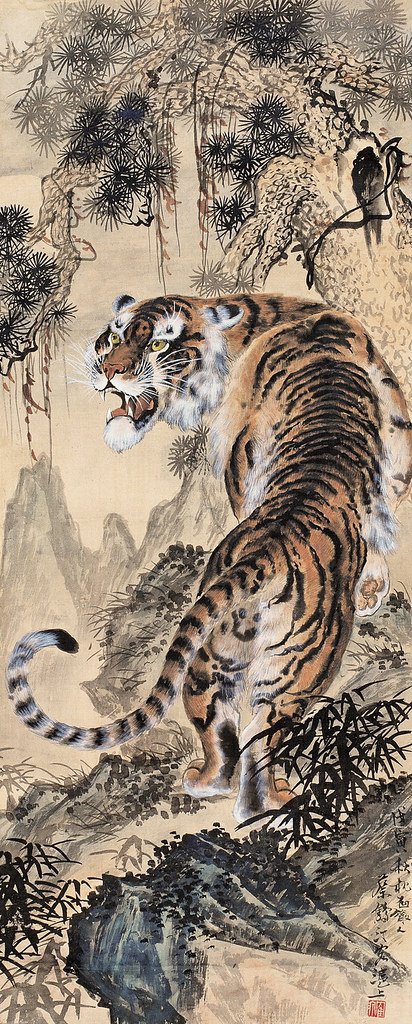
In order to understand how this Tiger year is likely to feel, it might be best to put it in the context of the Yin Metal Ox year we just finished. The ox is a beast of burden, focused on getting the job done no matter the weather, the demands, the level of exhaustion. As a year, it is intensely focused on getting through and preparing the way for the next thing to come along. Oxen represent an adherence to tradition, to the ways that things have always been done, and they provide a kind of continuity with the past that is essential for building strong foundations for the future. Oxen are confident and strong, but they are not aggressive, not self-starters.
Many of us felt that plodding quality throughout much of 2021. The pandemic stretched on endlessly, work and activity fell into a kind of complacent repetition and the idea of going out and doing new things, traveling to new places, starting new projects, for many people felt exhausting and distinctly uninteresting. Better to just keep on keeping on. That Ox energy was compounded by the general qualities of the Winter season where we are drawn into reminiscence and nostalgia; reflection and melancholy, by the natural depth and intensity of the Yin portion of the year. By the time Lunar New Year rolled around this year, I know a lot of us were ready for a change.
The Tiger year, in general, is a stark departure from the traditionalist continuity of the Ox year. That this Tiger year is a Yang Water Tiger, further indicates the that the aggressive transformative energy of this year will be even that much more potent. Let me explain:
Without getting too deep in the weeds, it’s important to remember a few basic tenants of Chinese cosmology:
There are 12 animals that represent the qualities of a standard 12 year annual cycle: Rat, Ox, Tiger, Rabbit, Dragon, Snake, Horse, Goat, Monkey, Rooster, Dog, and Pig
Each of those animals is assigned a Yang or Yin Quality and a qi phase (sometimes called element) in an alternating order: Yang/Yin Wood, Yang/Yin Fire, Yang/Yin Earth, Yang/Yin Metal, Yang/Yin Water.
The combination of an animal and a Yang or Yin marker and a qi phase creates 60 unique combinations that repeat over and over again. This larger pattern is called the Sexagenary Cycle
This cycle is derived from some complex math rooted in the movements of celestial bodies like Jupiter and the Moon. Those astronomical observations served as pre-modern time-keeping devices and allowed ancient people to observe that seasons, environments, individuals, and societies were influenced by the qi present during their gestations and life spans and that such effects were repeated and somewhat predictable.
Now it is important to note that CHINESE COSMOLOGICAL WORK IS NOT ABOUT HOROSCOPES AND FORTUNETELLING. I know we have a predisposition to seeing a discussion of trends, norms, and pronouncements through the lens of carnival charlatans and UsWeekly horoscopes, but instead, try to couch the qualities of any upcoming year or season in your own experience. What do you feel in your body? What is the state of your mind? Are you motivated and if so, by what? Knowing more about the qi qualities of any particular moment in time can help us to compare our experience to what is happened around us and inform us if what we are experiencing makes sense with our context or if it is somehow aberrant, something for us to take a look at and maybe correct.

So back to the Tiger Year. Tigers in general are strong, quick, and aggressive. They are flashy in their coloration and historically, Tigers occupied the apex predator position with humans, often themselves responsible for human deaths. Tigers stalk their prey and can be patient in the pursuit of such a lofty and important goal nabbing their next meal, but by their natures, Tigers pace and stalk, they don’t sit and wait. This behavioural variance is the root of the shift from Ox to Tiger. While Ox was content to walk forward in a straight line, doing what is right and good and reasonable, the Tiger has no such patience. Tiger is ready to move, to do, to pounce. Thus, the Ox helped to carry the energetic hoarding of the Rat year forward to build a strong and resourceful foundation so that the Tiger has the best perch from which to take action.
Additionally, Tigers express complimentary but sometimes opposing qualities. They are primarily solitary creatures, but they have a strong urge to mate. Tigers present with aggressive posturing like growls, glares, and fang-baring but in fact rarely fight among themselves, instead choosing the show over the actual event. Tigers are incredibly quick and strong but also spend a lot of time relaxing and lounging. This type of opposing energy manifests in a Tiger year as well, where we can easily be caught up in something and taken to new places or levels of excitement, but we can just as easily find ourselves bored with the new activity and disinterested, looking for the next big thing. Tigers are a mighty force but are fundamentally unreliable, favoring action and passion over stability and predictability. This propensity for forceful and expansive movement has earned the Tiger image an association with the Wood qi phase (which also has an upward and outward movement) as well as the Yang quality (which is active, agitating, and ephemeral). Thus, all Tiger years are rooted in Yang Wood qi.
All of these Tiger qualities are all the more emphasized because, while all Tiger Years are Yang Wood years, each of them is further modified by its position in the sexagenary cycle, which gives this Tiger Year the addition of the Yang Water quality. In the 5 phase cycle of qi, Water is considered the mother of Wood, providing the necessary resources for qi to transform from the internally focused and contracting quality of water to the expansive and outwardly moving quality of wood. In this case that means that all the natural qualities of a Tiger year (action-oriented, impulsive, impatient, passionate, enthusiastic, dramatic, flashy, etc…) are made more obvious and more pronounced because water encourages wood to grow and expand. Add to that mix the Yang marker for the water part of this Tiger year, and we have an even more potent boost to Tiger’s natural qualities. In fact, the combination of all these particular pieces of the puzzle put the Tiger’s qi into an excessive position, asking all of us to pay extra attention to the flow of our bodies, minds, and emotions in this upcoming year because it will be very easy to be swept up into the intensity of the Yang Water Tiger.
These last few years have been challenging on so many levels and while the Tiger Year promises to help break us out of our rut, exactly which way that break will fall remains to be seen. Change is guaranteed but depending on how solid a foundation was built during the Ox’s tenure, will certainly shape how productive this Tiger change will be. All things must end though so even if the change is destructive and far reaching, it will be part of our challenge this year to incorporate that energy into our experience, not minimize judgement of one type of activity over another, and to recognize that nothing is exempt from the cycle of qi.

Yin Water Rabbit Peers At the Moon
The Yin Water Rabbit year invites quiet discernment and careful pacing. It’s a time to tend what’s unresolved, listen deeply, and recognize that subtle shifts may carry more power than grand gestures.

A stylized white rabbit beneath the moon
The Chinese calendar’s system of reckoning is not simply a way to mark time—it is a way to understand time. Each year, composed from the 10 Heavenly Stems and 12 Earthly Branches, offers a layered cosmological snapshot of the qi dynamics at play. And like any good map, it helps us navigate not just what is happening, but how it feels, and where it may be headed. The year we are emerging from—the Yáng Water Tiger (壬寅, rén yín)—was one of sudden shifts, bold actions, and pent-up energy finally finding a release. Tiger years are known for their intensity and passion, and this one lived up to its reputation, marked by both widespread agitation and bursts of hopeful forward motion. But as with any explosive phase, there is a cost: exhaustion, overextension, and, for many, a sense of being emotionally and physically stretched beyond their limits.
That is the soil into which the Yīn Water Rabbit (癸卯, guǐ mǎo) is about to arrive. If the Tiger year was a storm breaking open the sky, the Rabbit year is the mist that lingers after—the cooling, quieting, gathering back of attention and energy. It invites us to pull inward, to reflect, and to begin the slower work of integration. The tone shifts from the overt to the subtle, from decisive movement to careful discernment. Rather than continuing to push outward, we are now asked to tend the internal terrain stirred up by the chaos of the year before. The movement continues, but it does so softly, quietly, beneath the surface.
Hexagrams; Yì Jīng, and Other Esoterica
The Rabbit year is often associated with Hexagram 2 (坤, Kūn) and Hexagram 31 (咸, Xián). Kūn, known as "The Receptive," is composed entirely of yin lines. It represents yielding, softness, and the capacity to hold and nourish. It teaches us that responsiveness can be a form of strength, and that deep power often appears in gentle forms. Within the yin water context of the year, Kūn mirrors the quiet, encompassing fluidity of emotional insight and the work of internal transformation.
Hexagram 31, Xián, sometimes translated as "Influence" or "Wooing," speaks to the magnetism of gentle persuasion, the movement of one thing toward another through attraction, not force. It is about relationship, resonance, and the way soft movements can create real change. In the Yīn Water Rabbit year, these images help us frame the year not in terms of bold declarations, but in subtle shifts—the slow reweaving of relationships, the quiet adjustments of internal orientation, the power of suggestion rather than command.
The Rabbit is associated with Yīn Wood and the Liver system in Chinese medicine, but this year’s heavenly stem, guǐ (癸), overlays a water influence (the mother of wood) that can generate depth, mystery, and even a kind of ancestral echo. It is a year of flowing downward and inward. The water-rabbit pairing encourages us to engage with the unseen, the emotional, the buried and the liminal. It is also a Peach Blossom year in many Chinese astrological systems—a symbol associated with romance, allure, social dynamics, and at times, illusion. Attraction increases. But clarity can become harder to maintain.
Yin Water Rabbit Vibes
If we were to name the year in terms of feeling, it might be called "The Threshold." Not because something dramatic is erupting, but because it marks a space in between: a moment of careful transition. After the resource-gathering intensity of the Tiger and the structural endurance of the Ox, the Rabbit year asks us to step back and take stock. It's the quiet hallway between two rooms, the part of a conversation where you're not yet sure what to say next. The momentum hasn't stopped, but it has shifted tone, inviting us to pay closer attention to the small signs that tell us what’s ready to grow and what needs more time.
Rabbits are prey animals. They are sensitive, perceptive, and responsive. Their safety depends on their ability to detect subtle changes in environment and adjust course quickly. That is the tone of the year. The energy is sensitive and alert, but also easily overwhelmed. It is a year that rewards subtlety and caution. Bold moves may not be well-received. Softness and timing will matter.
The Yīn Water Rabbit brings a mood of nostalgia, emotionality, and complexity. It will be a year of undercurrents. Many people may find themselves revisiting past stories, old relationships, or unresolved emotions. There may be an unusual level of internal processing happening across communities. And like water wearing away stone, many of the year’s changes may be slow and persistent rather than sudden and obvious.
Planning, Decisions, and Health

Peach Blossoms in a Chinese-style painting
In practical terms, 2023 may not be a year for rapid expansion. Plans that require wide-scale infrastructure or quick adoption could falter. By contrast, small, flexible, iterative approaches are more likely to succeed. This is a year for tending, editing, and preparing. And also for rest. Yin Water is not about performance. It is about replenishment.
Decision-making in a Rabbit year benefits from intuition, but the emotional water influence can also make it harder to feel confident. Some may experience hesitation, second-guessing, or foggy thinking. These are not flaws in cognition; they reflect the qi environment. When the water is deep and the bottom isn’t visible, you take careful steps. That kind of discernment is the year’s real strength.
From a health perspective, the liver system may be particularly taxed. The liver governs the smooth flow of qi, and the yin water can dampen and constrain that movement. We might see more symptoms related to emotional stagnation, irritability, digestive distress, and fatigue. Gentle movement, warmth, and emotional processing will be important tools. The medicine of 2023 will not be about fixing things, but about holding space for recovery and reorientation.
People, Politics, and Passions
On the social and political stage, the Rabbit year is unlikely to bring the bombast of a Dragon or Tiger year, but it may expose tensions in quieter, more personal ways. Scandals, conflicts, and disagreements may revolve around feelings—who feels heard, who feels betrayed, who feels invisible. The qi is interpersonal, not institutional. The fault lines will be subtle, but they may run deep.
This may be a year where "soft power" shows its teeth. Influence could be wielded through framing, narrative, and emotional leverage. The Peach Blossom nature of the year may make public discourse more reactive and more performative. The desire to be liked, followed, or affirmed could shape decisions. And under it all, there may be a gnawing sense of unease—as if something vital is shifting out of sight, below the surface of ordinary conversation.
Culturally, it may be a year of beauty and anxiety. A year of resurgence in aesthetic values and a yearning for connection, but also of tension, grief, and psychic fatigue. The Rabbit year holds us in a kind of limbo—not quite here, not quite there. And while that space can be uncomfortable, it is also rich with possibility. In holding the tension between what has passed and what has not yet arrived, we build the capacity to step through when the door finally opens.
Looking ahead, the Yin Water Rabbit year may not stand out for its obvious events, but it will likely be defined by how it feels: submerged, tender, tangled, and deeply human. A year that prepares the soil more than it plants the seed. A year for remembering that care is a form of action. That listening is its own kind of strength.

2021: Year of the Yin Metal Ox
The combination of Yin, Metal, and the Year of the Ox create an opportunity to learn from the past year and apply that reflective wisdom toward recovery and rebuilding.
Understanding the Chinese Zodiac and Astrological Reckoning
Chinese Zodiac calendar showing the 12 animals and their corresponding BaGua Hexagrams
Like many great civilizations, the ancient Chinese spent time looking up at the sky, both at night and during the day, charting and counting the movements of stars and planets as well as documenting the terrestrial changes of seasons and shifts in the behaviours of plants and animals. These observations were eventually systematized into an analytical and predictive astrological model called the 12 Earthly Branches which, along with another counting system called the 10 Heavenly Stems, forms the basis for the 60-year Chinese calendrical cycle.
The 12 Branches were derived from observing the movement of the planet Jupiter as it orbits around the Sun. Likely because Jupiter is one of the more visible planetary bodies in the night sky, the ancient Chinese were able to observe that Jupiter orbits the sun about every 11.8 Earth years which can be rounded to an even 12 for calendar purposes (the reality that the cosmos does not function in whole numbers is reflected in the occasional need for mathematical functions like leap years to keep January where it is in the astronomical record as opposed to it slowly drifting toward July because of a rounding discrepancy. For more on the science of leap years and astrological adjustment, just find your way to a wikipedia rabbit hole). This number 12 accounts for the 12 months of the year and the 12 year cycle of the Chinese zodiac, now represented by the animals we have all come to know from American Chinese restaurant place mats.
The 10 Heavenly Stems have a slightly less exact origin story but the historical record of Chinese bronze statuary and tools depicting the stems dates back to at least the Shang dynasty (1550 - 1050 BC). Originally, the stems were names used to distinguish the 10 days of the week as well as naming Shang dynasty ancestors whose worship and consultation were crucial to the social and political order of the period. The inscriptions of these Stem names can be found on brass pots and censors along with honorific monikers like grandfather or mother. Exactly why these particular names were used or how they related to the tribal and governmental milieu of the period is informedly speculated but not known definitively.
As time progressed and societies developed and collapsed, the ideas of the Stems and Branches evolved and comingled with other philosophical concepts like Yin and Yang or the 5 Phases. The interplay of these mathematical and philosophical principles eventually coalesces into the sexagenary, or 60-year, Chinese calendrical system that is simply referred to as 干支 (Gānzhī).
The details of the origins for each half of the 干支 (Gānzhī) is incredibly interesting and somewhat complex on its face, but the important take-aways for us have to do with the nuance and complexity that is afforded by a system of astrological reckoning that has so many layers. Because the system is built around a list of 10 things plus a list of 12 things and then dividing that list into 2 sets (yin and yang) and then cross dividing the resulting list by 5 other things (5 phases, sometimes erroneously called elements), we end up with a list of 60 items that each have a particular nuance communicated by its stem, branch, yin/yang, and phase. This cycle repeats every 60 years with the astrological qualities of each individual year recurring in the environment and influencing life and the cosmos.
Interpreting and Applying the 干支 (Gānzhī)
It is important to note that the use of the 干支 (Gānzhī) to inform decision making or to predict outcomes is much more complex and nuanced than googling your Chinese horoscope and not wearing blue that day on the advice of some faceless internet writer (You can see my face by clicking here). A detailed reading of your individual birth chart and how it intersects with the details of any given year is essential to getting useful and actionable information specific to you. But we can talk about the qualities of any one of the 60 years in the cycle in general such that they can be integrated into your regular activity and planning for any given year.
The Ox is the second creature in the 12 Branch reckoning. Though it is worth noting that the entire system is a circle and so picking any point in the cycle and calling it first or second is an arbitrary distinction that has not always been the same throughout history. I think we feel most comfortable making such distinctions because of how we usually perceive time linearly and so it makes it easier to discuss and digest if we give something beginning and end points. I will use words like “first” as I continue to talk about the cycle, but remember that first isn’t more important or representative of a true, singular beginning; it’s just a place to start.
The Ox, in the most basic reckoning, is a beast of burden — a creature that pulls heavy loads and works long hours toward goals and purposes set forth by its human caretaker. The Ox has abundant stamina and ceaseless drive, but its efforts are not quick or impassioned. Its work is diligent, purposeful, and relatively slow. These characteristics mark the nature of an Ox year where grit and fortitude are key qualities to success during what could be a difficult year.
Importantly, an Ox is also a stubborn animal. Sometimes difficult to get moving or to follow even simple commands that deviate from what is “normal,” an Ox can be a trying companion and a difficult tool to wield. Similarly, initial movement can be the challenge of an Ox year — finding the will and drive to get things going. But once there is movement, the Ox is a master of repetition, building momentum through ritual and habit that are the secrets to its seemingly endless supply of energy.
Adding the Specific Layers of Yin 陰 and Metal 金 to this Ox Year

Taijitu 太极图 “Diagram of the Great Ultimate” showing how Yin (black) and Yang (white) flow one into the other and even at their greatest strength, always contain the seed of the other inside.
The added details that create the 60 year cycle from a 12 animal calendar are the addition of a Yin 陰 or a Yang 陽 characteristic and one of the 5 phases 五行 (Fire 火 (huǒ), Water 水 (shuǐ), Wood 木 (mù), Metal 金 (jīn), and Earth 土 (tǔ)). There are thousands of words written in English on the concepts represented by Yin, Yang, and the 5 Phases and over the course of blogs and other entries, we will be able to talk about each of them. For 2021, let’s focus on the two that affect this Ox year.
Yin 陰 is one part of a pair of categories that describe all phenomena in the cosmos. These categories are described as being mutually-dependent, mutually-transformative, and mutually-restraining. That is, Yin and Yang are rooted in each other and come from the same place (mutually-dependent), Yin and Yang are constantly changing into one another (mutually-transformative) and their natures are designed to counter-balance one another (mutually-restraining). That classic YinYang symbol (actually called the Tai Ji Tu 太极图 or the “Diagram of the Great Ultimate”) that was everywhere in the US in the 90s is a representation of these concepts in a single graphic.
For the Ox year, the yin factor suggests a more substantive quality (rather than an action/moving quality) where aspects of the Ox will accented by a tendency toward reflection, rest, and restoration. Once we add the phase into the mix, the story gets even more nuanced.
The Metal Phase 金 can be simply understood as the boundaries necessary for healthy living. This phase gives people the ability to know what is me and what is not me, what is appropriate and what is out of context, what is an open mind what is a closed one. Metal is an essential quality to balancing and navigating the often overwhelming number of inputs that we regularly have to deal with. Like many traditional conceptions of the world, this is just one small sliver of how we can understand the metal phase, but this aspect is especially relevant to our Yin Metal Ox.
So what is the Yin Metal Ox 陰金牛?
It is a year of reflecting on all the madness of the previous year: all the hoarding and frantic accumulation, all the fear and frenetic worry, and all the activity of a Yang Metal Rat (2020) striving to get what it thinks it needs to survive. Then it means taking the understanding derived from this self-aware reflection and plotting a steady course forward, editing the superfluous things gathered by the Rat and organizing what remains toward our goals and hopeful outcomes. And lastly, it means slowly and intentionally working on those goals. The Yin Metal Ox year is a year for doing but for doing in an intentional and methodical way, undistracted by wild passion or intense emotion. It’s not a year for creating things completely new but instead a time for discerning what has worked and what hasn’t and putting those lessons into well-reasoned actions that become habits. It is a year for recovering and rebuilding, for putting things in context for ourselves and for our communities, and for knowing that the cycle always moves forward.