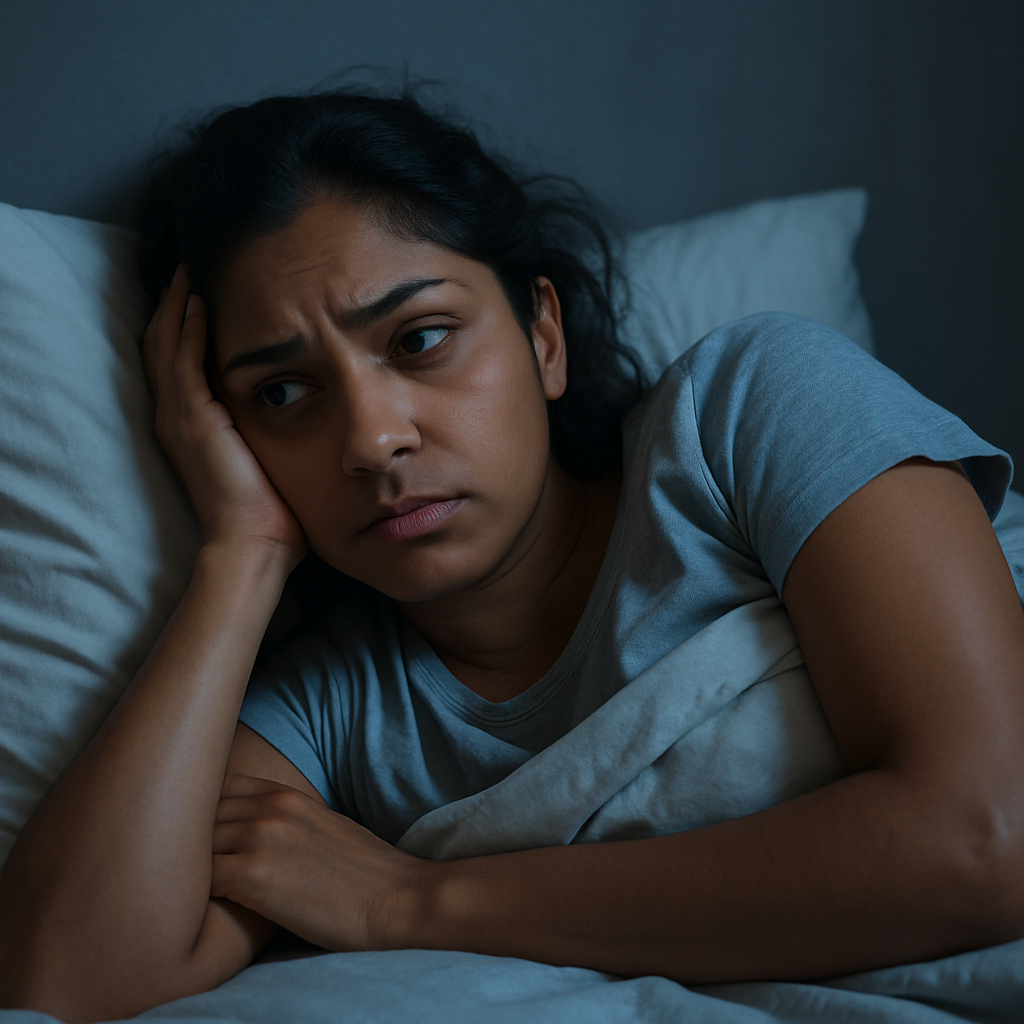
What They Came In For: Insomnia
Erin came to the clinic after months of insomnia. She’d cleaned up her sleep hygiene, but still woke night after night. With acupuncture and herbs, we helped her body remember how to stay asleep — not by forcing it, but by restoring the rhythms that allow real rest to return.
Erin came in because she couldn’t sleep.
Not just a rough night here and there — not the kind of sleep trouble that passes with a couple of early bedtimes — but deep, unrelenting insomnia that had taken over her nights for months.
She told us it started quietly. At first, she just had trouble winding down. She’d lie awake for a while scrolling her phone, or thinking through unfinished tasks, or replaying conversations from the day. But after a few weeks, it turned into something more stubborn. She couldn’t fall asleep until 1 or 2 in the morning, even when she was exhausted. And once she did fall asleep, she’d wake again — sometimes every hour. By morning, she felt like she hadn’t slept at all.
Erin described it as a kind of buzzing — like her body was on high alert all night. Her eyes would close, but her chest still felt wound tight, like something inside her was pacing the floor.
Her doctor called it primary insomnia. Nothing else seemed to be wrong. Her bloodwork was normal. Her vitals were fine. She wasn’t on any medications. They offered her a prescription for sleep aids and suggested she try to reduce stress.
But Erin didn’t want to sedate herself into sleep. She wanted her body to remember how to do it naturally — to feel safe enough to let go, quiet enough to rest.
By the time she came to us, Erin had already lost a lot to her insomnia. She used to love her morning routine — a long walk, hot tea, time to write in her journal — but now she could barely get out of bed. Her work had become harder. She felt foggy all the time, quick to tears, and emotionally raw. Her relationships were strained. Everything took more energy than it used to, and there was no rest to replenish it.
She told us, “I just don’t feel like myself anymore.”
Step One: Rebuilding the Conditions for Sleep
To Erin’s credit, she had done some research online about the negative impacts of tech on sleep and had started cleaning up her sleep habits.
She stopped bringing screens into the bedroom. No more scrolling before bed. No TV to fall asleep to. She started going to sleep at the same time every night — even on weekends — to re-train her internal clock.
She added in a few analog rituals: a warm cup of herbal tea, some gentle stretching, sometimes a few minutes with a paper journal or a novel. And most importantly, she stopped trying to make herself fall asleep. She gave herself permission to just lie there and rest, to read or breathe or be still, without watching the clock or pressuring herself to drift off.
These shifts helped. She started falling asleep a bit more easily. That heavy, wired feeling at bedtime began to soften. But the core problem — the one that made her feel truly unwell — was still there.
She was still waking up. Night after night, like clockwork, around 2 or 3am. Sometimes she could get back to sleep, but often she’d be awake for hours, mind alert and body humming. By morning, the little sleep she’d managed to get didn’t feel like enough.
That’s where Chinese medicine came in.
Step Two: Helping the Body Remember
From a Chinese medicine perspective, insomnia isn’t just about behavior or routine. Those things really matter, especially when it comes to maintaining quality sleep, but they’re not always enough to overcome the damage from persistent poor sleep. For Erin, we could see that her body wasn’t just overstimulated — it was out of rhythm. The systems that should have been quiet and replenishing at night were still active, still moving.
Her pulses confirmed what she described: her system was unsettled at night, not anchored. The internal transitions that allow sleep to come — quieting the mind, drawing awareness down into the body, releasing the day's tension — weren’t happening smoothly. She could fall asleep now thanks to better sleep hygiene, but something was still waking her up from the inside.
In Chinese medicine, we often speak of the Heart 心 (xīn) as the seat of consciousness — the part of us that governs wakefulness, clarity, and emotional tone. At night, that part is meant to be nourished and settled, so the mind can rest. But in Erin’s case, that internal quiet hadn’t been possible for some time. The Liver 肝 (gān), which is responsible for regulating movement, dreams, and transitions, seemed to be activating too early — stirring her awake before her body was ready.
With acupuncture and herbal medicine, we began to help her body recalibrate. We used points that calm and regulate the nervous system, supporting the internal downshift that should come naturally at night. We gave her a custom herbal formula designed to nourish the blood and support the quieting functions of the Heart system — not in a sedating way, but in a stabilizing one.
Over the next few weeks, the 3am wake-ups became less frequent. When she did wake, she could fall back asleep more easily. Her sleep deepened. Her mornings started to feel different — less heavy, less frantic.
Sleep returned in layers. A few good nights, then a stretch of consistency. Then — finally — a full week where she didn’t think about sleep at all.
A Return to Herself
After a couple months, Erin said something that stuck with us:
“I’m not even thinking about sleep anymore — I just go to bed, and then I wake up.”
It’s such a simple sentence, but it marked a big shift. Because by then, she wasn’t living around her insomnia anymore. She had energy again. Her moods were steadier. She had started journaling in the mornings again, taking walks before work. She had space in her life again that wasn’t filled with exhaustion.
We often say that Chinese medicine doesn’t force the body to do anything. It listens, it supports, and it reminds the body of what it already knows how to do — including how to rest.
Erin still keeps her nighttime rituals. She still avoids screens in the bedroom. But now, her body responds to those signals. Now, when she gets into bed, she knows what will happen next: she’ll rest. She’ll sleep. She’ll wake up feeling like herself again.