
Everyday Alchemy: Bedtime as a Boundary
In Chinese medicine, sleep isn’t just rest — it’s restoration. This post explores how bedtime can serve as a boundary, not just a stop button, and offers simple, nourishing practices to support the body’s natural descent into yīn 陰. Better sleep starts with honoring the transition into night.
Creating Restorative Sleep Habits
In Chinese medicine, the day has structure. It rises and falls with light and activity in patterns that have been described in clinical terms for two thousand years, and the transition into night is one of the more consequential moments in that cycle. The decision about when and how to go to bed shapes what the body is able to do over the following eight hours, which in turn shapes how the next day starts. Most of us make this decision casually, by default, or under the pressure of whatever was happening on the screen at 11:47 p.m.
Modern life tends to treat sleep as a utility, something to be scheduled around more important activities and shortened when the day runs long. Chinese medicine treats sleep as one of the three pillars of health, alongside food and breath, and views it as the time when most of the body's serious restorative work happens. The duration of sleep matters. The quality matters more, and the quality depends substantially on how we cross the threshold into it.
Night is the time when Yīn 陰 takes precedence. Where the Yáng 陽 of daytime supports activity, thought, and outward engagement, Yīn anchors inward processes: digestion settling into assimilation, cellular repair, the enrichment of Blood, the work of dreaming, and the containment of consciousness. The Shén 神, the part of consciousness that the Heart houses during the day, retreats more fully into the Heart at night and is nourished there by Blood. When this consolidation does not happen well, the consequences show up the next day as scattered attention, low-grade anxiety, or a dullness that coffee does not quite resolve.
The Liver does much of the processing work overnight. During sleep, Liver qì 氣 helps regulate the movement of Blood, settle the nervous system, and smooth the transitions between sleep stages. The food, emotion, and experience taken in during the day are metabolized while we are unconscious. When sleep is shallow or interrupted, that metabolic work stays incomplete, which is why a poor night's sleep can leave us feeling not just tired but unsettled in ways that are hard to name.
Bedtime as a transition
Most people treat bedtime as a hard stop. One moment the phone is in hand, the next it gets tossed aside in the hope that sleep will follow within minutes. The body does not actually work this way. Yīn needs time to gather, the mind needs time to descend from daytime intensity, and the autonomic nervous system needs an unambiguous signal that it can shift out of sympathetic tone. Without that transition, lying in bed becomes the experience of waiting for sleep that has not been given permission to arrive.
A more useful frame is to think of bedtime as a boundary that begins about an hour before the lights actually go off. The hour before sleep is when the body is being told what comes next. If that hour is full of email, doomscrolling, an episode of your favorite new show, and bright overhead lighting, the body has been told that the day is continuing. If the hour is quieter, dimmer, and lower-stimulation, the body has been told that sleep is coming, and the descent into sleep tends to happen more easily as a result.
This does not require an elaborate routine. It requires consistency and a small number of clear signals.
What an evening can look like
The most important variable is timing. The body is built on circadian rhythm, and the Heart, Liver, and Kidney all carry nighttime functions that depend on regular sleep windows. Going to bed at roughly the same time each night, ideally before 11 p.m., gives those systems the regularity they need to do their work. The exact minute does not matter, but the consistency of the target hour does. People who keep a stable bedtime within a 30-minute window, even on weekends, sleep noticeably better than people who swing across two or three hours depending on the day.
Light is the next variable. Bright light, particularly the blue-spectrum light from screens and overhead LEDs, suppresses melatonin and reads as daytime to the parts of the brain that govern sleep onset. Dimming the lights for the half hour or hour before bed, switching to warm-toned bulbs in the evening, or lighting a candle in the bathroom while you brush your teeth all give the visual system a clear signal. None of this is mystical. The hypothalamus is taking direct cues from your retinas, and it responds to what it sees.
Eating is the third variable. Late meals leave the digestive system actively working when the body is trying to redirect resources inward, and active digestion tends to keep the mind active too. A two- or three-hour gap between dinner and bedtime lets the Stomach finish its work before sleep starts. If hunger is genuinely present at bedtime, something small and easily digested is better than going to bed with a growling stomach, but the better long-term move is usually to eat dinner earlier.
The fourth variable is the kind of input you take in during the wind-down hour. Violent news, rapid editing, loud soundtracks, and emotionally intense narratives all pull Shén outward and keep the nervous system in engagement mode. Sleep requires the opposite movement, an inward gathering, and the easiest way to support that gathering is to choose calmer input in the last hour of the day. A book that is mildly engaging rather than a thriller. A conversation with someone in your household rather than an argument on social media. Music that does not insist on your attention.
The fifth variable is the transition itself. Some kind of consistent sequence of small physical actions before bed seems to matter more than any specific action. A shower or a face wash, a cup of mild herbal tea, ten minutes of reading in a cool, dark bedroom, the deliberate slowing of breath as you settle in. The body learns that this sequence means sleep, and over time the sequence itself becomes part of how sleep arrives. Reading a real book in bed is one of the better-established practices because it engages the visual system in a calmer way than a screen, allows the eyes to grow heavy naturally, and provides a clear physical cue (closing the book, turning off the lamp) that marks the actual transition into sleep.
When sleep is genuinely difficult
Some people do all of this and still cannot fall asleep, or fall asleep readily but wake at 2 a.m. and cannot get back down. These patterns often point to something specific. Difficulty falling asleep is more often a Heart and Shén problem, with racing thoughts and a sense that the mind cannot find an off switch. Waking between 1 and 3 a.m. corresponds to the Liver's window in the Chinese organ clock, and tends to point to Liver-related patterns of stagnation or Blood deficiency. Waking at 4 or 5 a.m. with the inability to return to sleep often points to Kidney depletion or to the underlying patterns we see in long-running burnout. These are clinical pictures that respond well to treatment, and if a sleep problem has been going on for months, it is worth being seen rather than continuing to optimize the wind-down routine alone.
For most people, though, what looks like a sleep problem is closer to a rhythm problem. The body has not been given clear cues that the day is ending, and so the descent into sleep happens reluctantly or incompletely. The fix is rarely dramatic. A consistent bedtime, dimmer light in the last hour, an earlier dinner, calmer input, and a small repeated sequence of pre-sleep actions will resolve a meaningful portion of the cases that show up in the clinic, and they will improve sleep even for people whose sleep is already reasonably good.
What Chinese medicine offers here is mostly a frame. The day has a shape, the body works with that shape rather than against it, and bedtime is the moment when the work of the day is handed over to the work of the night. Treating that moment with a little care is one of the higher-leverage things a person can do for their own health, and it costs nothing beyond the willingness to put the phone down twenty minutes earlier than usual.

To Sleep Like A Baby
By
Travis Cunningham LAc. MSOM DICEAM
(The Elusive) Good Night Of Sleep

How long has it been since you’ve had a good night of sleep? Can you remember what it was like?
Do you remember falling asleep? Staying asleep? Or, how you woke up? Do you remember the dreams you had? Or, do you only remember the feeling of restfulness upon waking?
One of the most challenging things to consider when we contemplate sleep, is just how unconscious a good night of sleep can be. We require nothing to sleep well. All humans must sleep. But how much? And, to what quality? What is required and what is optimal? What does sleep do for us? And, how can sleep be corrected if it becomes problematic?
If we take the basic premise that sleeping well is a natural process, we encounter our first problem…
“If a good night of sleep happens unconsciously, how can we consciously change it?”
And thus, (the internet) spawns a million suggestions. Searches, studies, science - all seeking to answer the same basic questions.
One of my teachers used to say that “if we look at the disease, we will find one thousand medicines to treat it. But, if we look at health, we will find only one cure.” Before we can learn to treat a problem, we must first understand what it is like to have no problem. So, what is healthy sleep?

Defining Healthy Sleep
The first thing that one might notice in the analysis of healthy sleep is that sleep - all sleep, is a rhythm. Just like breathing, eating, urination, defecation, movement and rest, sleep is a rhythmic process. When a person generally sleeps well, one night of poorer sleep doesn’t bother them so much. When a person generally sleeps poorly, one night of good sleep doesn’t benefit them so much. Many people who have chronic insomnia will actually report that they feel worse, when they (rarely) get a full night of sleep. We can make sense of this fact with the simple understanding that sleep is rhythmic. And, the effect of a single “beat” of sleep, is not nearly as impactful as the timbre of a repeated rhythm.
When we compare sleep to other rhythms, like eating, we find that sleep is a longer rhythm. Sleep is longer; both in the time that it takes to engage in, and the time that it takes to influence as a habit. When we are younger, we can live with poor sleeping habits for a longer period of time without feeling the negative effects on our vitality. As we age, poor sleeping habits catch up with us more quickly and become much more difficult to correct once they are set. In the traditions of East Asia, this is explained by the concepts of Yin and Yang.
In youth, we are more Yang. We have access to more energy and are able to make changes in our lives more easily. As we age, we become more Yin. We become more stable, (hopefully) more grounded and wise, but with less capacity to quickly change and shift. It is advised that we establish good habits when we are youthful because it is easier to keep these habits as we get older. While I believe that any habit is changeable at any stage life, sleep is a rhythm that is easier to correct in our earlier years.
It is important to discuss the longer rhythmic nature of sleep right away because if we wish to change a longer rhythm, we must expect that it will take a longer period of time to shift than other activities. When I work with adults in the clinic for sleep, I tell them to expect that it will take a minimum of three months to shift the basic pattern and possibly longer if there is a standing history of insomnia. Good sleep takes time. It takes effort to create a positive sleeping habit, before good sleep can become effortless once again.
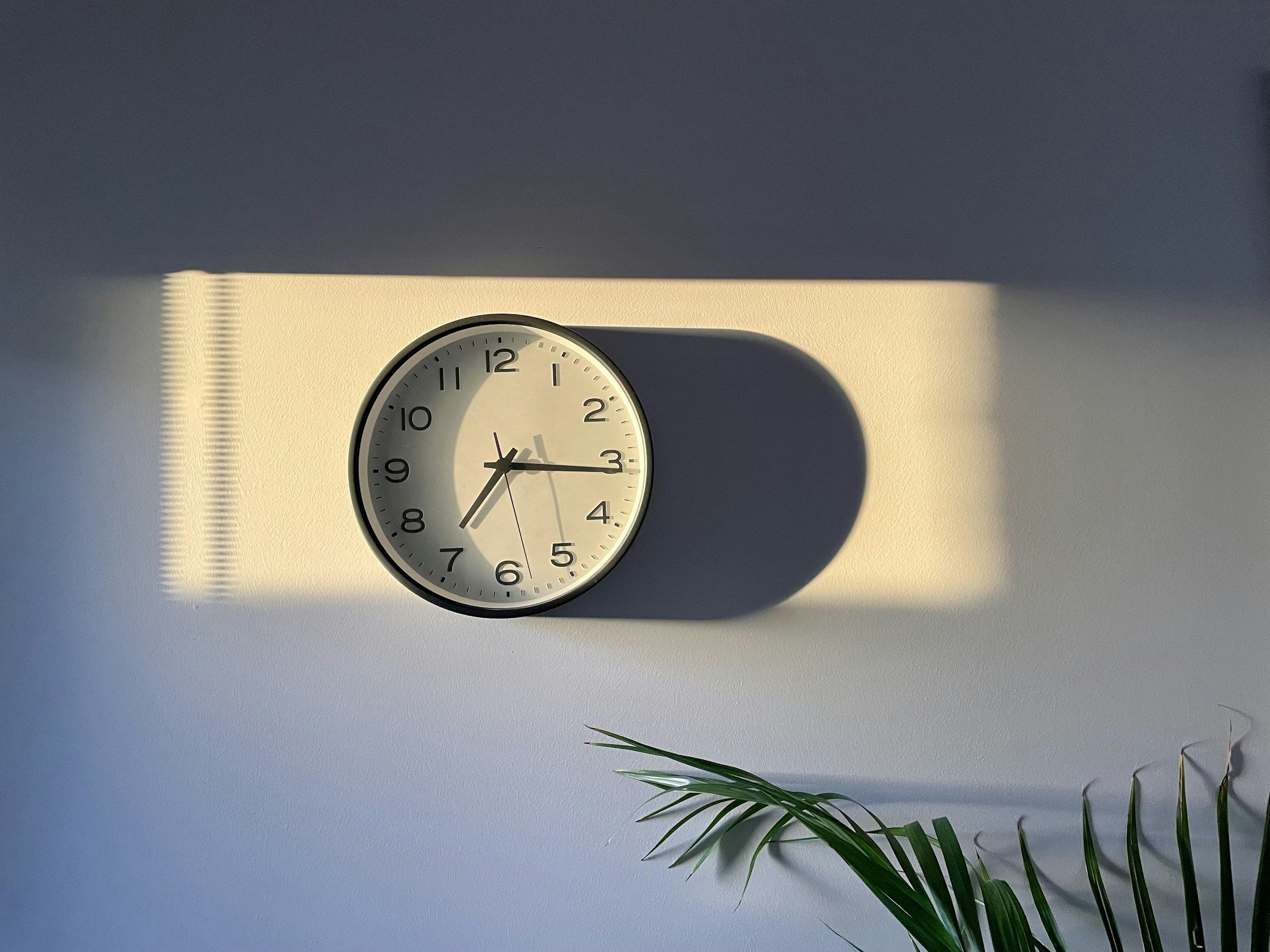
Sleep & Time
Sleep, just like any rhythmic process is inextricably connected to time. The connection to time has two aspects. First, we have the duration or amount of time a person is sleeping within a day or night. Second, we have the time during the 24 hour day that a person chooses to sleep. While at first, these two aspects of time seem to be separate topics, at a closer glance we will find that they overlap and influence each other.
In East Asian medicine, there is a keen interest in the efficiency and quality of nature. Ancient people observed that all creatures followed the circadian rhythms of day and night. Human beings tended to sleep during the night time and stay awake for most of the day. Humans generally followed the cycles of the Sun, and were more active when the Sun radiated its light from the sky.
As human beings evolved with the Sun’s cycles, our physiology “learned” to become more efficient when we follow them. We have naturally more energy to act during the day and more proficiency to restore ourselves through resting at night. In modern times, we can easily live outside of or contrary to these natural rhythms. But we inevitably pay the price through inefficient restoration and a challenged expression of vitality.
Many modern people may push against the idea that for optimal vitality, we must adhere to the circadian rhythm - resting and waking with the cycles of the Sun. These people may insist that they feel better staying up late at night, and waking in the late morning or early afternoon. I can honestly say that I have not (yet) seen a single person in clinical practice to make this claim who has not obviously damaged their health because of it. Sleep, as we saw before, is a longer rhythm. It is harder for most people to see the damaging effects of an inefficient sleep habit in the short term. But over the course of weeks, months and years, the deficit will show itself.
So what does a sleep deficit look like? For some people, it can simply mean that they require more hours of sleep to function normally than they might. The lack of efficiency in restoration means that the body needs more time to recover than it could otherwise. In traditional medicine, we think of a healthy sleeping habit to (generally) require between 6-8 hours of sleep within a 24 hour cycle. Most people trend closer to the 8 hour mark with what they need, then the 6 hour one. This need can also fluctuate with the seasons - trending a bit longer in the winter and a bit shorter in the summer.
Problem One: Needing More Sleep

If a person finds that they need more sleep than 8 or 8.5 hours to feel rested, it is a sign that their sleep is inefficient or in deficit. I’ve treated patients who claim to need 11 or even 12 hours of sleep per night to feel rested. This is a sign of a profound deficiency of vitality that the body is trying to rectify by sleeping more. In traditional medicine we would say that the body is having a difficulty storing its vitality. The need to sleep for this many hours obviously effects the person’s daily life. I’ve also noticed that a huge percentage of these patients struggle with depression. In these cases, there is good news. If we can help to restore their vitality, the person will generally need fewer hours of sleep and their depression will either lift or at least be less problematic for them.
In East Asian medicine, we see this pattern of sleep coincide with feelings of cold in the body, weak digestion and malaise or fatigue. We call this Yang deficiency with Yin sinking. The warm and active quality of Yang is deficient and unable to transform or utilize the nutritive substance of Yin. This Yin substance “sinks” in the digestive tract, causing looser stools and a general feeling of heaviness in the body. The remedy for this pattern is treatment which targets warming the Yang, making it strong enough to transform the Yin substance and lighten the body.
Problem Two: Being Unable To Sleep
The other possibility for inefficient sleep or sleep deficit, is that a person may be unable to sleep or unable to sleep deeply. These people generally learn to sleep for fewer hours than the 6-8 that is considered normal or healthy. They basically never sleep well or feel rested, but may report feeling worse when they (rarely) do get a decent night of sleep.
While this may appear different than the first type of problem, it is actually the same. Both problems come from inefficient sleep or a lack of restoration. In East Asian medical diagnosis, I find that most of these patients still qualify as Yang deficient. In these cases the Yang is not only deficient, but also floating. These people can tend to have an overactive mind when they lay down to sleep, feel warmer at night or experience night sweating and have very vivid dreams. Underneath the superficial heat, there is cold. Sometimes you can feel this cold when you touch their feet or lower abdomen, especially when compared to the temperature of the neck.
These people would be treated differently than the first type, given that their presentation is not the same. I find that working with these folks can be a bit more challenging, because they will often feel more tired when we start treatment. These feelings of tiredness are often what they have been avoiding during the day, by use of stimulates or stimulating activities. Unfortunately, they must begin to feel their body’s fatigue in order to restore their vitality through sleep.

Can It Change?
In every case of insomnia, inefficient sleep or sleep deficit that I’ve seen thus far, the answer has been yes - it can change. The more important question is how much of a priority is the person willing to make their sleep? Sleeping well is a by-product of living a life where good sleep is possible. If we live contrary to the body’s natural rhythms, we cannot expect our sleep to be efficient or restorative. But if we are willing to change, so can our sleep. So how can we get our sleep back on track?
Step One: Empty The Stomach
A famous Chinese medicine doctor once said, “if a person tells me that they have a problem sleeping (any problem sleeping), I tell them the same thing: No food after dark. If they can adhere to this rule alone for two weeks, about 60% of sleeping problems will resolve.”
This one sounds a bit strange at first but when we take a closer look, it makes quite a lot of sense. When we go to sleep at night, our heart rate decreases and our body’s surface becomes cooler. A complex chain of events begins to happen involving many organs, nerves, blood vessels and the hormonal system. In East Asian medicine, we call this phenomena Yin ascending, Yang descending or the communication of the Heart (Fire) and Kidney (Water).
If we go to bed and our stomach is still full, our body has to ramp up its metabolism to digest the food. Our heart rate increases, and it can even feel uncomfortable to lay down. When our stomach (Earth) is full, the pathway for the heart (Fire) and kidney (Water) to communicate is “blocked.” This can inhibit the quality of a person’s sleep or even prevent sleep from occurring at all. The first and clearest step to getting better sleep is to increase the amount of time between your last meal or snack and your bed time. I recommend people work toward 3 hours between the two, if possible.
Step Two: Create A Slide

If you have any difficulty getting to sleep, its unlikely that you’ll be able to do so for awhile without a routine before bed. So create one. This routine will look different for every person. But the routine should include the general feature of moving from more activity to less. I call this “creating a slide.”
Keep in mind, that by activity, we don’t only mean physical activity. Modern people are less and less physically active as our work becomes more closely engaged with technology. For some of us, our evening routine may need to include physical movement to release the activity in our nervous systems. There are many great practices for this - from gentle Qigong, to Yoga. My favorite is actually just walking. Remember the cheesy phrase: Whatever it is that you do to unwind, make sure to include your body and mind.
Step Three: Swing Out To Swing In
Many people have a difficult time sleeping because they lack basic movement or exercise during their day. But by engaging in a short exercise routine, people can dramatically enhance the quality of their sleep at night.
There are many studies that have been done on this subject alone. Some of these studies have analyzed specific data on the cycles of hormones and the assistance that day-time exercise can provide.
In East Asian medicine, we can summarize this phenomena quite simply: Yang activity benefits Yin restoration. Swing out, in order to swing in.
Step Four: Create A Break In The Static
So many cultures around the world take a siesta or a mid-day nap. Interestingly enough, if we look at the times of the day that most cultures take siesta (1-4PM), these are the clock-opposite times that most Americans struggle to sleep at night.
If you ask people about how they sleep, many people who can fall asleep easily will struggle to stay asleep between 1-4AM. East Asian medicine is a medicine that looks at opposites (Yin & Yang). If there is a problem that regularly occurs for someone at 3AM, we might look at adjusting the person’s conduct at 3PM to change it. For example, If a person is regularly waking up at 2:30AM and unable to fall back asleep, one way to change this dynamic would be for the person to take a short nap at 2:30PM. It sounds strange, but it totally works!
Another way to think about the helpfulness of mid-day rest is what I call, creating a break in the static. First, imagine that during the work day, we accumulate stress or a type of pressure in our nervous system. To me, this stress feels like static electricity, so I call it static. As the static builds without a release point, our nervous system continues to get more and more stimulated. If this continues all day, when we reach the day’s end, we may experience the “tired but wired” phenomena. We feel very tired, but we cannot sleep.
By taking a mid-day nap or short resting period, we can provide a natural release valve for our accumulated stress. Now before you instantly write off this idea by telling me that you don’t have time, hear me out. A break even as small as 5 minutes can significantly shift the state of accumulated stress within the nervous system. I’ve worked with all types of busy people. If you prioritize it, you can create the time.
What can you do with this time? The best thing that I’ve found, short of a quick nap is a mindful breathing practice or a shaking exercise (scroll down the page to see the exercise). If you make the time and participate every day, you will feel the changes.

Step Five: Get Help
If you’ve been struggling with your sleep for a long time, or even a shorter period of time, the quickest way to get better is to receive help. I’ve specialized in helping people with their sleep since beginning my training in East Asian medicine. Not being able to sleep efficiently is a huge burden - one that I know from my own experience.
It is possible for your sleep to improve if you are willing to receive help and participate in the process. If you’d like to take the next step, follow the links below to read more about treatment for insomnia or sign up for your first appointment today.