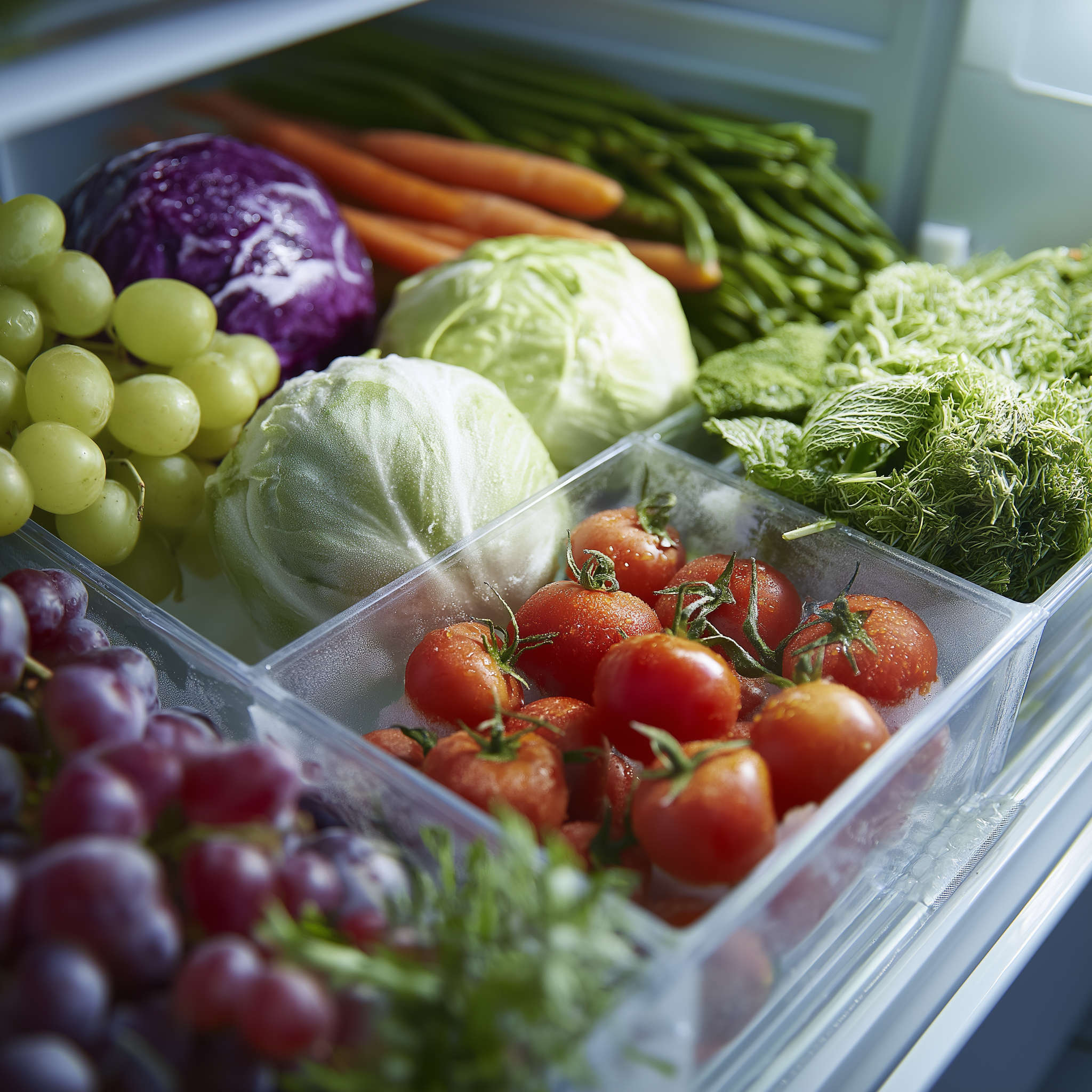
Everyday Alchemy: Cold and Raw Cautions
Learn about ways to maximize your digestive strength by being mindful of how much cold and raw food you are eating.
On Cold Food, Raw Food, and the Digestive Fire
There is a recommendation that comes up often in Chinese medicine clinics and almost never in the rest of the food conversation in this country: go easy on cold and raw foods, and when you do eat them, eat them in the season they grow, during the part of the day when your digestion is strongest, and in a smaller quantity than the salad-bar version of health would suggest. This runs against a lot of contemporary nutritional advice, which tends to frame raw vegetables and iced drinks as categorically good and to treat any caution about them as fussy or unscientific. The Chinese medical position is more specific than that, and once you see what it is actually claiming, it tends to stay with you.
Cold and raw foods have a place. The question the tradition asks is where that place is: which foods? in which season? at which time of day? and in what quantity?
Why the Digestive Fire Matters
In Chinese medical terms, the reasoning starts with the Spleen and Stomach, the paired organ systems responsible for what the tradition calls the transformation and transportation of food. The Spleen in this sense is the functional system that takes what you eat and drink and converts it into the substances the body actually uses, which is a larger role than the small immunological organ biomedicine names by the same word. That process runs on warmth. Classical texts describe the Stomach as a cooking pot and the Spleen Yáng as the fire underneath it, and the metaphor holds up well enough that it is worth taking seriously. Food that arrives cold has to be warmed to body temperature before the digestive system can work on it, and that warming costs the Spleen something each time. A cold meal occasionally is a small cost. Cold meals as a daily habit, especially in people whose digestive fire is already low, become a pattern called Spleen Yáng deficiency. The clinical presentation includes bloating that worsens after cold foods, loose stools, fatigue after eating, cold hands and feet, and a general sluggishness that people often attribute to stress or sleep when the more proximate cause is sitting on their plate.
Raw food sits in a similar category, slightly differently. Raw plant material is harder to break down than cooked plant material, because cooking does some of the work of digestion in advance by breaking down cell walls and making nutrients more available. A healthy digestive system handles raw food well. A depleted one struggles, and the difference shows up as the same bloating and sluggishness that cold food produces, often with more gas. Raw vegetables in moderation, in the warmer seasons when the body has less thermoregulatory work to do, eaten when digestion is strongest (daylight hours), are a different proposition from a kale salad at six in the evening in February.
The physiological picture in biomedical terms lines up with the traditional framing more than you might expect. Gastric emptying slows when the stomach has to warm incoming food. Digestive enzyme activity is temperature-dependent, with most enzymes working optimally at body temperature and dropping off sharply below it. Cold liquids in particular trigger transient vasoconstriction in the gastric mucosa, which reduces blood flow to the tissue that does the actual work of digestion. None of these effects is dramatic in a single meal. They accumulate across a dietary pattern, and they accumulate faster in people whose digestion is already compromised by stress, illness, medication, or age. The Chinese medical account of why cold and raw foods burden digestion describes a thermoregulatory and enzymatic reality that centuries of clinical observation identified well before laboratory measurement could confirm it.
Season, Time of Day, and Amount
Seasonality enters the picture because what grows locally at a given time of year tends to be what the body can actually use at that time of year. Summer produces the cooling, hydrating foods a warm body wants: watermelon, cucumber, tomato, leafy greens, soft fruits. Winter produces the denser, warming foods that support metabolic function in cold weather: root vegetables, cabbages, winter squash, alliums. The contemporary grocery store has flattened this calendar by making strawberries available in January and butternut squash available in July, but the body has not updated accordingly. Eating watermelon in January asks the digestive system to cool a body that is already working to stay warm. Eating strawberries in January gives you a fruit that was picked unripe, shipped thousands of miles, and contains a fraction of the nutrients it would have in June. The seasonal guidance is practical: work with the thermoregulatory situation the body is actually in.
The time-of-day question is the one patients find most counterintuitive, because the American food calendar tends to concentrate raw vegetables at dinner. In Chinese medicine, digestive capacity follows a daily rhythm. The Stomach and Spleen are at their strongest in late morning and midday, between roughly seven and eleven for the Stomach and eleven to one for the Spleen in the classical organ clock. By evening, digestive fire is lower, which is part of why heavy or cold meals late in the day produce more trouble than the same meals at lunch. If you are going to eat a big raw salad, lunch is a better placement than dinner. If you are going to drink a smoothie made of cold fruit and ice, morning is a better placement than after work (though to be honest, smoothies are one of the biggest culprits of weakened digestion). Shifting the raw and cold portion of the day earlier is one of the simplest adjustments a person can make, and it often produces a noticeable improvement in digestion within a week or two.
Quantity is the last piece, and it is where the practice tends to resolve for most people. The traditional guidance is that cold and raw foods should make up a minor portion of the plate, alongside a cooked main. A palm-sized serving of salad next to a warm dish is different from a dinner-plate-sized salad as the whole meal. A small glass of cold water with a meal is different from a large iced drink. Cold and raw foods place a real demand on the digestive system, and that demand should be sized to what the system can comfortably meet.
Putting all of this into practice tends to look less dramatic than it sounds. A reasonable pattern for most people is something like this. Start the day with something warm, whether that is congee, oatmeal, eggs, or just hot water with lemon before breakfast. Eat raw vegetables at lunch rather than dinner, in moderate quantity, alongside cooked food. Favor room-temperature or warm water over iced water with meals, and keep ice for hot days when you are genuinely overheated. Let the season guide the plate, which in practice means eating more raw and cooling food from late Spring through early Autumn and more cooked and warming food from late Autumn through early Spring. Dinner, in particular, benefits from being cooked and warm, with soups and stews doing real work in the colder months.
The signs that the shift is helping are usually subtle, but they build over time. Digestion that had been sluggish becomes more reliable. The bloating that used to follow certain meals stops happening. Energy after eating improves instead of crashing. Cold hands and feet warm up over weeks. These are the ordinary markers of a digestive system that has been given conditions it can work with, and they compound quietly over months.
I do want to name a tension that exists in this advice though. If you are someone who has been told, possibly repeatedly, that raw vegetables and cold-pressed juices are the foundation of a healthy diet, shifting toward cooked and warm foods can feel like you’re doing something wrong. That feeling should be acknowledged and then consciously set aside. We are not interested in the moral or “correct” way of eating, from any point of view. The Chinese medical view is that raw food is a particular kind of food with particular requirements, and that eating it without regard to season, time of day, or quantity places a load on digestion that a lot of people cannot comfortably carry. The work is mostly a matter of meeting the body where it actually is, not about a universal system of the “right” way to live.
The practice, in the end, is a form of attention. You are paying attention to what the season is offering, to when your digestion is at its strongest, and to how much of any given food your body can actually use. None of this is complicated, and none of it requires giving anything up. It requires only that the question of what to eat include the question of when to eat it, and in what company, and in what amount. Those questions have answers, and the answers tend to make the body feel better. That is the whole of it.

Falling Leaves and Changing Winds
Travis Kern, L.Ac.
The transition from Summer to Fall is a marked one in most parts of the US. Not only do the days start to shorten and the temperatures get cooler but many people start to get excited about the coming holiday seasons. Whether spending time with family or loved ones, going on trips, playing out meaningful traditions, or just getting a few minutes of pensive reflection, the fall season reminds us all of the continuous change intrinsic to all of our environments.
Historically and still in many parts of the world, Fall is the time of harvesting and fruition; of storing away the potent Yang that has dominated these last several months so that in the coming months ruled by the dark and cold Yin, we have enough motive force to sustain our lives and activities. This process is easiest to see in the picking, processing, and canning of late summer fruits and vegetables. If you’ve ever grown tomatoes or green beans, you know that those four plants you started in May are now overfilled with ripe fruit, more than you could ever eat, and it’s time to pack their nutrients away to help satisfy your appetites come Winter.
But it is not only in food and eating that the Fall season can be experienced. Indeed, our activity and movement during this time of year also changes. Many of us know the feeling of wanting to curl up on the couch with a warm drink and watch our favourite films or read a great book. Humans start to feel slower and disinclined to make intense physical efforts. This tendency is our natural movement toward the hibernation of the eventual winter season when we need to conserve our energy and our effort because making big things happen during the cold of the coming Winter can be difficult and almost always depleting.
Fall is also the Chinese Medicine season of dryness and even though in many parts of the country fall brings increased rain, the air begins to chap our faces and lips and the ground starts to crack as the chill begins, reflecting the systemic dryness of the season. Foods that are moistening and supportive of the lung from a Chinese Medicine point of view are a must during this time of year.
The Interaction of Yin and Yang

The classic Taiji symbol has been common in American consciousness since the early 90s at least. That swirl of white and black doesn’t usually draw profound contemplation from Western people but it is indeed a powerfully simple image of a very complex idea. It would be easy to imagine that Yin and Yang have moral qualities because of our Western dualistic mindset (for more on that check out this blog post). Yet, the dark and cold qualities of Yin are not bad things just as the movement and activity of Yang are not good things. They have no moral dimension and they are both absolutely required in order for life to move forward and flourish.
What is movement with no substance or earth with no animation? The interaction of Yin and Yang form the essential elements of all things both living and not. They are descriptors of things and of changes between states of being. They can be used as all the parts of speech and each aspect gives us more insight into the complexity of existence. Profound indeed.
But it’s hot where I live. Like, all the time. In every season…
When we talk about the changes in season, the theories we expound on here are rooted in the the patterns and times of Earth’s Northern Hemisphere and a latitude roughly equivalent to central France. If you lived in Australia or Brasil, your seasons would happen in different months but they would still happen. And though most of us think of the change in season as a change in the temperature of the air, the ancient Chinese considered many more factors than the sensation of hot or cold in the air. Spring is the time when new plants sprout and grow powerfully. Summer provides the necessary sunlight to grow the bulk of our food. Fall is the time of harvest and storage. Winter is the season of conservation and contemplation. Regardless of the exact temperature of your particular locale, these qualities present themselves in every place, every year. OF course we have all experienced a warmer Christmas or a really wet autumn, but these weather based assessments are only one aspect of the season. Tapping into how you feel in your body, of what your experience is during any given month in the year is the best way to begin to sense the environmental and cosmic changes that are happening all the time.
This Moon and the Coming Qi Node
Knowing how cosmic changes affect us on our little blue planet is no small feat. I use calendar notes and updates to keep me in the loop and even then I planted my tomatoes two days after a full moon (those in the know are aghast and those that aren't, let's just say you're not supposed to plant things after a full moon). Knowing your seasons can continue to live in the broad strokes but if you are interested, the rabbit hole can go as deep as you like.

2nd Moon of Autumn
September 9th was the second moon in the fall seasonal cycle. The first moon is when the season’s movement begins and by the 2nd moon, humans start to feel the qualities we associate with the season. By the 3rd moon, the season feels in full swing.

Qi Node: Autumnal Equinox (Qiu Fen)
September 22nd marks the even divide between daytime and nighttime where the cooler days and falling leaves mark the tangible presence of Autumn
Things to Eat:
Pears and Apples
Winter Squash like Butternut and Pumpkin
Last of the veges from the garden
Sweet potatoes, carrots, and parsnips
Medium aged cheese like Brie and Roblochon
The best cuts of beef
Things to Do:
Eat lighter meals, maybe skip a dinner
Switch to darker brews of all your drinks
Start collecting your cool weather gear
Keep your neck covered when outside
Bake some pumpkin bread
Take a canning class in your area
Things to Cook:
STUFFED SQUASH WITH BROCCOLI RABE AND QUINOA

serves: 8 as a side, 4 as a main
notes: You can make your own balsamic glaze by reducing balsamic vinegar in a saucepan, but I find it easier (and usually economically advantageous) to buy a pre-made, high-quality glaze. If you have dried rosemary on hand, you could substitute it for the fresh by reducing the amount to 2 teaspoons. Last one: I used the fancy, truffled marcona almonds from Trader Joe's for the garnish here and it was spectacular.
Ingredients:
2 small-medium acorn squashes
1 ½ tablespoons olive oil, divided
salt and pepper, to taste
1 tablespoon minced fresh rosemary (from roughly 1 sprig)
½ cup quinoa, rinsed
1 cup vegetable stock
1 medium shallot, peeled and diced
1 celery stalk, diced
1 carrot, peeled and diced
1 tablespoon minced fresh sage (from roughly 1 sprig)
1 clove of garlic, peeled and minced
½ bunch broccoli rabe, tough ends of stems trimmed
3 tablespoons dried currants
2 tablespoons balsamic glaze
3 tablespoons marcona almonds, chopped
Preheat the oven to 400°F and line a large baking sheet with parchment paper.
Directions:
Cut the acorn squashes in half lengthwise. Scoop out the seeds and stringy bits with a spoon. Then, cut each of the seeded squash halves in half once more. You should have 8 evenly sized wedges once you’re done with both squashes.
Place the squash wedges facing up on the parchment-lined baking tray. Brush the squash flesh with about half of the olive oil. Season all of the squash with salt and pepper. Sprinkle the minced rosemary over top. Slide the tray into the oven and roast the squash for 35-40 minutes, or until the squash is tender.
While the squash is roasting, combine the rinsed quinoa, vegetable stock, and a pinch of salt in a medium saucepan. Place the saucepan over medium heat and bring to a boil. Lower the heat to a simmer and cook for about 15 minutes, or until all of the stock is absorbed and the quinoa has puffed up. Set aside.
In a large pot with a well-fitting lid, heat the remaining olive oil over medium heat. Add the diced shallots to the pot and stir. Cook until shallots are translucent, about 2 minutes. Add the diced celery and carrot and stir. Cook until all of the vegetables are slightly soft, about 3 minutes. Add the minced sage and garlic to the pot and stir. Chop the broccoli rabe into bite-sized pieces and add it to the pot.
Stir the vegetables to coat and season with salt and pepper. Add a ¼ cup of water to the pot and place the lid on top. Let the broccoli rabe steam in the pot for about 3-4 minutes. Then, remove the lid and stir in the cooked quinoa and dried currants. Remove the pot from the heat.
Place roasted squash wedges on a serving platter and carefully spoon the broccoli rabe and quinoa stuffing into the natural cavities of the squash. Drizzle all of the stuffed squash pieces with the balsamic glaze and garnish with the chopped marcona almonds. Serve immediately.
Recipe Credit: The First Mess
www.thefirstmess.com

Hazy Days of Summer and the Coming Change
Travis Kern, L.Ac.
Here in the Pacific NW, it takes a while for the weather to reflect the season. In fact, it's common wisdom in Portland that if you schedule an event outdoors before the 4th of July and it rains, well, you should have known better. It rains a lot here. After the 4th though, you're golden. Work and play outside to your heart's content. It will be dry, warm, and the sun will be shining. It is extra interesting to me then that the last moon of summer is today, July 12th. For the next thirty days we will experience the final moon cycle for this season that seems to have just begun. What is going on?
Understanding
Chinese Cosmology
The way that the ancient Chinese understood the universe is incredibly complex. Like all developed ancient cultures, the sages of the past looked to the stars to understand what was happening on the earth, and they took cues from the cyclical movement of the cosmos. Over millennia, this observation developed into understanding and eventually into concrete systems to explain current events, guide healthy activity, and even predict what might happen in the future. The ancient Chinese were masters of patterns and applied what they found to all aspects of life.
Based on ancient observations and teachings, the Chinese divide the year into four seasons which each have 3 moons. A moon is counted at the new moon, when the sky is dark and no moon is visible, and progresses through the full moon until the next dark sky and its new moon. This gives us 12 moons per year (roughly, there are exceptions like with everything).
Each of these moons is also divided into two qi movements or "qi nodes" that give us further insight into the movement of the qi during that part of any season. That gives us a total of 24 qi nodes for the year. Keeping track of these different movements throughout the year can help us dive more deeply into matching our food and activites to what is happening in the broader context of the season and the stars.
How Does It Work?
To create some context for all this moon and qi node stuff, let's look at some broad strokes first:
Every season's first moon is when the nature of that season is just beginning to take hold so it always still feels like the season right before. Then every season's last moon is when the season feels like it is finally in full bloom. So it takes the course of the three moons for the qi of a season to build up enough to push out into our environments. Of course one way to decide what season you are in has to do with the temperature of the air and the amount of rain or snow a place gets, but we all know that the weather is not the same everywhere in the world. But the nature of season is constant in every part of the planet, even if there might still be snow on the ground in Chicago in April. That is, there are other factors that describe any given season beyond the temperature and the amount of sunshine. We know, for example. that Spring is the season for renewal and growth (the plants come back, the flowers bloom), the Summer is a time of activity and change (it's generally warm out, the days are longer to get more done), the Fall is a time of harvest and preparation (an abundance of crops, a time to prepare and preserve for the lean months coming), and of course the Winter is a time for going slow, preserving your energy, and contemplating. And of course cuddles. Never forget about the cuddles, though they work well in any season.
Each season has is own nature that shapes what we do, what the plants and animals do, and finding harmony with that cycle is one of the paths to good living.
This Moon and the Coming Qi Node
Knowing how cosmic changes affect us on our little blue planet is no small feat. I use calendar notes and updates to keep me in the loop and even then I planted my tomatoes two days after a full moon (those in the know are aghast and those that aren't, let's just say you're not supposed to plant things after a full moon). Knowing your seasons can continue to live in the broad strokes but if you are interested, the rabbit hole can go as deep as you like.
3rd Moon of Summer
The warmth of Yang Qi is everywhere. The season is in full swing.

Qi Node: Greater Heat (Da Shu)
July 22nd marks the culmination of the summer energy and the last build up to the Full Moon, when the qi will begin to descend to Fall.
Things to Eat:
Peaches and Stone Fruits
Citrus of all kinds
Snap peas and Green Beans
Tropical Fruit
Fresh Cheeses like Mozzarella and Chevre
Fish and Seafood
Things to Do:
Eat lighter meals
Enjoy a nice lager
Sit on the back porch
Keep getting up with the sun
Bake something sweet and delicious
Start gathering your canning supplies
Things to Cook:
Fish Tacos with Pineapple Slaw and Chipotle Cream

Ingredients:
12 oz firm white fish (Hake, cod, halibut, or sole)
2 slices of fresh whole pineapple, ½ inch thick (no need to core)
1½ cups cabbage, shredded
1 lime, zested and cut in half
½ cup plus 1 tbsp sour cream
¼ cup diced onions,1/4 inch dice
2 tbsp chopped cilantro
1 tsp sugar
¾ tsp sea salt, divided
½ tsp freshly ground pepper, divided
½ tsp red pepper, divided
¼ tsp cumin
½ - 1 chipotle, finely diced (according to taste)
8 Corn tortilla's
Instructions:
1. Heat grill.
2. Season fish with ¼ tsp pepper, ¼ tsp sea salt and ¼ tsp red pepper.
3. Squeeze juice from ½ lime over fish. Set aside.
4. Place cabbage, onions and cilantro into a medium sized bowl.
5. Add 1 tbsp sour cream, juice from ½ lime, 1/2 the lime zest, sugar, ¼ tsp red pepper, ¼ tsp freshly ground black pepper, and ½ tsp
sea salt. Mix all ingredients together. Then pour over the cabbage mixture and toss to combine.
6. Place ½ cup sour cream, chipotle, and cumin into small bowl. Mix well to incorporate all ingredients. Set aside. This will be your chipotle cream topping
7. Lightly oil a piece of aluminum foil for the grill and place fish on top of foil (prevents the fish from falling through the grate).
8. Cook fish for 10- 12 minutes, turning once during cooking time, or until fish is white and flaky (time is dependent
on thickness of fish fillet).
9. At the same time the fish is cooking, place pineapple slices on open grill, the amount of time to caramelize is
about the same time for the fish,10-12 minutes. Turn once half way through cooking.
10. Warm corn tortilla's on the grill (if there is room), or wrap them in aluminum foil and place in the oven to warm at
350 for 15 to 20 minutes.
11. Once fish is done, remove from grill and cover with foil to keep warm.
12. Remove pineapple from the grill and allow to cool a few minutes for handling.
13. Cut pineapple slices away from the core and chop.
14. Add pineapple to cabbage mixture and toss to combine.
15. Assemble tacos, evenly dividing the fish, pineapple slaw, and chipotle cream onto the warm corn tortillas.
16. Serve immediately.

Summer and the Command of Yang Qi
Travis Kern, L.Ac.
The Summer season is full of classic images and experiences like beach lounging, hiking and swimming, backyard barbecues, and outdoor fun. It's a season of adventure and exploration, energized by the warmth in the air and by the extra long days that make us forget how late the hour might actually be. Summer is the fruition of a promise made in earliest days of Spring when the long dormant seeds and hibernating animals just began to stir. The ground was still cold, and in some places covered in snow, when the movement of the seasons first whispered the words that reanimated the sleeping Yang.
Understanding Yin and Yang
Imagine a burning oil lamp. The oil is dominated by Yin. It is substantive, slow moving, tangible. The fire burning on the lamp is dominated by Yang. It is hot, moving, and bright. The place where the fire touches the oil, where the oil transforms into the flame, is the point where we can witness the transformation of yin into yang. This relationship is infinitely divisible such that we can find Yin in things that are Yang like fire and we can find aspects of Yang in things that are Yin like oil.
Yin and Yang are two forces at play in the entirety of existence. They are words that represent different aspects of substance and activity. Yin and Yang are mutually dependent, mutually consuming, and constantly changing into one another. They are not static qualities but instead are dynamic descriptors that work at the most macro and micro levels. They are not religious terms or even ideas that represent a specific belief system. They were imagined and codified by ancient people trying to understand the world around them, and they have stood the self-critical test of time.
Summer is the time for doing, for achieving the things you thought about and imagined over the Winter and those same things that you started to make happen in the Spring. Now is the time to bring your ideas into reality and set yourself up for the leaner and colder times of the coming Winter season.
For now though, enjoy the weather and your outside times! Get grilling. Harvest some backyard veggies or visit your local farmers market. In the summer season you can enjoy your favorite cold treats and indulge in the fruits of the season like Tomatoes, Cucumbers, Eggplants, and Zucchini. Get up earlier and stay up later. This is the time in the year when you can really flex your boundaries and explore the complexity of living.

Eating
As always, foods in season and grown locally are you best friends.

Activity
Get Outside and Get Moving. Summer is the time of activity.
Things to Eat:
Berries of every kind
Tomatoes and Peppers
Snap peas and Green Beans
Eggplant, Zucchini, and Summer Squash
Fresh Cheeses like Mozzarella and Chevre
Bright herbs like Basil, Mint, and Cilantro
Fish and Seafood
Things to Do:
Eat lighter meals
Build that playhouse
Sit on the back porch
Enjoy a glass of rose
Get up earlier than you usually do
Enjoy the sunsets, even when they're late
Spend time near moving rivers and streams
Things to Cook:
Grilled Beet, Quinoa, and Feta Salad

Ingredients
Salad
2 large red beets*
1 tablespoon olive oil
¼ teaspoon sea salt
¼ teaspoon black pepper
2-3 handfuls loose leaf lettuce (like Arugula, Red Leaf Lettuce, Curly Endive)
1 cup cooked quinoa, cooled
¼ cup roasted almonds, whole or sliced
1 ounce feta
Dressing**
2 whole scallions, minced
¼ cup olive oil
2 tablespoons champagne vinegar***
¼ teaspoon sea salt
¼ teaspoon black pepper
Toast
2 slices sourdough bread
1 tablespoons olive oil
1 clove garlic
Instructions
1. Light Grill to medium-low heat.
2. Bring a pot of water to a boil. Scrub beets well and slice off the top and bottom then remove any wispy parts of the
beet. Drop into the boiling water and cook for 12-15 minutes, just until the beet starts to be tender. Drain and rinse with
cold water. Let sit until cool enough to handle.
3. Take the parboiled beet and slice into ¼" slices. Toss with 1 tablespoon olive oil, ¼ teaspoon salt, and ¼ teaspoon
pepper. Place beet slices on the grill and cook until charred on both sides, 6-8 minutes per side (depending on heat.)
Remove and quarter each slice.
4. Combine lettuce, quinoa, almonds, and feta in a large bowl. Add cooked beets and toss to combine.
5. In a small food processor or blender, combine scallions, olive oil, vinegar, salt, and pepper. Run until dressing has
emulsified.
6. Dress salad if desired or serve dressing on the side.
7. In addition to the salad, to make the garlic toast, brush sliced bread with olive oil. Cut the end off the garlic clove and
rub on the bread. Grill along side the beets but only for 30-60 seconds on each side (if grill is hot.) Serve salad with
slices of toast or cut into cubes and use as croutons.
Notes
*Beets are one vegetable that if it looks healthy, I won't peel. However, if you want to peel the beets. Let cool after parboiling
and peeling before cutting into slices.
**This makes a little extra dressing but I find the blender/food processor handles it a bit better. Store extra dressing in an
airtight container in the refrigerator for 2-3 days.
***I love the light, refreshing taste champagne vinegar adds to vinaigrette, however, if you can't find it, apple cider or white
balsamic works as well.
Recipe by Naturally Ella at http://naturallyella.com/2014/05/20/grilled-beet-quinoa-and-feta-salad/